🌏 Habitat and Ecology
Aeschynanthus gracilis is a slender epiphytic subshrub native to the montane regions of South and Southeast Asia. Its indigenous territory extends from the Eastern Himalayas (including Nepal and Northeast India) across Myanmar to Southern China and down into Vietnam and Thailand.
It is a denizen of cool-to-warm, moist evergreen forests. In these environments, it thrives in high-humidity microclimates, often found growing pendulously from mossy tree branches or sometimes as a lithophyte on damp, shaded rock faces where airflow is excellent.
🌿 Description and Distinguishing Features
This member of the Gesneriaceae family is highly prized in horticulture, particularly by terrarium growers and collectors of hanging plants, due to its refined, delicate growth habit which contrasts with more robust members of the genus.
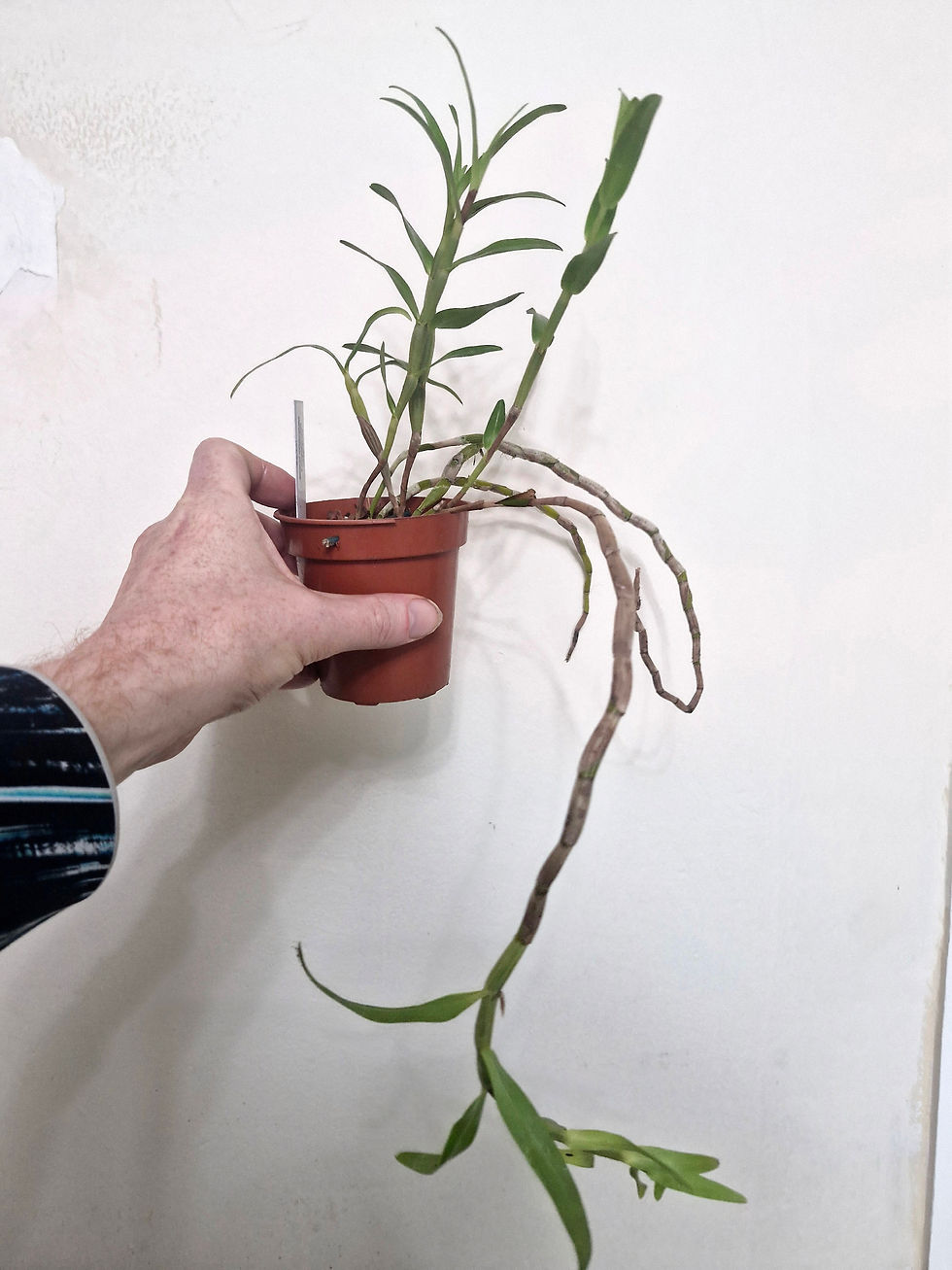
Habit: It is a slender, trailing or cascading epiphyte. It forms a curtain of fine stems that hang downwards, making it ideal for mounted culture or hanging baskets.
Stems: The stems are characteristically thin, wiry, and graceful, spreading extensively and often rooting at nodes where they contact moist substrate.
Foliage: The leaves are arranged oppositely and are relatively small compared to many other "lipstick plants." They are elliptical to lanceolate, thick, and leathery (coriaceous) or slightly succulent. They are typically a deep, matte green.
Flowers: The blooms appear axillary or terminally. They are distinctly tubular and curved. Unlike the prominent calyces of some species, the calyx here is relatively short. The corolla tube is slender, typically a bright scarlet-red or orange-red, and is often covered in fine, soft hairs on the exterior. The throat of the flower often shows darker markings on the lower lobes.
🔬 Taxonomy and Ethnobotany
Taxonomy: It belongs to the large genus Aeschynanthus within the family Gesneriaceae. The specific epithet gracilis is Latin for "graceful" or "slender," a direct reference to the plant's delicate stems, small leaves, and overall refined appearance compared to chunkier species like Aeschynanthus radicans.
Ethnobotany: While specific traditional medicinal uses for this species are not prominently documented in general botanical literature, it is highly valued globally in modern horticulture as an ornamental flowering epiphyte suitable for smaller spaces due to its finer texture.
💧 Cultivation and Care
Aeschynanthus gracilis is an excellent subject for intermediate tropical conditions, making it a classic choice for hanging baskets in conservatories or mounted on the background of medium-to-large humid terrariums.
Light: Requires bright, indirect light. It needs good light levels to trigger flowering. While shade-tolerant, too little light leads to weak, leggy growth and few blooms. Direct, harsh sun will scorch the foliage.
Substrate: Needs a highly aerated, free-draining epiphytic mix. A mixture typical for orchids or epiphytic ferns (e.g., medium bark, perlite, and coarse peat or sphagnum moss) is ideal to prevent root rot, as the fine roots require significant airflow.
Watering: Keep the substrate evenly moist during the active growing season. It has moderate drought tolerance once established due to its succulent nature but will drop leaves if allowed to bone-dry for long periods. Avoid stagnant, waterlogged conditions, which are fatal.
Temperature: It is a tropical/subtropical montane plant that appreciates consistent warmth but can tolerate slightly cooler nights than lowland species. It is frost-tender.
Daytime: 20-26 C (68-76 F).
Night time: 15-20 C (59-68 F).
Humidity: High humidity (ideally above 60-70%) is crucial for healthy growth and to prevent brown leaf tips and, most importantly, flower bud drop before they open.
✨ Unique Features
The defining characteristic of Aeschynanthus gracilis is its graceful, delicate texture. The combination of the thin, trailing wiry stems and small leathery leaves contrasted against the slender, hairy bright red flowers makes it a more refined and intricate spectacle than many of its larger cousins.
🏷️ Specifications
Plant Size: Divisions (most often mounted), from our stock plant. Plants are 12-20 cm.
Plant Family: Gesneriaceae
Plant Passport: A Aeschynanthus gracilis B 140084 C [buyer to use number of the plant label] D GB