🌏 Habitat and Ecology
Dendrochilum yuccaefolium is an endemic epiphytic orchid native to the wet tropical biomes of the Philippines, with populations specifically recorded on the island of Luzon. In its natural habitat, it is typically found growing firmly attached to the trunks and lower branches of large trees. It thrives at lower to intermediate elevations of approximately 500 metres, where it benefits from a highly humid, well-ventilated environment and dappled canopy light.
🌿 Description and Distinguishing Features
This species is prized by specialist growers for its distinctively rigid, architectural foliage and its elegant, spiraling floral displays.
Habit & Pseudobulbs: It is a small to medium-sized, tightly clustering sympodial epiphyte. The pseudobulbs are narrowly cylindrical, measuring roughly 3 to 4 cm (1.5 inches) long, and become deeply furrowed and textured as they mature.
Foliage: Each pseudobulb carries a single, stiff, linear-lanceolate leaf. The foliage is prominently ribbed and distinctly erect, growing up to 30 cm long and 1.5 cm wide. This rigid, pointed structure gives the plant a distinct "yucca-like" appearance, which is the origin of its specific epithet.
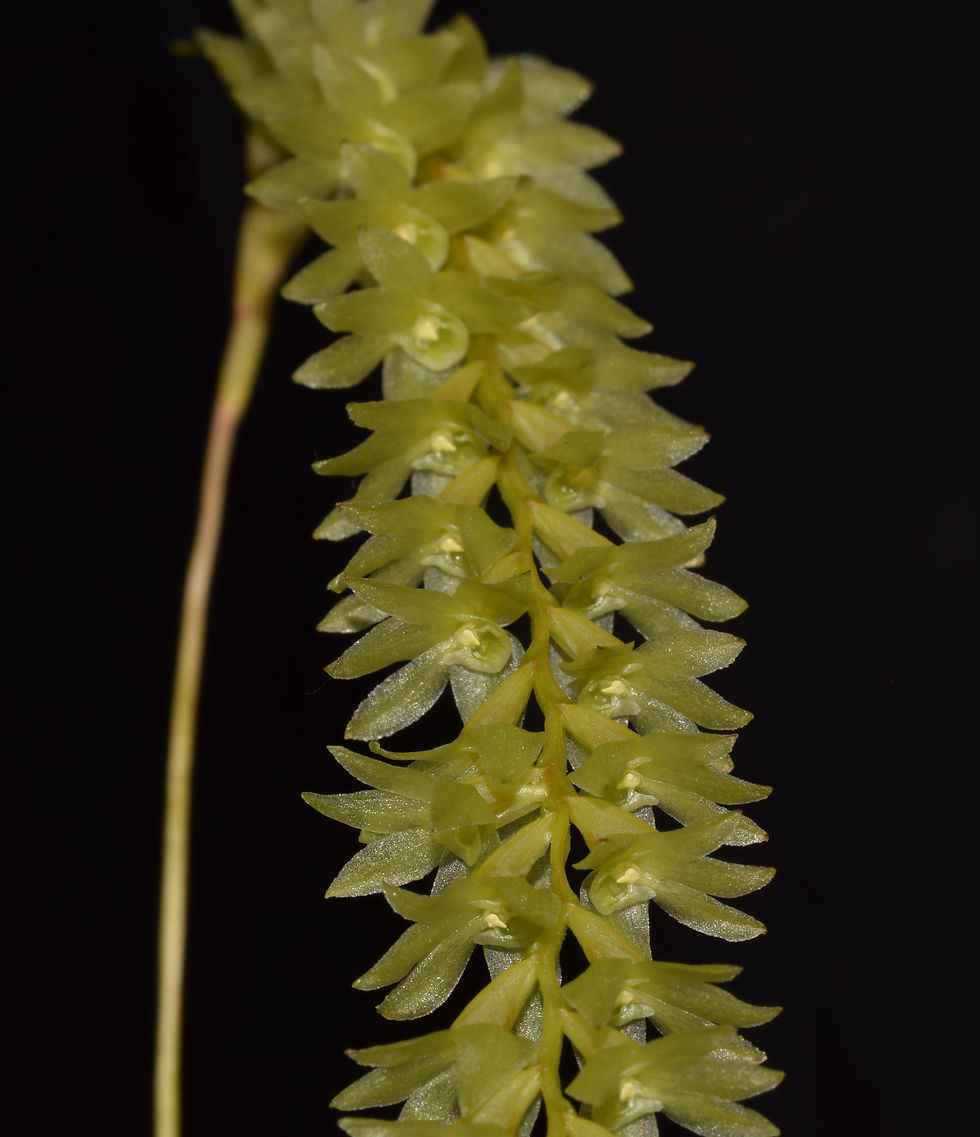
Flowers: Blooming primarily from winter into spring, it produces arching to semi-pendulous inflorescences (up to 20 cm long) that emerge alongside newly developing growths. The spike carries an array of closely ranked, creamy-white to pale greenish-yellow star-shaped flowers arranged in a loose spiral.
Scent: The crystalline blooms emit a highly pleasant, sweet fragrance.
🔬 Taxonomy and Ethnobotany
Taxonomy
According to Kew Plants of the World Online (POWO), the accepted scientific name for this species is Coelogyne yuccifolia (L.O.Williams) M.W.Chase & Schuit., following the recent phylogenetic merger of the genus Dendrochilum into Coelogyne. Dendrochilum yuccaefolium L.O.Williams is officially classified as a homotypic synonym.
(Note for your website: While frequently spelled "yuccaefolium" in the UK horticultural trade and in its original description, POWO recognizes "yuccifolium" as the grammatically correct botanical spelling. Both are highly searchable). We are following the origin description.
Ethnobotany
There are no recorded traditional medicinal, culinary, or practical ethnobotanical uses for this species. It is primarily valued globally as a sought-after cultivated ornamental orchid.
💧 Cultivation and Care
This is a vigorous species that grows exceptionally well when provided with constant moisture and a highly aerated root zone.
Light: Requires bright, filtered indirect light to semi-shade. Direct, harsh midday sun should be avoided to prevent burning the stiff foliage, but good light ensures strong, upright growth and profuse flowering.
Substrate & Soil: As an epiphyte, it demands excellent drainage. It performs best in a fine to medium-grade orchid bark mix heavily amended with perlite and chopped sphagnum moss. It also adapts perfectly to being mounted on cork bark with a moisture-retentive moss pad.
Temperature: It is an adaptable intermediate to warm grower, perfectly suited to standard greenhouse or indoor environments.
Daytime Range: 21–29°C (70–84°F).
Nighttime Range: 15–18°C (59–64°F).
Watering: Requires consistent moisture, particularly during the active summer growing season. Water thoroughly 3 to 5 times a week, allowing the potting media to dry only lightly between waterings. Never allow the root zone to become completely bone dry.
✨ Unique Features
Dendrochilum yuccaefolium features stiff, yucca-like leaves and arching chains of fragrant creamy-white star flowers. A rare Philippine epiphytic orchid.
🏷️ Specifications
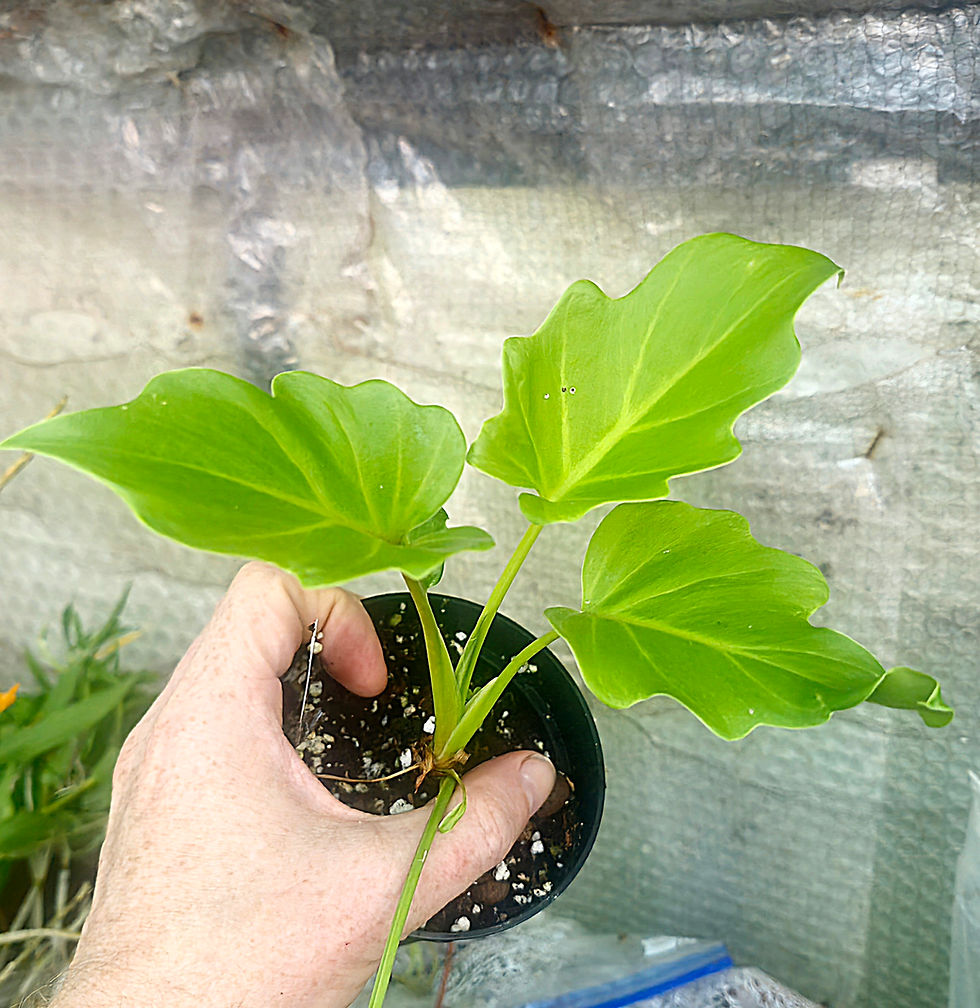
Plant Size: As seen in the picture
Plant Family: Orchidaceae
Plant Passport: A Dendrochilum yuccaefolium B 140084 C use the number written on the plant label D GB