🌏 Habitat and Ecology
Dendrochilum hampelii is an epiphytic orchid endemic to the island of Mindanao in the Philippines, with specific wild populations recorded in the provinces of Bukidnon and Misamis Oriental. It inhabits the wet tropical biome, growing at elevations between 1000 and 1200 metres. It is typically found growing among dense mosses on the trunks and branches of trees within shaded to slightly lit montane broad-leaf forests.
🌿 Description and Distinguishing Features
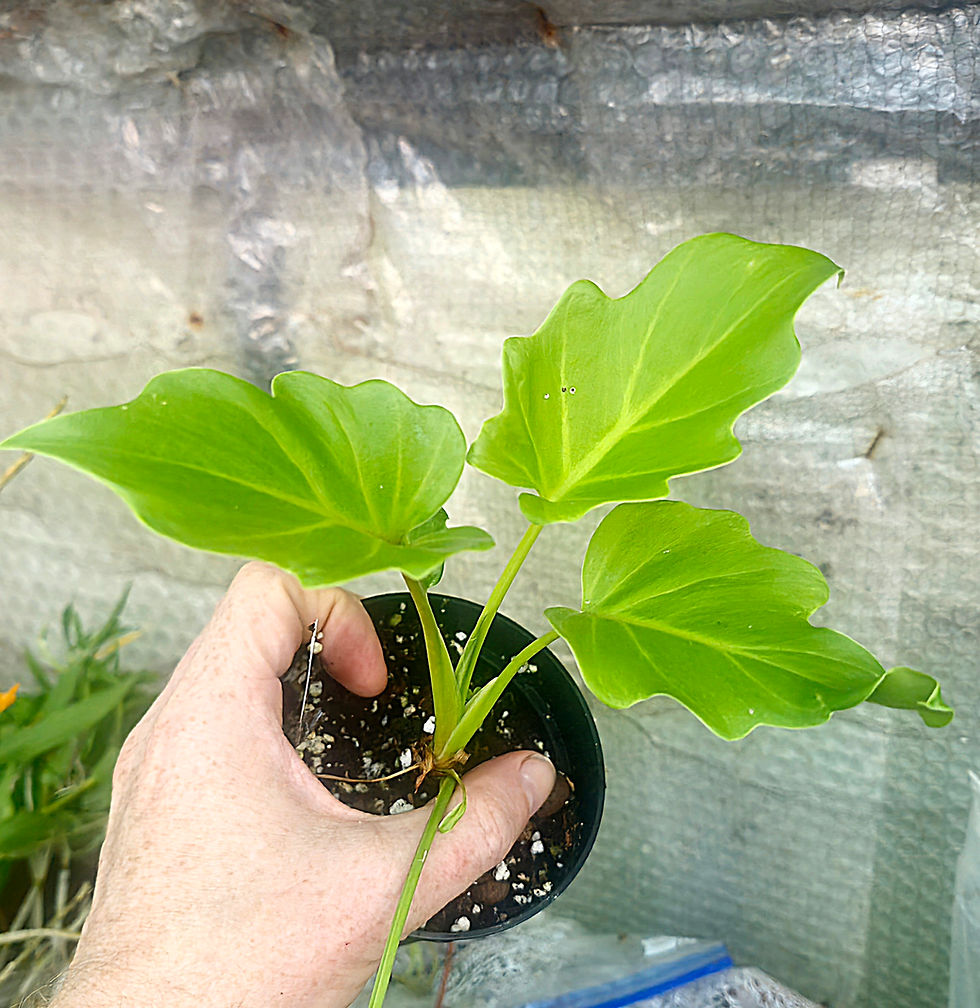
Originally entering the horticultural trade as an unidentified plant nicknamed 'Big Pink' ( this is a division of that plant), this relatively new species was formally described in 2015.
Habit & Pseudobulbs: It is a small-sized epiphyte with a short rhizome. The pseudobulbs are clustered, spindle-shaped, and relatively small (1.0–2.1 cm long). They are initially covered in papery cataphylls that disintegrate into persistent fibres.
Foliage: Each pseudobulb carries a single, narrowly linear, leathery leaf (up to 10 cm long and 2 mm wide) with a distinctly channelled petiole.
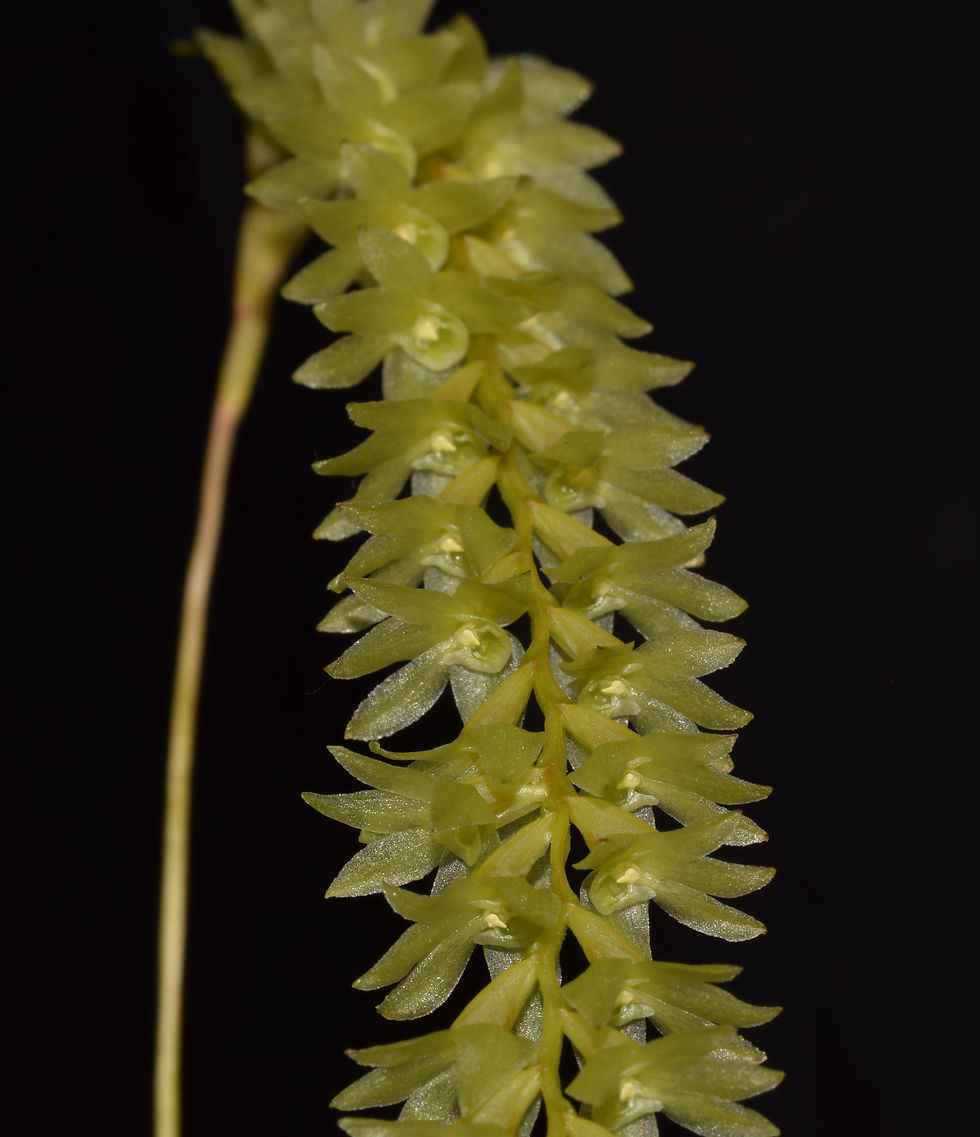
Flowers: The inflorescence emerges with the new growth (synanthous). It produces a slender, arching-to-pendent raceme carrying a dense display of up to 12 flowers.
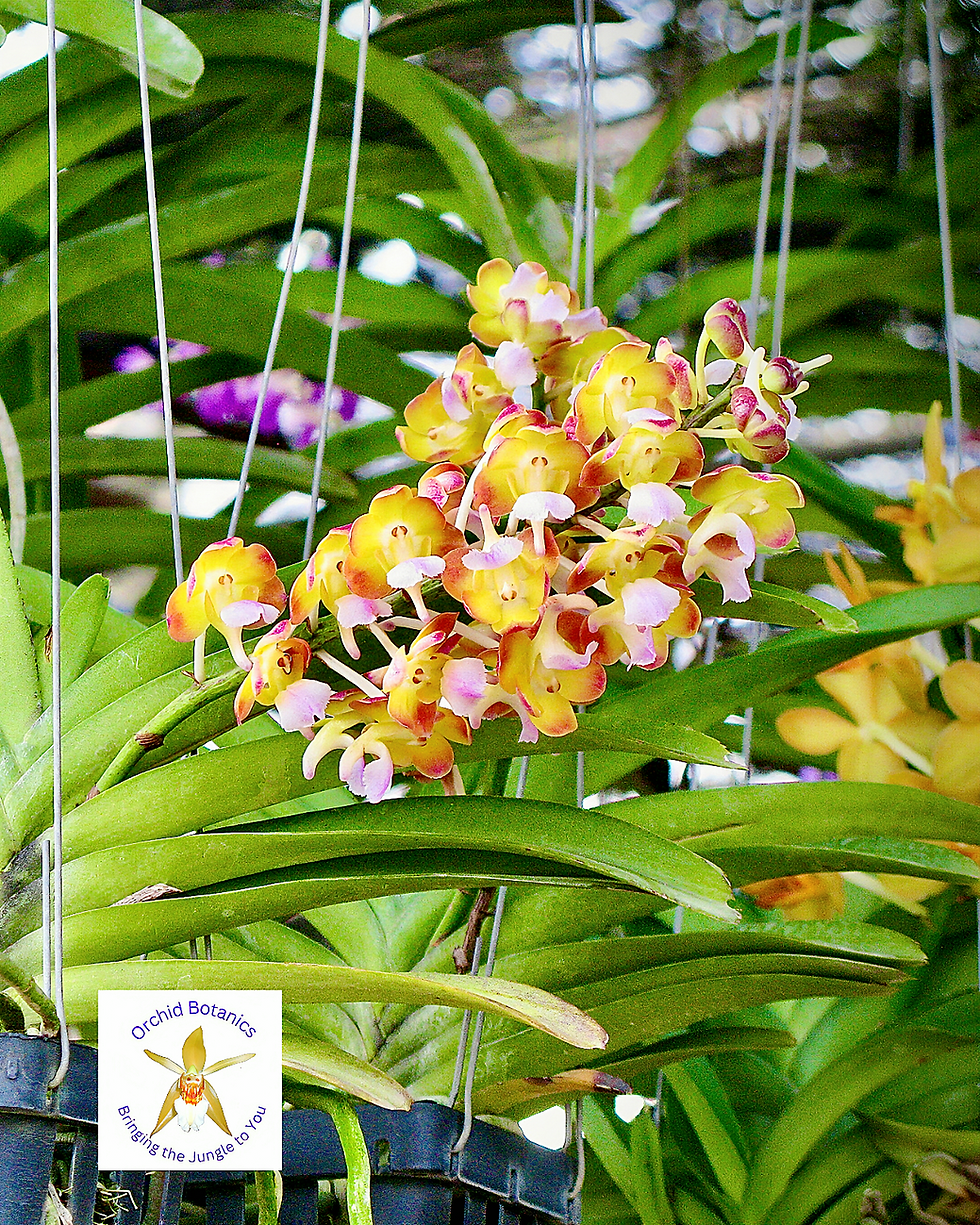
Colour Variations: In cultivation, a famous striking pinkish-salmon form (the original 'Big Pink') is highly sought after. In the wild, pale yellow, white, and greenish-white forms have also been recorded.
🔬 Taxonomy and Ethnobotany
Taxonomy
According to Kew Plants of the World Online (POWO), the accepted scientific name for this species is Coelogyne hampelii (Sulistyo, Gravend., R.Boos & Cootes) M.W.Chase & Schuit., following the recent phylogenetic reclassification. Dendrochilum hampelii is a homotypic synonym. Morphologically, it shares close affinities with Dendrochilum propinquum.
Ethnobotany
There are no recorded traditional uses for this species. It is highly valued in the global horticultural trade due to its relatively large flowers for the genus and striking colour variants.
💧 Cultivation and Care
This species is highly adaptable but performs best when given conditions mimicking its intermediate-elevation, mossy forest habitat.
Light: Prefers bright, filtered indirect light. Direct summer sun must be avoided, though it tolerates slightly brighter conditions in winter.
Substrate & Soil: A well-draining epiphyte mix (fine bark, perlite) with a top-dressing of sphagnum moss to replicate its mossy native tree trunks is ideal.
Temperature: It is an intermediate to warm grower.
Daytime Range: 22–28°C (72–82°F). It can tolerate summer highs up to 35°C (95°F) provided there is a significant nighttime temperature drop.
Nighttime Range: 16–18°C (61–65°F).
Watering: Water heavily during the summer when new shoots and inflorescences are developing, but ensure the pot dries out slightly between waterings. Reduce watering frequency in winter, keeping it slightly drier but avoiding prolonged dry spells.
✨ Unique Features
Dendrochilum hampelii (formerly 'Big Pink') produces striking, relatively large pinkish-salmon or pale yellow flowers on arching stems. A rare Mindanao endemic.
🏷️ Specifications
Plant Size: Flowering size divisions of 4+ pseudobulbs
Plant Family: Orchidaceae
Plant Passport: A Dendrochilum hampelii B 140084 C use the number written on the plant label D GB