🌳 Habitat and Ecology
Ceratostema glans is a rare and likely endemic epiphytic shrub belonging to the Ericaceae (Andean blueberry) family. It is found on the eastern slopes of the Andes in Ecuador (specifically Morona-Santiago province). It grows on tree trunks in primary moist to wet montane forests at altitudes around 1,400 to 1,550 metres. This habitat is characterised by frequent fog and high atmospheric moisture, typical of a cool, tropical mountain environment. As an epiphyte, it requires excellent air movement and a substrate of decaying organic debris.
🌺 Description and Distinguishing Features
This plant is a small, pendent, epiphytic shrub with slender, young branches that are erect.
Foliage: The leaves are coriaceous (leathery), small (2.2-2.8 cm long), ovate, and often provided with scattered circular glands on the lower surface. The upper surface is darker green and shiny (lustrous). The stems are terete and glabrate. The species name glans (Latin for "acorn") refers to the shiny, nut-like appearance of the developing fruit or the unique glands on the calyx/corolla.
Flowers (Morphology): The flowers are striking: solitary and pendent, 5-merous, and are large (about 23.5-24.7 mm long). They are tubular, thick, and fleshy (carnose), and typically a vibrant crimson or bright red colour. They possess a distinctive feature: conspicuous, circular, black or dark glands on the corolla and calyx. The corolla lobes are narrowly triangular, spreading, and recurved. It is notable for having fewer stamens (five) compared to similar species which often have ten.
Differentiation: C. glans is distinguished from its closest relative, C. campii, by the absence of lignotubers and its solitary flowers (vs. short-racemose inflorescences with 2-4 flowers in C. campii). It also lacks the black glands found in other relatives and has fewer stamens17.
💧 Cultivation and Care
Ceratostema glans is a specialised collector's plant requiring cool to intermediate conditions and extremely high humidity, making it best suited for a cool greenhouse or humid cabinet in the UK.
Light: Needs bright, filtered light; too little light will inhibit blooming, but hot, direct sun will scorch the leaves.
Substrate: The medium must be acidic (pH < 6.0), chunky, and exceptionally well-draining; use an epiphytic mix of orchid bark, perlite, and a minimal amount of synthetic peat or coir. Keep the medium evenly and consistently moist but ensure rapid drainage.
Temperature
Daytime: 18-24 C (64-75 F).
Nighttime: A distinct cooling is necessary, ideally 10-18 C (50-64 F).
Humidity: High humidity (70%+ is strongly recommended) and good air circulation are vital. Feed monthly during the growing season with a diluted, balanced ericaceous liquid fertiliser.
✨ Unique Features
This is a very rare and highly sought-after member of the tropical "Andean blueberries" group. Its appeal lies in its small, pendent habit and its intense, glossy, crimson, tubular flowers. The most fascinating feature is the presence of black, circular glands on the corolla and calyx, which gives the flower an unusual, distinctive ornamentation. Its solitary flowers and lack of lignotubers make it a unique trophy plant for the specialist collector.
🏷️ Specifications
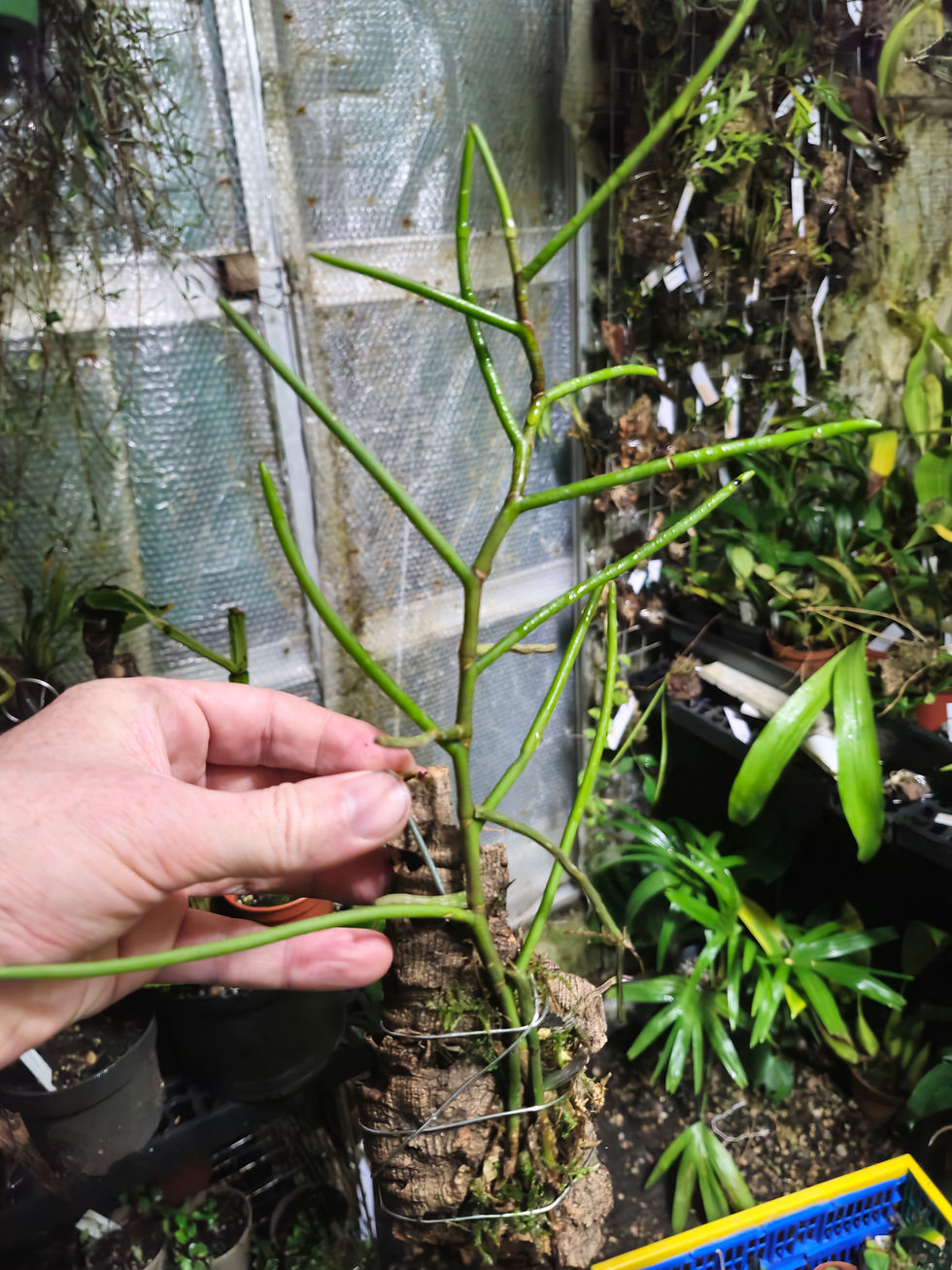
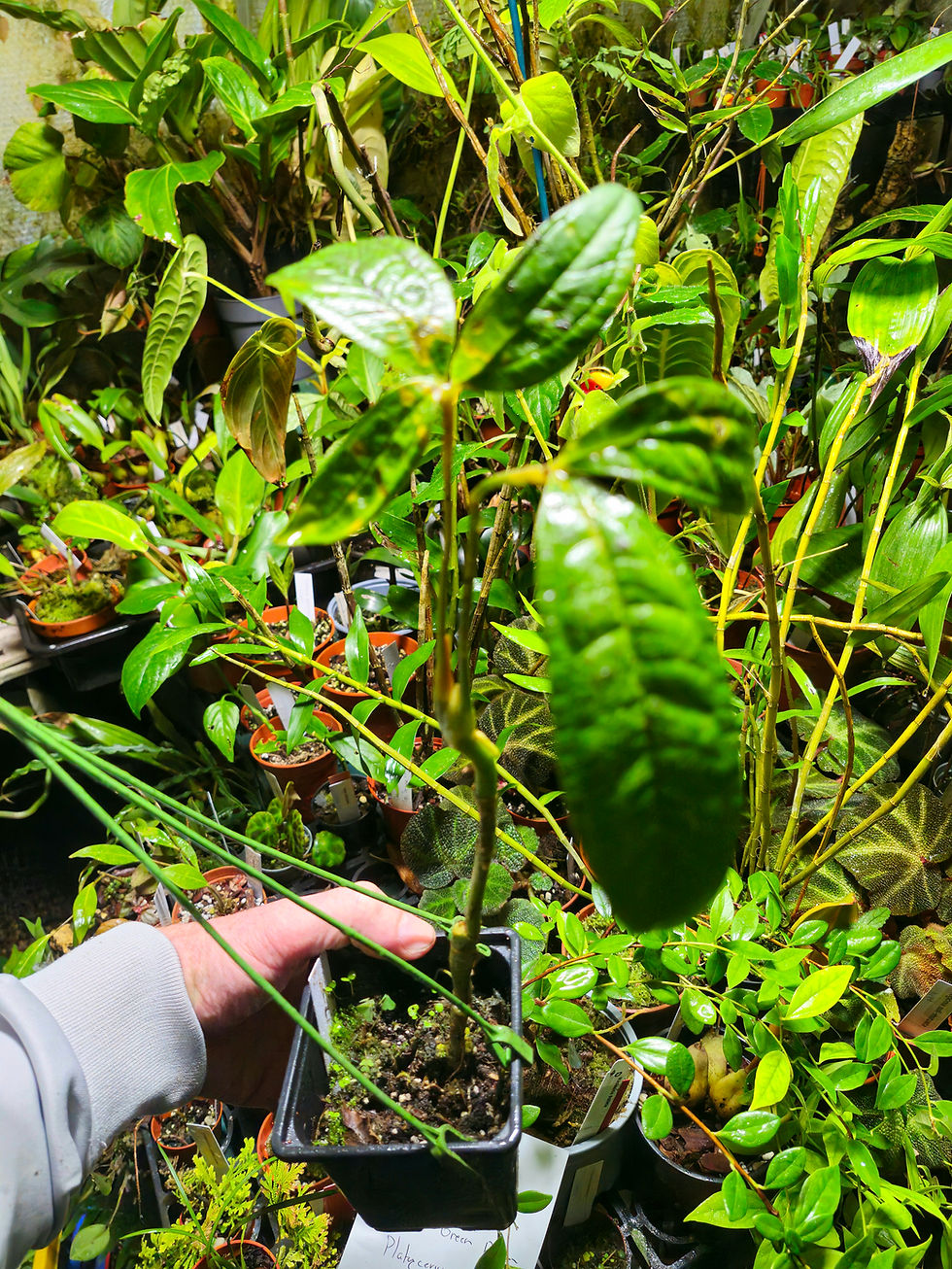
Plant Size: As can be seen in the image
Plant Family: Ericaceae
Plant Passport: A Ceratostema glans B 140084 C [buyer to use number of the plant label] D GB