🇮🇩 Habitat and Ecology
Coelogyne pseudoviscosa is a medium-sized epiphytic orchid native to Laos. It is found growing on tree branches in lower montane and hill forests at moderate elevations, typically between 1,000 and 1,600 metres. This species is adapted to an intermediate growing regime with consistently high humidity, good air circulation.
🌸 Description and Distinguishing Features
This orchid is a sympodial perennial that forms robust clumps.
Pseudobulbs & Foliage: It produces clustered, ovoid to fusiform (spindle-shaped) pseudobulbs (up to 7 cm long) that become slightly grooved with age. Each pseudobulb is topped by two lanceolate, leathery, plicate (pleated) leaves.
Flowers: The flowers are produced on a short, erect to arching spike (raceme) that emerges from the center of the new growth (synanthous) or just before it (proteranthous). The rachis is often slightly zig-zagged (fractiflex).
Aesthetics: The blooms are medium-sized (approx. 4-5 cm wide). The sepals and petals are typically translucent white or creamy-white. The lip (labellum) is the focal point, featuring dark brown or reddish-brown veins on the side lobes and a yellow or brown patch on the mid-lobe with wavy keels. As the name suggests (pseudo = false, viscosa = sticky), the floral parts, particularly the ovary and rachis, can be slightly viscid (sticky), similar to C. viscosa. The flowers are fragrant.
Ethnobotany: There are no specific medicinal uses recorded for this species, but it is valued in horticulture for its fragrance and manageable size.
Differentiation:
Versus C. viscosa: C. viscosa is native to mainland Southeast Asia (Thailand, Vietnam) and typically has broader white flowers with a distinct brown-streaked lip; C. pseudoviscosa is Sumatran and often has a more greenish-cream tone and slightly different keel structure.
Versus C. asperata: C. asperata is a much larger, more robust plant with a very long, arching inflorescence and a much stronger, often overpowering scent.
💧 Cultivation and Care
Coelogyne pseudoviscosa is a rewarding intermediate growing orchid suitable for a bright windowsill or conservatory.
Light: Requires bright, filtered light. Protect from harsh midday sun to prevent leaf scorch, but ensure enough light to encourage blooming.
Substrate: Best grown in a free-draining epiphytic mix of medium-grade bark, charcoal, and perlite. It can also be mounted if humidity is high enough.
Watering: Water regularly throughout the year, keeping the medium evenly moist. Do not allow the pseudobulbs to shrivel significantly. Slight reduction in water is acceptable in winter, but it does not require a harsh dry rest.
Temperature:
Optimal Daytime Temperature: 20-27°C (68-81°F).
Optimal Nighttime Temperature: A small drop is beneficial, ideally 14-18°C (57-64°F).
Humidity: High humidity (60-80%) is important for lush foliage.
✨ Unique Features
Coelogyne pseudoviscosa is a collector's gem for its sweet fragrance and the sticky texture of its flower stems, a curious trait shared with a few other Coelogyne species. Its Laos endemic status and the elegant contrast between the creamy petals and the dark-veined lip make it a sophisticated addition to any collection.
🏷️ Specifications
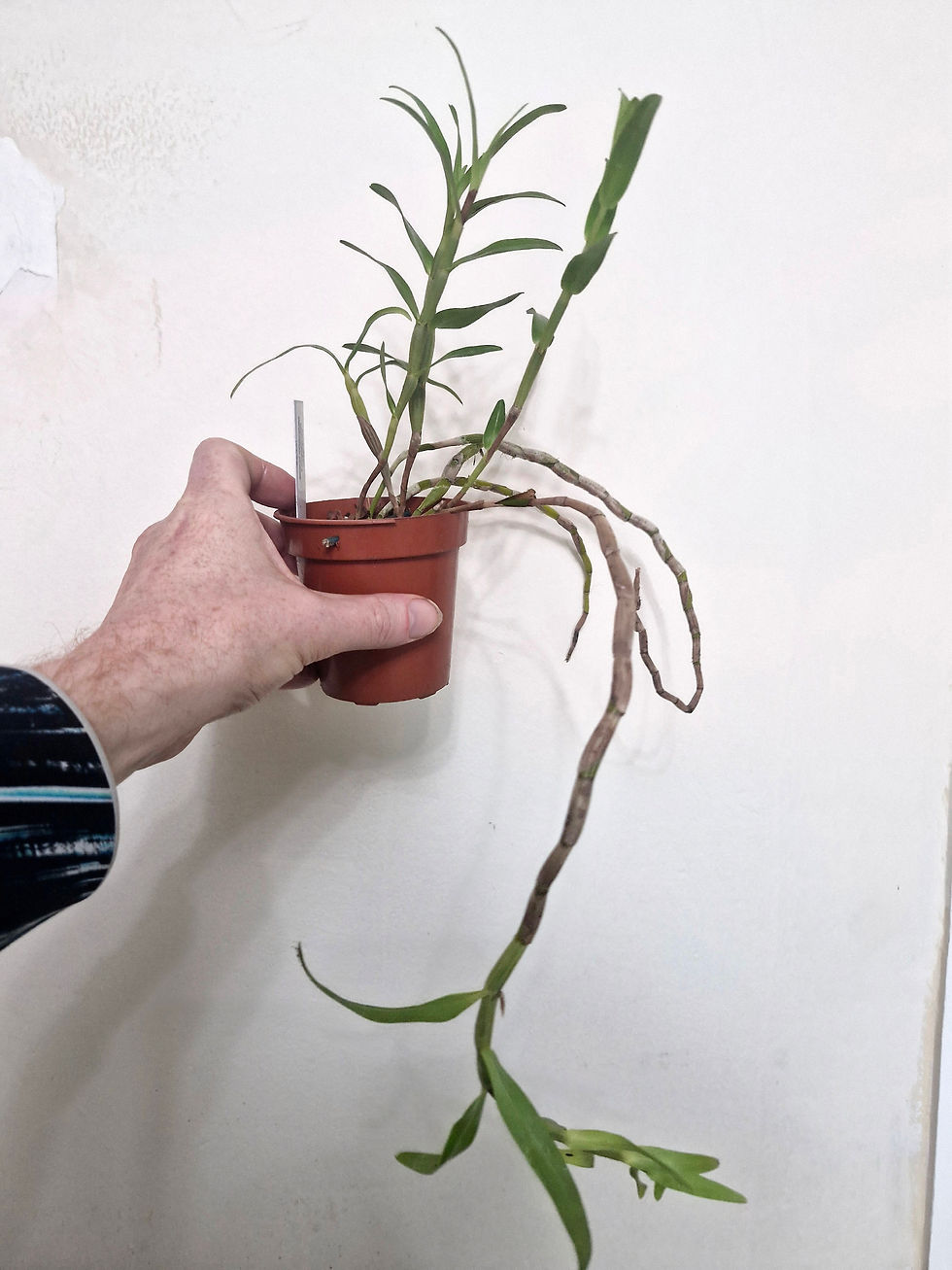
Plant Size: as seen in the plant above
Plant Family: Orchidaceae
Plant Passport: A Coelogyne pseudoviscosa B 140084 C [buyer to use number of the plant label] D GB