Habitat and Ecology
Hoya decipulae is a recently discovered and highly unique epiphytic shrub that is endemic to the island of Sumatra, Indonesia. It was found growing on host plants, specifically bamboo, in protected mixed hill forests at an elevation of approximately 780 metres. This Hoya thrives in a warm, wet tropical biome, relying on high humidity, consistent moisture, and filtered light that permeates the forest canopy. Its thin-leaved nature suggests it is highly sensitive to desiccation in its natural environment.
Description
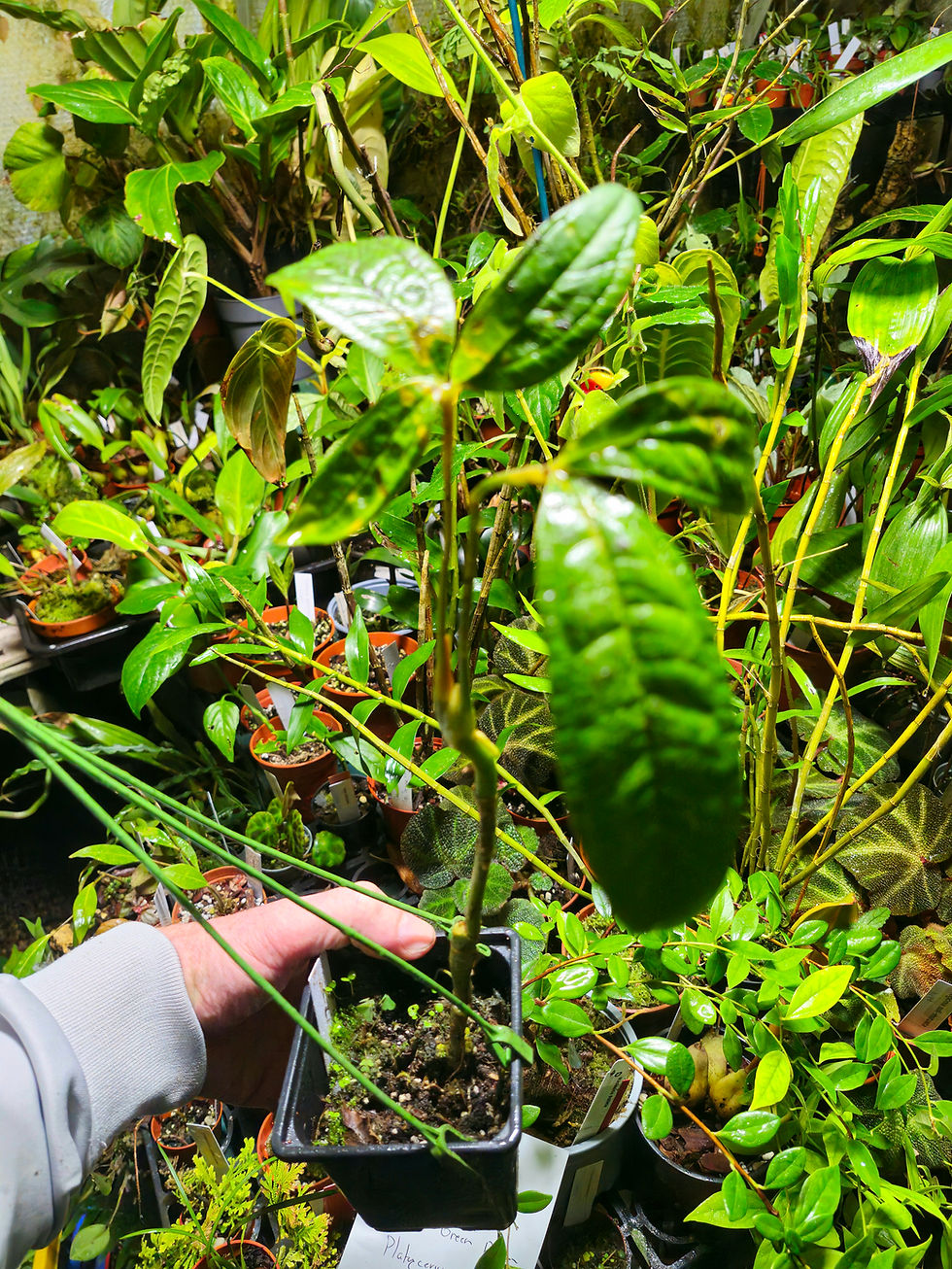
This is an evergreen, thin-leaved, shrubby Hoya with a compact growth pattern, quite unlike the thick, succulent leaves of common Hoya species. The leaves are medium-sized, dark, rich green, and elongated elliptic to lance-shaped (10-14 cm long). The plant is primarily renowned for its exceptionally unique floral structure. The flowers are borne in small, terminal clusters (umbels). Before they fully open, the corolla (fused petals) forms a rigid structure that strikingly resembles a small trap or cage—a feature so distinctive it inspired the species name decipulae (Latin for 'trap' or 'to ensnare'). The open flowers are large for a thin-leaved Hoya, typically creamy-white to pale yellow, with a subtle, sweet fragrance, and can last for over a week.
Cultivation
Hoya decipulae is a demanding, warm-intermediate grower that requires stable, high humidity and should be grown in a humid cabinet, greenhouse, or large terrarium in the UK. It requires bright, indirect light to promote robust growth and flowering; a little gentle morning sun is tolerated, but avoid harsh direct sun to prevent scorching. As a thin-leaved epiphyte, it requires a well-aerated, moisture-retentive, and quick-draining substrate of fine orchid bark, perlite, and a small amount of coir. The medium must be kept consistently moist; it is intolerant of prolonged periods of dryness, which can quickly cause leaf yellowing (chlorosis) or drop. High humidity (60-80%) is essential.
Optimal Daytime Temperature: 20-26 (68-79 F)
Minimum Nighttime Temperature: Must not drop below 15 C (59 F).
Feed every two to four weeks during the active growing season (spring/summer) with a balanced liquid fertiliser diluted to half strength. Never remove the old peduncles (flower stems) as it will re-bloom from them.
Unique Features
This Hoya is a rare jewel for the dedicated collector, only discovered in 2017. Its main draw is the bizarre, cage-like appearance of its flower buds that transform into striking, geometric, white, waxy blooms—a truly spectacular and unique feature in the Hoya genus. Its thin leaves and requirement for constant moisture distinguish it from the hardier, succulent-leaved Hoya, appealing to enthusiasts of high-humidity tropicals.
Specifications
Plant Size: (Flowering sized plants, 15 cm tall.
Plant Family: Apocynaceae (formerly Asclepiadaceae)
Plant Passport: A Hoya decipulae B 140084 C [buyer input from the number on the plant label] D GB