🇵🇪 Habitat and Ecology
Pilea spruceana (commonly known as the Silver Tree Pilea or Silver leaf Pilea) is a low-growing tropical herbaceous plant native to the rainforests of South America. Its range includes Peru, Bolivia, Venezuela, and Northern Brazil.
It inhabits the dark, humid forest floor of the Amazon basin and Andean foothills. In these environments, it grows as a groundcover in deep shade, thriving in the consistent moisture and stillness of the understory, often rooting into decaying leaf litter or growing on mossy logs.
🌿 Description and Distinguishing Features
This plant is a compact, mat-forming perennial belonging to the Nettle family (Urticaceae), though it lacks stinging hairs.
Foliage: The leaves are the primary attraction. They are ovate, opposite, and deeply rugose (quilted or textured). The colouration is dramatic: the leaf blades are a deep bronze-green to almost black, contrasting with a broad, metallic silver strip running down the center vein. The undersides of the leaves are typically a rich reddish-purple.
Habit: It rarely exceeds 15–30 cm in height, preferring to spread horizontally.
Flowers: The flowers are insignificant, appearing as tiny, creamy-pink clusters (cymes) hidden within the upper leaf axils. They are rarely produced in cultivation and are not the focal point.
Differentiation:
Versus Pilea involucrata: P. spruceana is frequently confused with P. involucrata (Friendship Plant). In trade, P. spruceana is distinguished by its darker, bronze-black foliage and the distinct silver center stripe, whereas P. involucrata is typically lighter green with coppery tints and lacks the defined silver band.
Versus Pilea cadierei: P. cadierei (Aluminum Plant) has raised silver patches between the veins on a bright green leaf, rather than the dark, quilted bronze leaf of P. spruceana.
🔬 Taxonomy and Ethnobotany
Taxonomy: The specific epithet spruceana honours Richard Spruce (1817–1893), a legendary British botanist and explorer who spent 15 years collecting plants in the Amazon and Andes, contributing massively to the Victorian understanding of South American flora.
Ethnobotany:
Ornamental Use: While there are no widespread records of P. spruceana being used medicinally by indigenous Amazonian tribes (unlike its cousin Pilea microphylla, which is used for stomach ailments), P. spruceana is culturally significant in horticulture as a parent plant. It is believed to be one of the parents of the popular cultivar 'Norfolk', a staple in the terrarium trade.
💧 Cultivation and Care
Pilea spruceana is an obligate shade lover and a perfect candidate for enclosed environments like terrariums due to its high humidity requirements.
Light: Requires moderate to deep shade or filtered indirect light. Direct sun will bleach the silver markings and scorch the dark leaves, turning them a dull brown.
Substrate: Prefers a humus-rich, peat-based mix that stays moist. A standard houseplant potting soil lightened with perlite is effective.
Watering: Keep the soil consistently moist. It does not tolerate drought. If the plant droops, it needs water immediately. However, avoid waterlogging the soil, which leads to stem rot.
Temperature:
Optimal: 18-27 C (64-80 F).
Minimum: It is frost tender and suffers below 13 C (55. F). Cold drafts cause leaf drop.
Humidity: High humidity (60-80%) is crucial. In dry air, the leaf margins will turn crisp and brown. It thrives in bathrooms, bottle gardens, or terrariums.
✨ Unique Features
The metallic silver stripe against the deep bronze-black, corrugated leaf surface gives Pilea spruceana a premium, jewel-like appearance. Its deep quilting (bullate texture) is an adaptation to capture low light levels on the rainforest floor by increasing surface area.
🏷️ Specifications
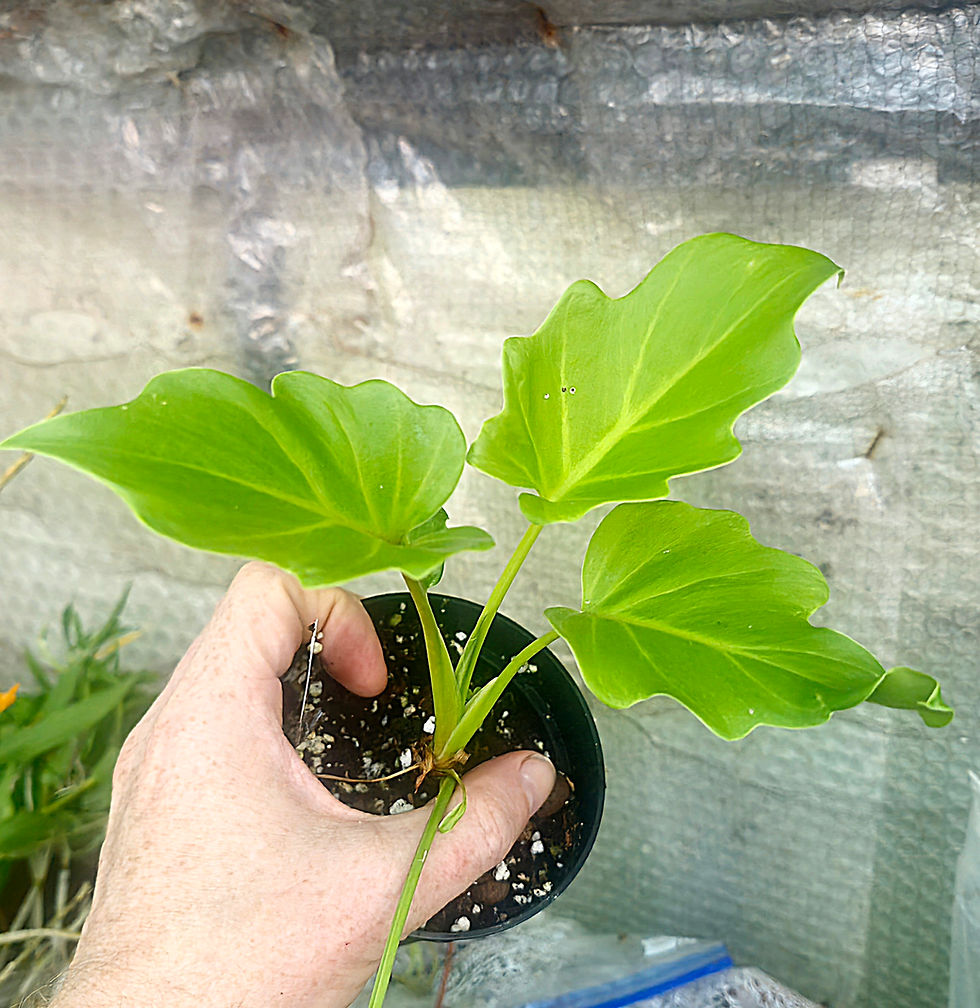
Plant Size: as seen in the picture
Plant Family: Urticaceae
Plant Passport: A Pilea spruceana B 140084 C [buyer to use number of the plant label] D GB