🇻🇪 Habitat and Ecology
Vriesea splendens (commonly known as the Flaming Sword) is a striking epiphytic bromeliad native to the tropical rainforests of Eastern Venezuela, the Guianas (Guyana, Suriname, French Guiana), and Trinidad.
In the wild, it grows high in the canopy of trees, attaching its roots to bark where it collects rainwater and decaying organic matter in its central "tank" or vase. It thrives in the warm, humid, and shaded conditions of the cloud forest and lowland rainforest biomes.
🌿 Description and Distinguishing Features
This plant is one of the most popular bromeliads in cultivation due to its dual appeal: spectacular foliage and a long-lasting flower spike.
Foliage: It forms a rosette of stiff, strap-like leaves that arch outwards. The leaves are dark green and characteristically marked with distinct, horizontal reddish-brown or purple bands, giving it the nickname "Tiger Bromeliad". The rosette acts as a funnel to catch water.
Inflorescence: The common name "Flaming Sword" comes from its dramatic flower spike. It produces a tall, flattened, sword-shaped spike (up to 60 cm high) composed of bright, overlapping scarlet-red bracts.
Flowers: The true flowers are small, yellow, and tubular, emerging briefly from between the red bracts, but the red spike itself persists for months.
Lifecycle: Like most bromeliads, the rosette is monocarpic. It flowers once, and then the mother plant slowly dies over a year or more, replaced by "pups" (offsets) produced at the base.
🔬 Taxonomy and Ethnobotany
Taxonomy: The genus Vriesea is named in honour of Willem Hendrik de Vriese (1806–1862), a Dutch botanist and physician. The specific epithet splendens means "splendid" or "shining," referring to its showy nature.
Ethnobotany:
Ornamental Value: While there are no widespread records of indigenous medicinal use for this specific species, it has been a staple of European horticulture since its introduction in the 19th century due to its ability to adapt to indoor conditions better than many other epiphytes.
Ecological Role: In its native habitat, the water-filled tank (phytotelmata) of Vriesea species serves as a crucial micro-habitat for tree frogs, insects, and other small rainforest organisms.
💧 Cultivation and Care
Vriesea splendens is a classic "urn plant." Its care differs significantly from terrestrial potted plants because it drinks primarily through its central cup, not its roots.
Light: Requires bright, indirect light. Direct sun will scorch the leaves and fade the beautiful banding. It can tolerate lower light levels than many bromeliads, but flowering requires decent brightness.
Substrate: The root system is small and primarily for anchorage. Use a loose, airy mix (orchid bark, coir, and perlite) or mount it. Heavy, soggy soil will rot the base quickly.
Watering (The Tank Method):
The Cup: Keep the central vase (tank) filled with water (preferably rainwater or distilled). Flush it out and replace the water every few weeks to prevent stagnation and bacterial buildup.
The Soil: Keep the substrate slightly moist but never wet. The roots dislike being waterlogged.
Temperature:
Optimal: 18–27°C (64–80°F).
Minimum: It is tropical and does not enjoy drops below 13°C (55°F).
Humidity: Moderate to High. Mist the leaves regularly if the air is dry (e.g., central heating), as it absorbs moisture through foliar trichomes.
✨ Unique Features
The distinct horizontal banding on the leaves makes Vriesea splendens attractive year-round, even when not in bloom. When it does bloom, the architectural, 2D flattened shape of the bright red spike is almost artificial in its perfection and longevity, often lasting 2–4 months before fading.
🏷️ Specifications
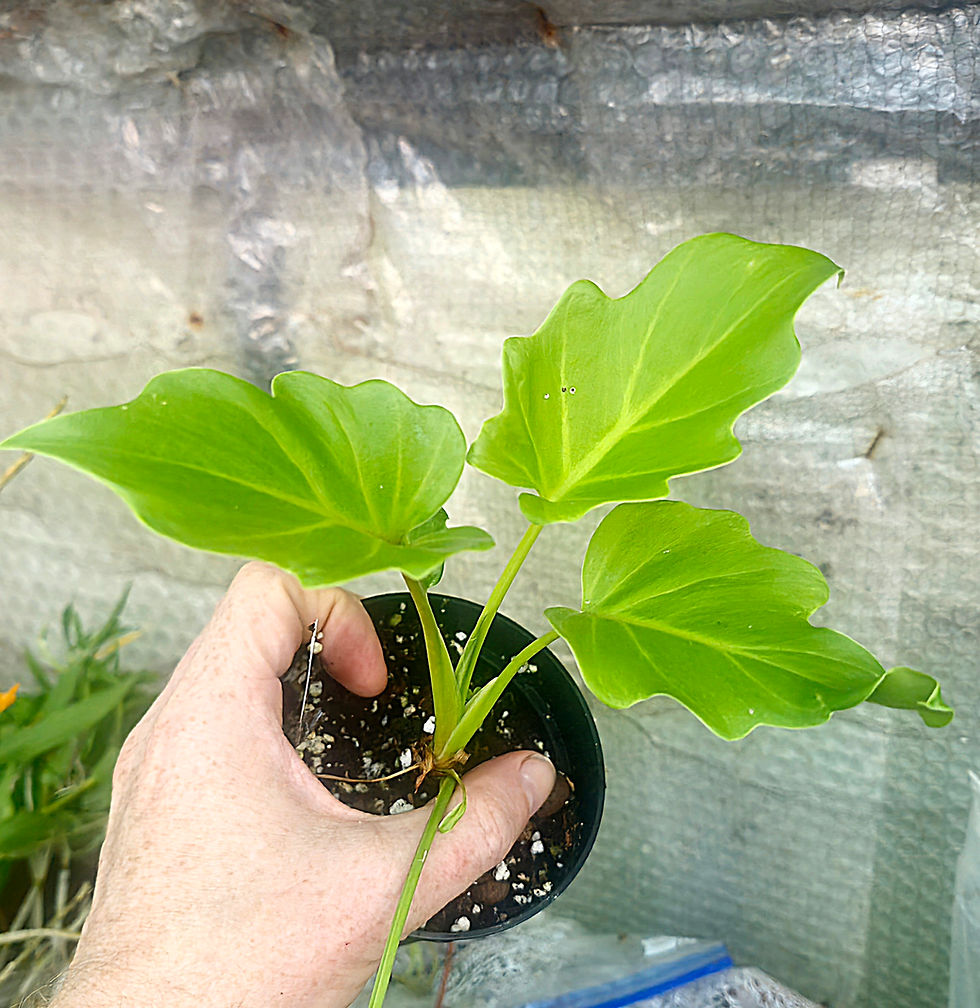
Plant Size: divisions from our stock plant as seen in the picture
Plant Family: Bromeliaceae
Plant Passport: A Vriesea splendens B 140084 C [buyer to use number of the plant label] D GB