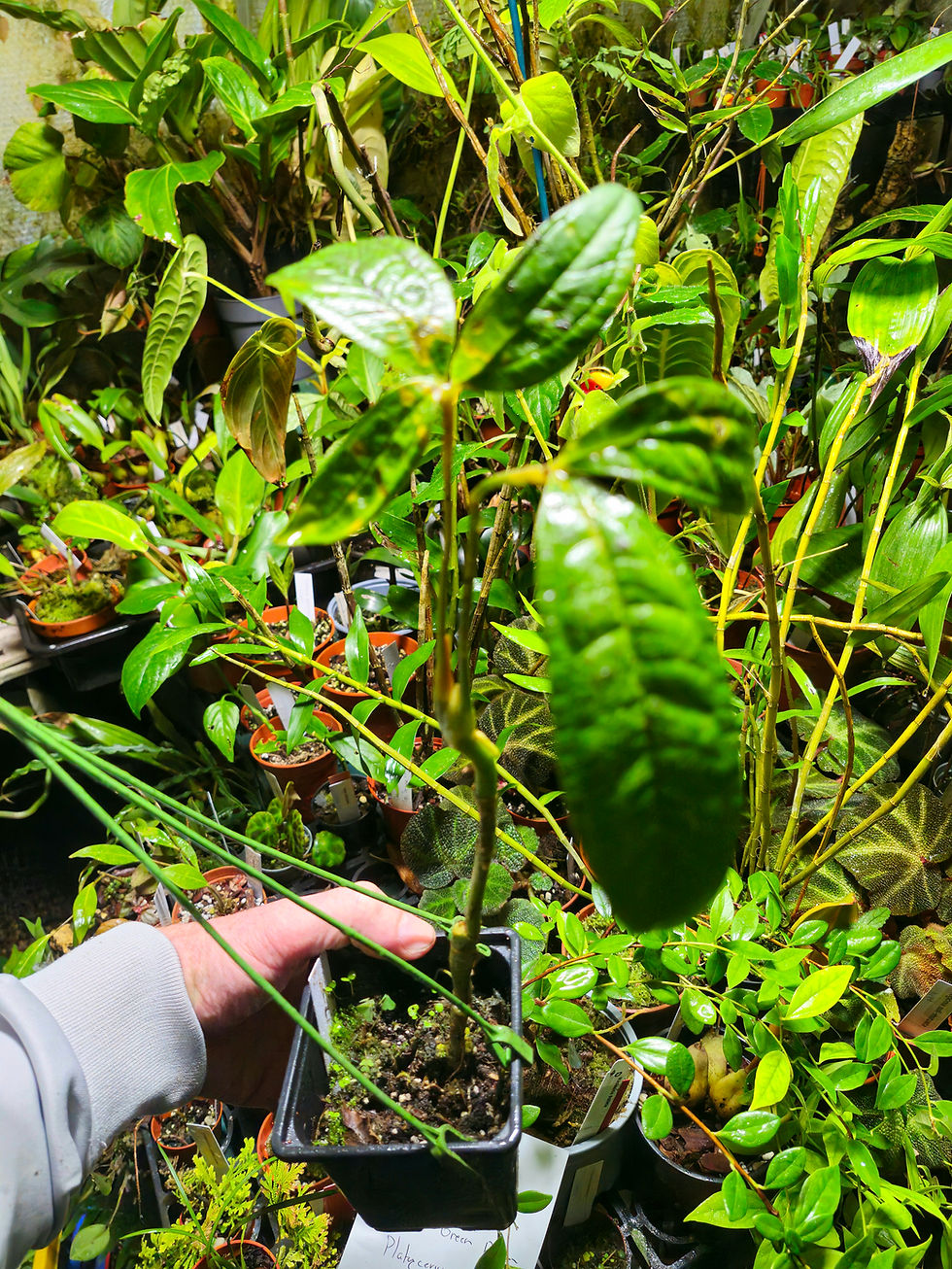
Habitat and Ecology
Hoya manipurensis is a highly unusual epiphytic shrub native to the Himalayan foothills of Northeast India (Manipur) and Myanmar, extending into Southwest China (Yunnan). It grows in humid forests and is found at various altitudes, thriving in the subtropical biome. Historically classified under Dischidia or Micholitzia, its unique morphology has been confirmed by DNA studies to be a Hoya. It grows attached to trees or rock crevices, relying on high air circulation and filtered light.
Description
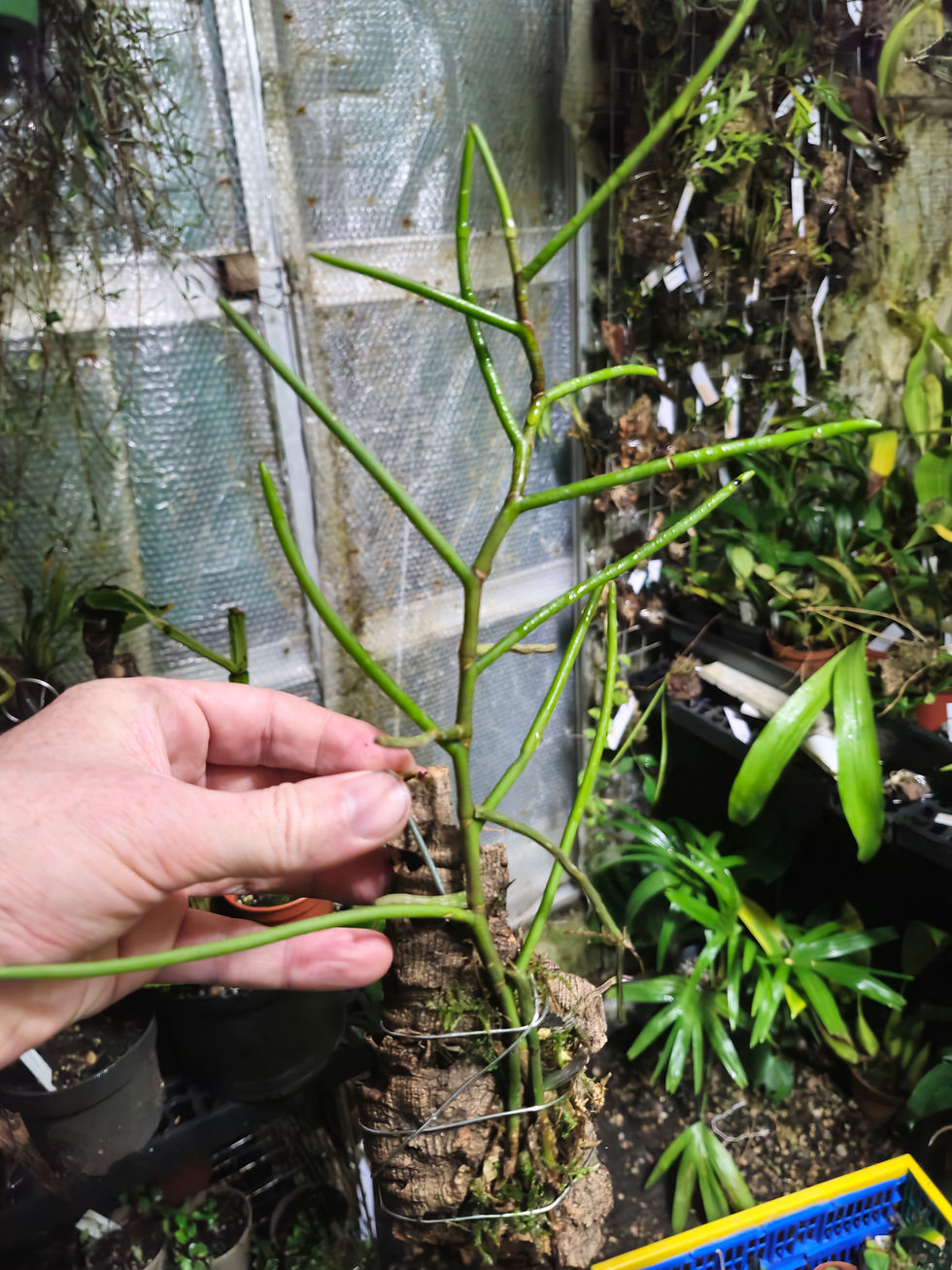
This is an evergreen perennial that adopts a unique shrubby or bushy growth habit with stiff, erect, or ascending stems, rather than the long, trailing vines typical of many Hoya species. The leaves are a primary ornamental feature: they are small, fleshy, and thick, ranging in shape from obtriangular to obcordate (reverse heart-shaped), and are a matte or dark green with a subtle sheen. The flowers are produced in small clusters (umbels) at the nodes, but are morphologically unusual for a Hoya, often resembling Dischidia blooms. They are typically pale yellowish-green to cream, with a slightly pubescent (fuzzy) corolla and a small opening. The flowers are subtly fragrant and produce plentiful, deep orange nectar.
Cultivation
Hoya manipurensis is a desirable collector's plant that requires a warm, humid environment with specific light conditions to flower well. It needs bright, indirect light; ample filtered light is necessary, but protection from strong midday sun is crucial to prevent leaf burn and maintain foliage health. The substrate should be lightweight, very well-aerated, and fast-draining, such as a chunky mix of orchid bark, perlite, and a small amount of coir. Allow the top half of the potting mix to dry out almost completely between waterings, as the leaves are slightly succulent. High humidity (60% or above) is beneficial for growth and blooming.
Optimal Daytime Temperature: 21-28 C (70-82 F)
Minimum Nighttime Temperature: Not below 16 C (61 F); consistency is key.
Feed regularly (monthly during the growing season) with a balanced liquid houseplant fertiliser diluted to half strength. Avoid cutting off spent flower peduncles, as the plant will re-bloom from them.
Unique Features
This Hoya is a taxonomic rarity and a fantastic specimen due to its unusual, non-trailing, shrubby habit and its thick, distinctive triangular or heart-shaped leaves, setting it apart from the common vining Hoya species. Its small, unique, pale green flowers that resemble those of Dischidia make it a point of intrigue for enthusiasts. Its slow, deliberate growth adds to its exclusivity as a prized collector's piece.
Specifications
Plant Size: Established plants that have formed the fishtail leaf look. Please consult the picture for further guidance.
Plant Family: Apocynaceae
Plant Passport: A Hoya manipurensis B 140084 C buyer input number from the plant label D GB