🌏 Habitat and Ecology
Amorphophallus hirsutus is a highly localized, tuberous terrestrial aroid native to the wet tropical biomes of Southeast Asia and the Indian Ocean. Its natural geographic range is remarkably restricted, with populations primarily recorded in West Sumatra, West Java, and the Great Nicobar Island of India. It is a strict denizen of the lowland tropical rainforest understory, where it thrives in deeply shaded, high-humidity environments, growing in rich, decomposing organic leaf litter on the forest floor.
🌿 Description and Distinguishing Features
Prized by advanced aroid collectors for its bizarre, highly specialized inflorescence and architectural, umbrella-like foliage, this species is a true botanical oddity.
Habit & Tuber: It is a seasonally dormant herbaceous plant growing from a subterranean, subglobose (nearly spherical) tuber.
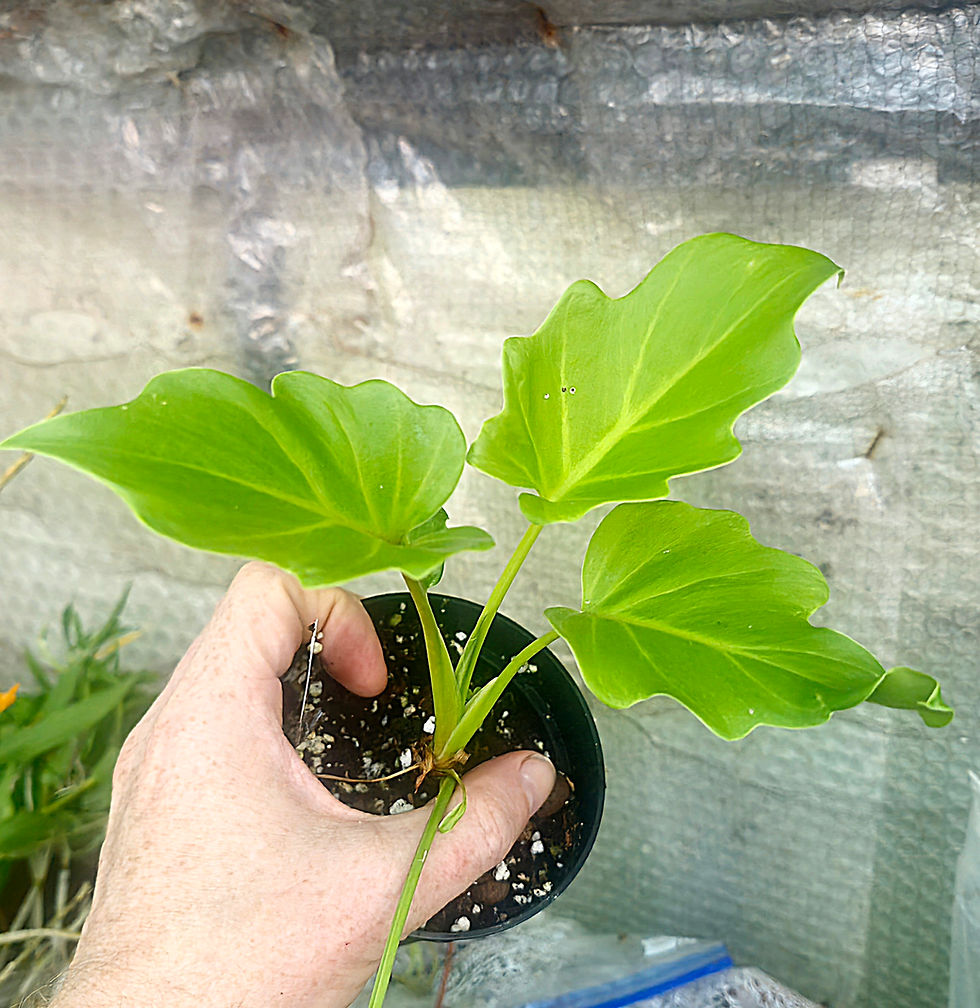
Foliage: During the vegetative phase, the tuber produces a solitary, highly divided, umbrella-like leaf. The petiole (leaf stalk) is intensely patterned, typically dark green heavily mottled with pale green, whitish, or pinkish irregular speckles. The leaf canopy can reach up to 80 to 100 cm tall, consisting of numerous elliptic-lanceolate leaflets.
Flowers: The inflorescence is highly unusual. It produces a campanulate (bell-shaped) spathe that is pale greenish on the outside and rich purplish-maroon on the inside. The most distinguishing feature of this species is its spadix-appendix: unlike most Amorphophallus species where the spadix is smooth, the subglobose apical column of A. hirsutus is covered entirely in stiff, short papillae (hairs).
Scent: During anthesis, the inflorescence emits a pungent odor resembling decaying meat to attract its primary pollinators, which are typically carrion flies.
🔬 Taxonomy and Ethnobotany
Taxonomy
According to Kew Plants of the World Online (POWO), the accepted scientific name for this species is Amorphophallus hirsutus Teijsm. & Binn. (frequently spelled Teysm. & Binn. in older botanical literature). It belongs to the Araceae family, specifically within the section Amorphophallus. The specific epithet hirsutus translates directly to "hairy," referencing the unique, stiff papillae covering the spadix-appendix.
Ethnobotany
There are no recorded traditional medicinal or culinary uses for this specific species, unlike its commercially cultivated relative, Amorphophallus paeoniifolius. It is strictly cultivated globally as an ultra-premium ornamental, highly coveted by rare aroid and botanical oddity collectors in the UK.
💧 Cultivation and Care
As a seasonal, tuberous tropical aroid, this species requires a strict wet/dry cycle mimicking the Southeast Asian monsoon to prevent tuber rot during its natural dormancy.
Light: Requires bright, filtered indirect light or heavy shade. In its natural understory habitat, it is protected from harsh, direct sunlight. Direct midday sun will rapidly bleach and scorch the delicate, divided leaflets.
Substrate & Soil: Demands a highly aerated, fast-draining, organic-rich terrestrial mix. A premium blend of high-quality loam, coarse perlite, horticultural pumice, and chopped sphagnum moss is ideal to allow the tuber to expand without sitting in stagnant water.
Temperature: It is a strict, warm-growing tropical species that absolutely resents cold drafts.
Daytime Range: 25–30°C (77–86°F).
Nighttime Range: 18–22°C (64–72°F). Temperatures dropping below 15°C (59°F) can prematurely trigger dormancy or severely damage an active tuber.
Watering & Dormancy: During the active growing season (when the leaf is present), keep the substrate evenly and consistently moist. Crucial UK Winter Care: In late autumn, the foliage will naturally yellow and collapse as the plant enters dormancy. At this point, stop watering entirely. The tuber must be kept almost completely dry in its pot, stored in a warm location, until the new shoot naturally emerges the following spring.
✨ Unique Features
Amorphophallus hirsutus is an exceptionally rare tuberous aroid featuring heavily mottled petioles and a bizarre, "hairy" spadix.
🏷️ Specifications
Plant Size: our stock plant procured in 2022
Plant Family: Araceae
Plant Passport: A Amorphophallus hirsutus B 140084 C use the number written on the plant label D GB