🌏 Habitat and Ecology
Platycerium coronarium, commonly known as the Crown Staghorn Fern, is a spectacular epiphytic fern native to the maritime and mainland wet tropical biomes of Southeast Asia. Its vast natural range encompasses Myanmar, Thailand, Vietnam, Peninsular Malaysia, Sumatra, Java, Borneo, and the Philippines. It is a dominant denizen of lowland rainforest canopies, typically found growing high up in the crotches of massive old-growth trees, where it thrives in hot, humid conditions and dappled sunlight, perfectly positioned to catch falling organic detritus.
🌿 Description and Distinguishing Features
This monumental fern is prized by specialist tropical plant collectors for its dramatic, highly architectural fronds and its unique method of catching its own nutrients.
Habit: It is a massive, true epiphytic fern. Rather than growing in soil, it anchors itself to the bark of trees, eventually forming a massive, basket-like clump that can weigh several hundred pounds in the wild.
Basal (Shield) Fronds: The sterile shield fronds are tall, thick, and deeply lobed at the upper margins, flaring outward to create a distinctive "crown" (hence the specific epithet coronarium). These specialized fronds are designed to act as a funnel, capturing falling leaves, rainwater, and animal droppings which compost down to feed the fern.
Fertile Fronds: The fertile foliage is highly pendulous and elegantly multi-forked, capable of cascading down several metres from the crown.
Spore Patches: A highly distinguishing feature of this specific species is the specialized, spoon-shaped or kidney-shaped lobe that develops beneath the fertile fronds, exclusively dedicated to bearing the thick, brownish spore patches (sporangia).
🔬 Taxonomy and Ethnobotany
Taxonomy
According to Kew Plants of the World Online (POWO), the accepted scientific name for this species is Platycerium coronarium (J.König ex O.F.Müll.) Desv. It belongs to the Polypodiaceae family. Due to its long history in botanical literature, it has several older homotypic synonyms, most notably Osmunda coronaria J.König ex O.F.Müll.
Ethnobotany
While there are minor historical records of the mashed fronds being used in traditional Southeast Asian medicine to treat enlarged spleens, the plant's overwhelming global value is ornamental. It is considered one of the most magnificent and desirable of all the Platycerium species, serving as a prestige botanical specimen for premium tropical collections.
💧 Cultivation and Care
Unlike standard terrestrial ferns, Platycerium coronarium will rapidly rot if planted in a traditional pot with potting soil. It must be cultivated as an epiphyte.
Light: Requires bright, filtered indirect light or dappled shade. Direct, harsh midday sun will quickly scorch both the delicate pendulous fronds and the protective shield fronds.
Substrate & Soil: Must be mounted to a sturdy wooden board, cork bark plaque, or grown in a slatted wooden basket. The root zone should consist entirely of premium, moisture-retentive New Zealand sphagnum moss. Never bury the crown or plant it in soil.
Temperature: It is a strict, warm-growing ultra-tropical that absolutely resents the cold.
Daytime Range: 24–32°C (75–90°F).
Nighttime Range: 18–22°C (64–72°F). It should never be exposed to temperatures below 15°C (59°F), making it an indoor-only or heated greenhouse plant in the UK.
Watering: Wait until the sphagnum moss feels slightly dry to the touch, then water thoroughly by soaking the entire mount or heavily showering the moss ball. Avoid constantly misting the foliage in stagnant air, as this can encourage fungal spotting. Good air circulation is essential.
✨ Unique Features
Platycerium coronarium (Crown Staghorn Fern) produces a dramatic "crown" of shield fronds and massive, pendulous green foliage. A spectacular, highly architectural mounted epiphyte that sets Orchid Botanics apart as the UK's premier source for rare botanical statement plants.
🏷️ Specifications
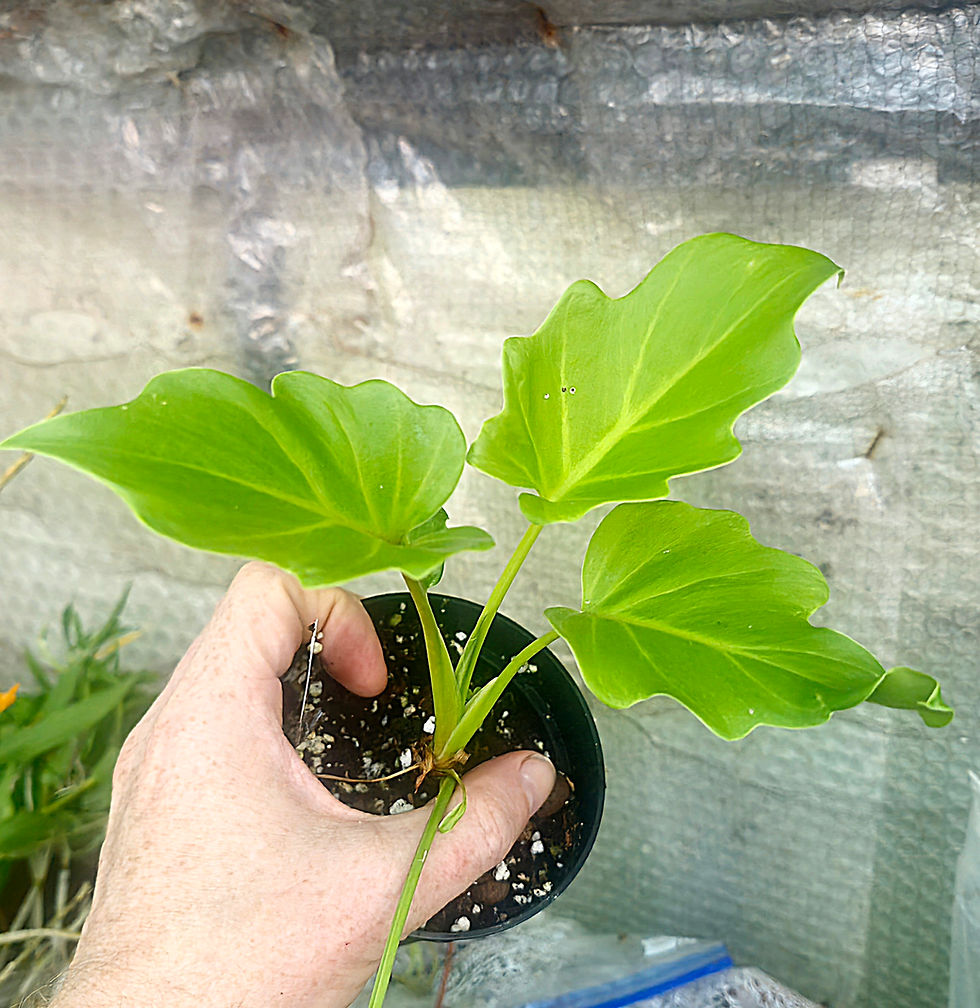
Plant Size: A well sized plant as seen in the image
Plant Family: Polypodiaceae
Plant Passport: A Platycerium coronarium B 140084 C use the number written on the plant label D GB