🏔️ Habitat and Ecology
Coelogyne corymbosa is a high-elevation epiphytic or lithophytic orchid native to the Himalayas and Southeast Asia. Its distribution is extensive, spanning Nepal, Bhutan, Northeast India (Sikkim, Assam), Myanmar, and Southwest China (Yunnan, Tibet).
It is a true cool-growing species, inhabiting wet, mossy montane forests and rhododendron scrub at elevations ranging from 1,400 to 3,500 metres. In these cloud-soaked environments, it is often found covering large branches or mossy rocks, where it experiences cool temperatures year-round and high humidity.
🌸 Description and Distinguishing Features
This orchid is a sympodial, evergreen perennial belonging to the Section Ocellatae, a group of Coelogyne distinguished by the eye-like markings on the flower lip.
Pseudobulbs & Foliage: The plant forms compact clusters of ovoid to obovoid pseudobulbs (2-5 cm tall) that are tightly packed together. Each bulb is topped by a pair of leathery, elliptic-lanceolate leaves (10-18 cm long) that are a glossy dark green.
Flowers: The flowers are borne on erect to semi-arching racemes that emerge from the center of the young growth (heteranthous) in spring to early summer. Each spike carries 2 to 4 large, showy blooms.
Aesthetics: The flowers are approximately 6-7 cm wide and are pristine white. The defining feature is the lip (labellum), which features four bright yellow "eyes" (ocelli) bordered by orange, rust-red, or brown margins. These colourful markings contrast sharply against the snowy white background. The blooms are heavily fragrant, emitting a sweet, honey-like or musk-like scent.
🔬 Taxonomy and Ethnobotany
Taxonomy: The specific epithet corymbosa refers to the flower arrangement, which was originally thought to resemble a corymb (a flat-topped flower cluster), although it is technically a raceme. It is the type species for the Section Ocellatae.
Ethnobotany:
Medicinal Use: In Nepal and Northeast India, the pseudobulbs of Coelogyne corymbosa have traditional medicinal value. A paste made from the crushed pseudobulbs is applied topically to treat burns, wounds, and boils, reportedly aiding in cooling the skin and speeding up healing.
Cultural Significance: In the Sikkim Himalayas, it is a beloved wildflower, often seen adorning roadside trees in the misty higher altitudes, symbolizing the arrival of spring in the mountains.
💧 Cultivation and Care
Coelogyne corymbosa is a rewarding orchid for growers who can provide cool conditions. It struggles in constant heat.
Light: Requires bright, filtered light. It can tolerate higher light levels than many rainforest orchids (similar to Cymbidium levels) provided it is kept cool and moist.
Substrate: Best grown in a shallow pan or basket rather than a deep pot, as it spreads horizontally. Use a medium-grade bark mix with added perlite and moss to retain moisture while ensuring drainage. It thrives when root-bound and left undisturbed.
Watering: Water abundantly during the active growing season (summer), keeping the medium constantly moist.
Winter: Reduce watering slightly, allowing the surface to dry, but do not allow the pseudobulbs to shrivel. Unlike Coelogyne cristata, it does not require a harsh dry rest, just a slight reduction.
Temperature:
Summer: Cool to Intermediate, ideally under 25 C.
Winter: Cool. It prefers night temperatures of 6-10 C (43-50 F). It can tolerate temperatures close to freezing (1-2 C) for short periods if dry.
Humidity: High humidity (70-85%) is crucial year-round, accompanied by strong air movement to prevent spotting on the white flowers.
✨ Unique Features
The "Four Eyes" on the lip are the plant's signature. The specific combination of bright yellow surrounded by rusty-orange on a pure white canvas is evolved to guide pollinators (likely bees) into the flower. Its cold tolerance and powerful fragrance make it an elite species for cool greenhouses or conservatories where tropical orchids might fail.
🏷️ Specifications
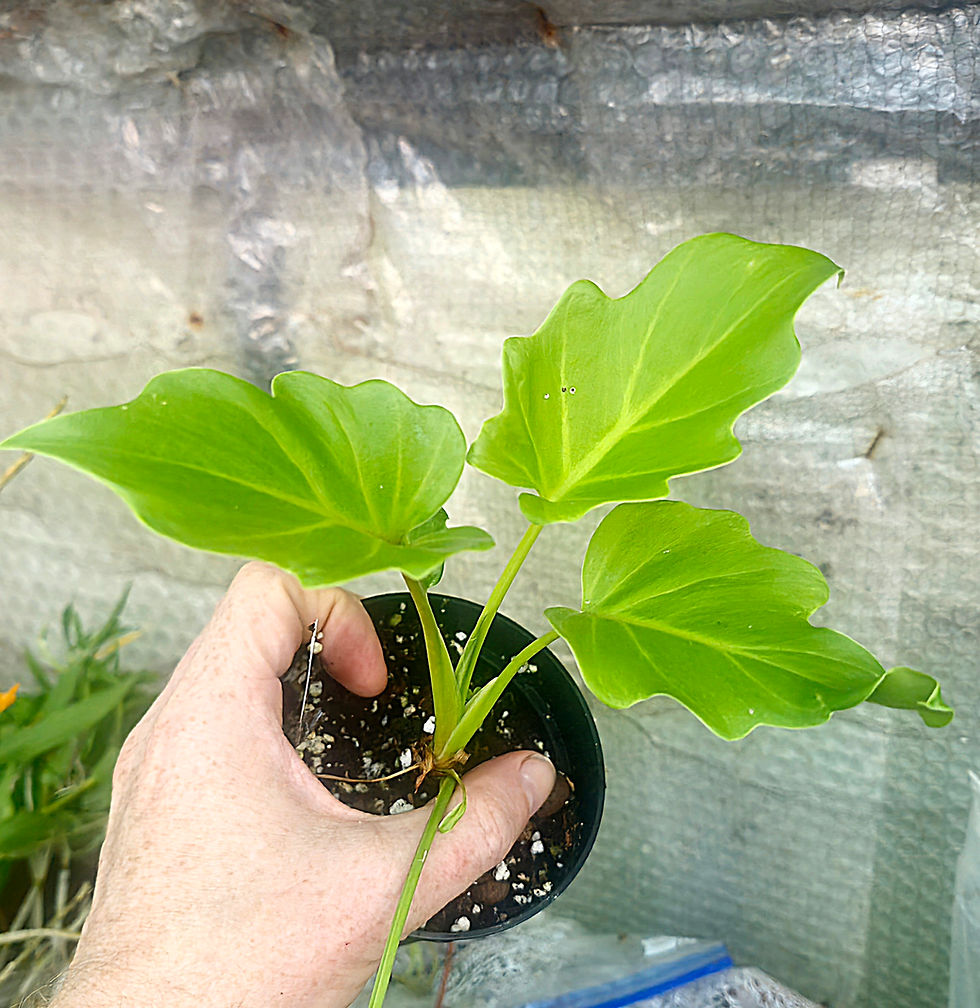
Plant Size: maturing plants in pots not yet flowering size. As seen in the picture.
Plant Family: Orchidaceae
Plant Passport: A Coelogyne corymbosa B 140084 C [buyer to use number of the plant label] D GB