🌏 Habitat and Ecology
Coelogyne barbata, widely known as the Bearded Coelogyne, is a spectacular epiphytic and occasionally lithophytic orchid native to the mountainous regions of the Himalayas, Nepal, Bhutan, northeastern India, Myanmar, and southwestern China (Sichuan, Yunnan, and Tibet). It is a highly adaptable denizen of montane cloud forests and mixed broadleaf evergreen forests. Thriving at elevations ranging from 1000 up to 2800 metres, it is perfectly adapted to environments that experience heavy, monsoon-driven summer rains followed by cooler, drier winter periods.
🌿 Description and Distinguishing Features
This medium-to-large sized orchid is highly coveted by specialist collectors for its crisp, elegant blooms and uniquely textured, contrasting lip.
Habit & Pseudobulbs: It grows as a robust, clumping epiphyte. The pseudobulbs are clustered, ovoid to somewhat pear-shaped (pyriform), and pale green, often becoming slightly wrinkled as they mature.
Foliage: Each mature pseudobulb produces two apical leaves. The foliage is distinctly plicate (pleated), heavily veined, lanceolate, and leathery, reaching up to 30 cm in length.
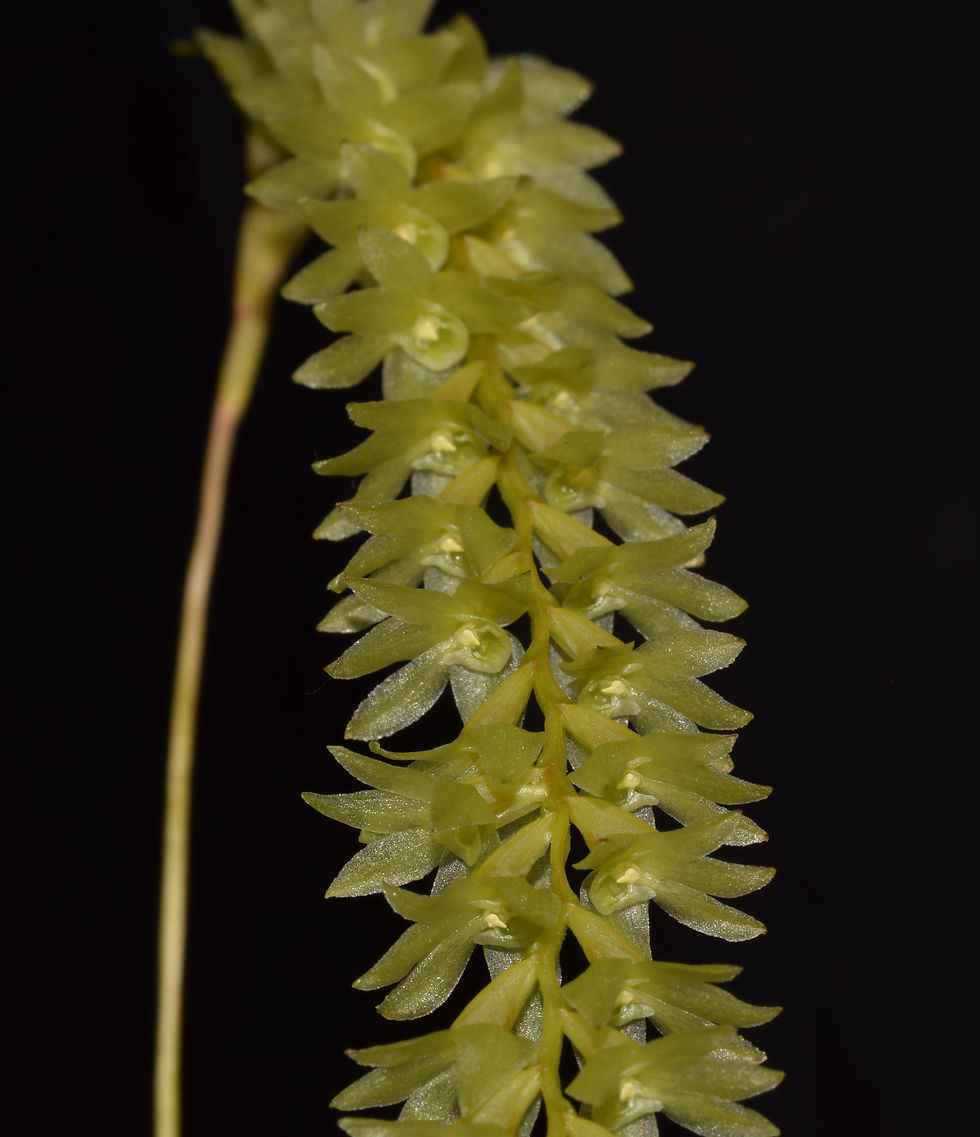
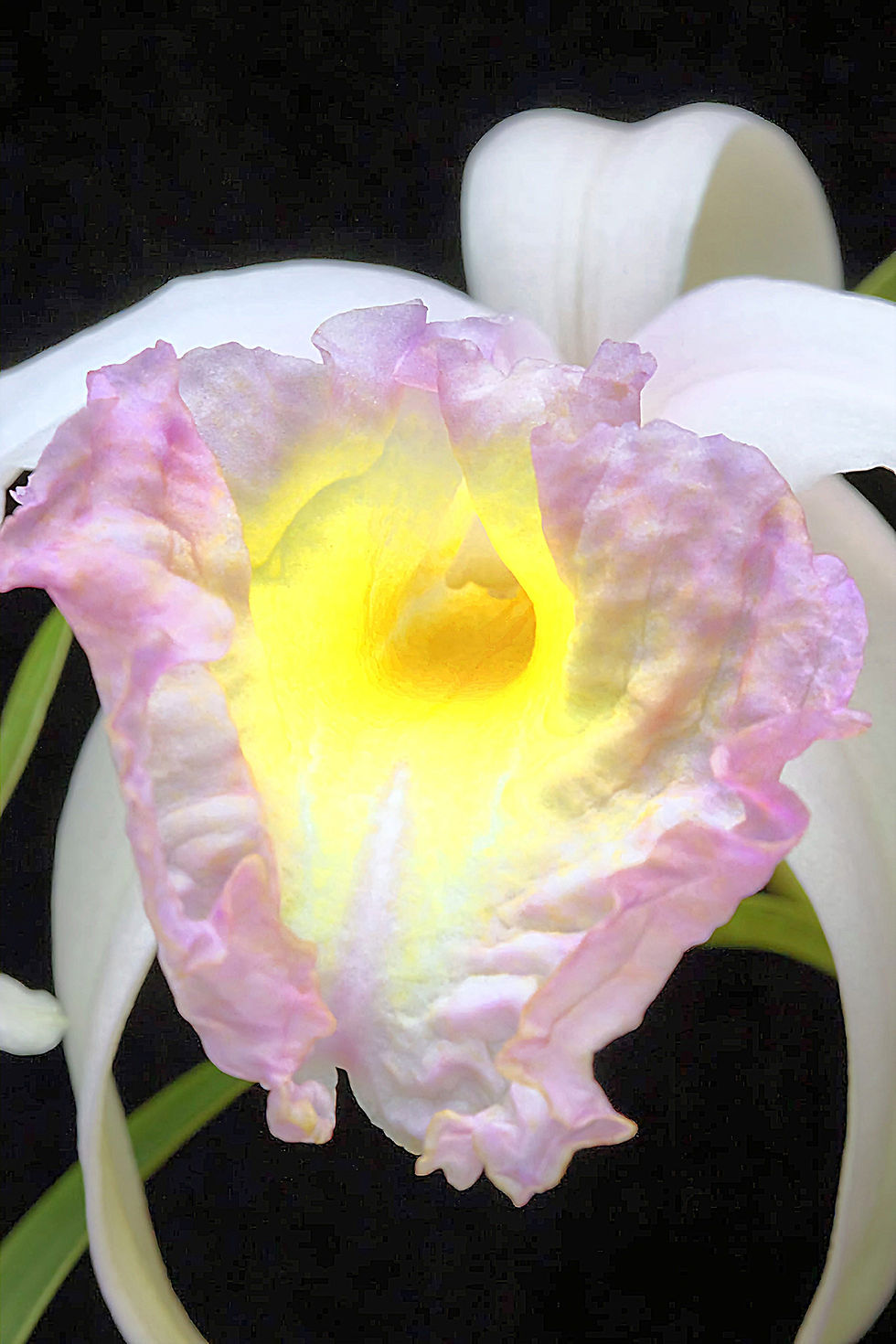
Flowers: Blooming in late autumn to winter, it produces an erect to gracefully arching inflorescence carrying up to 10 or more successive flowers. The sepals and petals are a pure, crystalline white. The standout feature—and the source of its name—is the labellum (lip), which is intricately marked with dark brown to nearly blackish fimbriate (fringed) hairs, creating the appearance of a dark, shaggy "beard" against the pristine white petals.
Scent: The flowers emit a distinct, musky, and somewhat sweet fragrance, particularly noticeable during the warmer parts of the day.
🔬 Taxonomy and Ethnobotany
Taxonomy
According to Kew Plants of the World Online (POWO), the accepted scientific name for this species is Coelogyne barbata Griff. It belongs to the Orchidaceae family within the Coelogyninae subtribe. It was formally described by the British botanist William Griffith in the 19th century.
Ethnobotany
There are no major recorded traditional medicinal uses for this specific species. It is strictly cultivated as a highly desirable, prestige ornamental orchid. It holds significant historical value as one of the classic Himalayan species grown in traditional European winter conservatories.
💧 Cultivation and Care
Because of its Himalayan origins, Coelogyne barbata requires a distinct seasonal shift in watering to mimic the natural monsoon cycle and trigger abundant winter blooming.
Light: Requires bright, filtered indirect light or partial shade. Protect from harsh, direct midday sun which will yellow and scorch the pleated foliage.
Substrate & Soil: Demands a highly aerated, well-draining epiphytic mix. A premium blend of medium-grade orchid bark, coarse perlite, and a small fraction of chopped sphagnum moss is ideal. It performs beautifully in a well-ventilated pot or a wooden slatted basket to accommodate its spreading rhizome.
Temperature: It is a cool-to-intermediate montane grower that appreciates a distinct drop in nighttime temperatures.
Daytime Range: 18–25°C (64–77°F).
Nighttime Range: 10–15°C (50–59°F). Cooler winter nights are essential for initiating the flower spikes.
Watering & Dormancy: During the active spring and summer growing season, water heavily and frequently, keeping the medium consistently moist but never soggy. Crucial Winter Care: In late autumn and winter, as growth slows, significantly reduce watering. Allow the potting mix to dry out moderately between light waterings, but never let the pseudobulbs shrivel severely. Maintain high ambient humidity (70%+) year-round.
🏷️ Specifications
Plant Size: as pictured
Plant Family: Orchidaceae
Plant Passport: A Coelogyne barbata B 140084 C use the number written on the plant label D GB