🌏 Habitat and Ecology
Cuitlauzina pulchella, affectionately known as "The Beautiful Cuitlauzina," is an elegant epiphytic orchid native to the high-altitude cloud forests of Mexico (primarily in the southern state of Chiapas), Guatemala, El Salvador, Honduras, Nicaragua, and Costa Rica. It is a cool- to cold-growing mountain dweller, typically found at elevations ranging from 1200 to 2600 metres. In the wild, it grows as an epiphyte in open, damp pine-oak forests, where it experiences a distinct climate: wet, humid summers followed by a cooler, significantly drier winter season.
🌿 Description and Distinguishing Features
This medium-sized species is highly admired for its pristine, crystalline-textured winter blooms and compact, glossy foliage.
Habit & Pseudobulbs: It grows as a clump-forming epiphyte. The pseudobulbs are clustered, strongly compressed (flattened), ovoid to ovoid-ellipsoid, and reach up to 10 cm long. They have a smooth, attractive sheen.
Foliage: Each mature pseudobulb produces 2 to 3 apical, thin but leathery, linear-ligulate, and erect-spreading leaves that can grow up to 36 cm long.
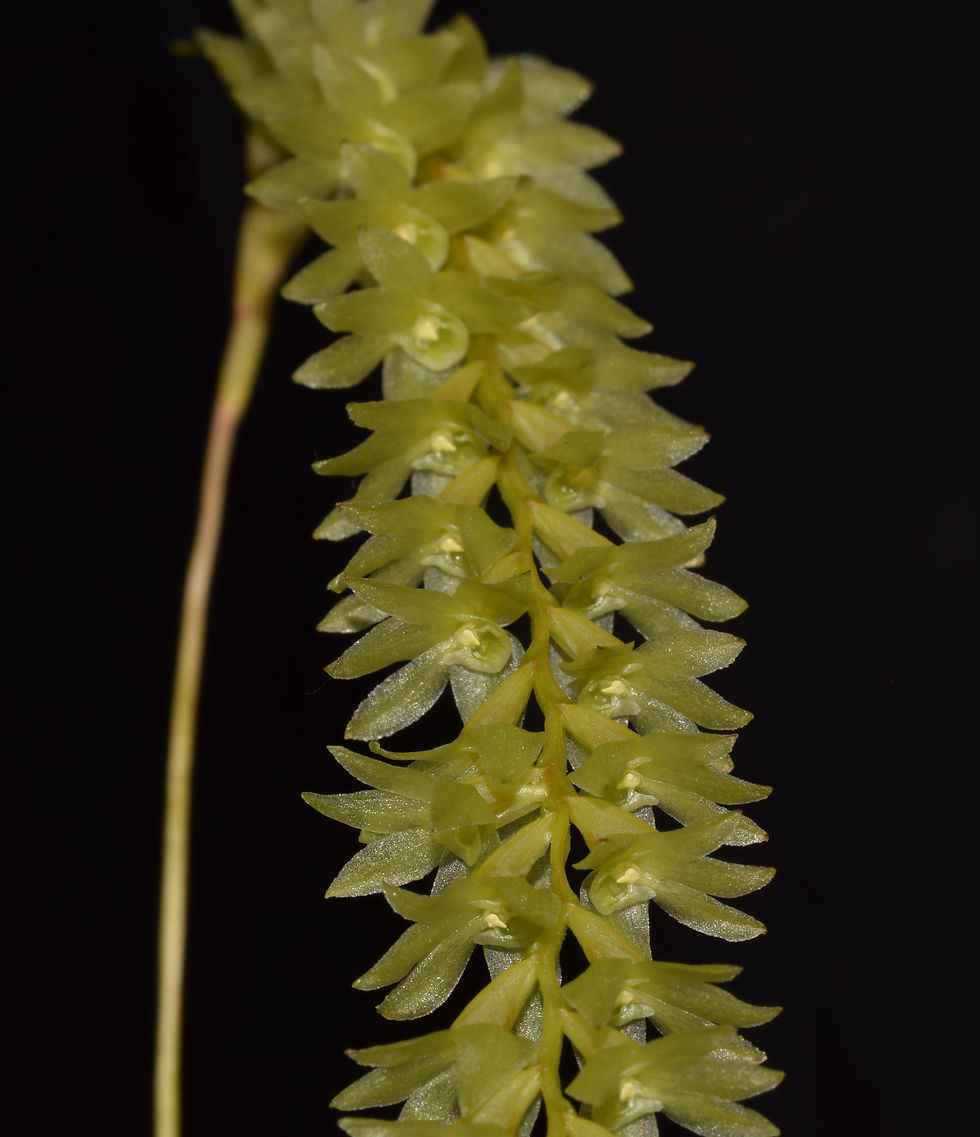
Flowers: Blooming from autumn through winter, it produces erect to gracefully arching, thin inflorescences (12 to 50 cm long) carrying 4 to 10 intensely fragrant, long-lasting flowers.
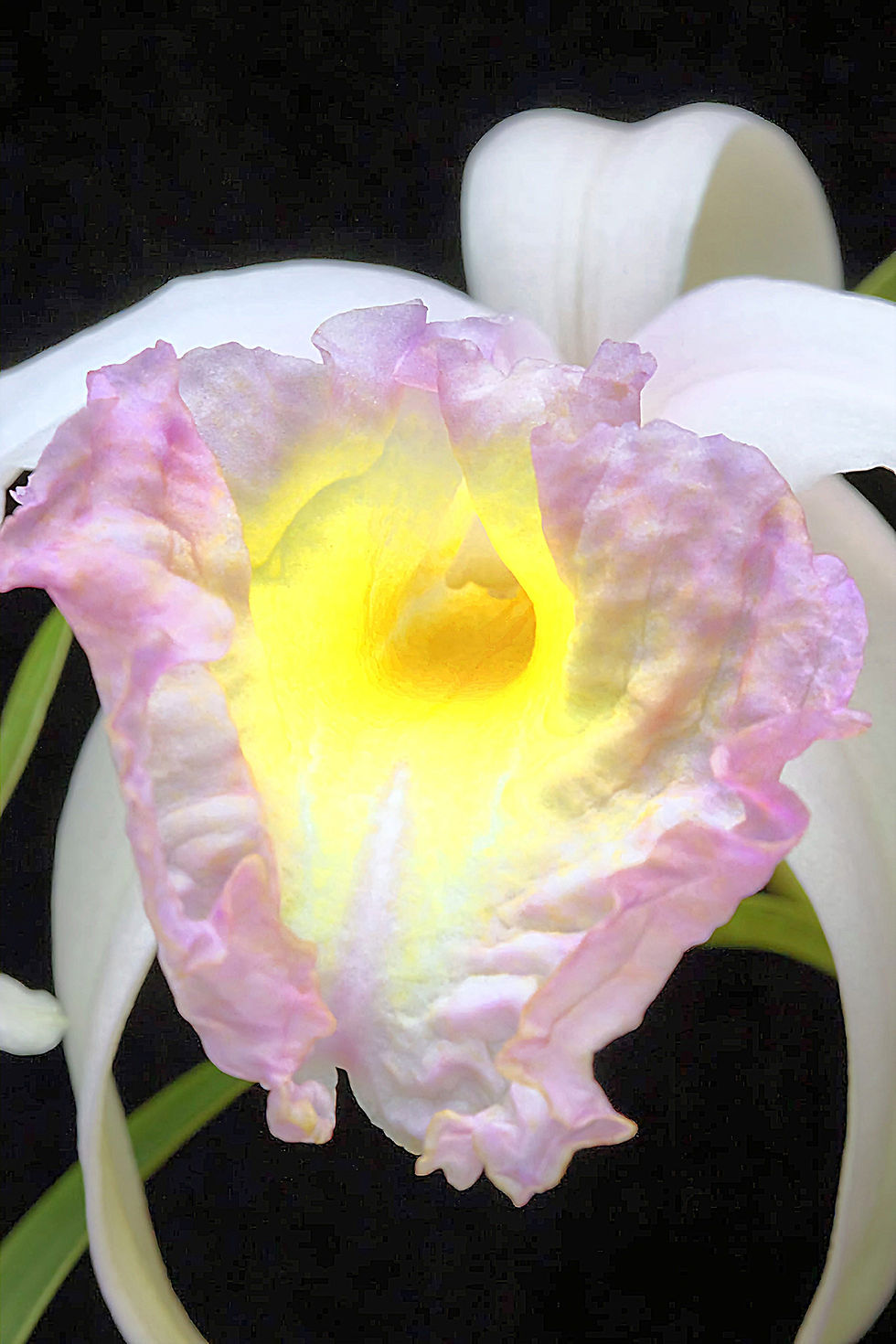
The "Upside-Down" Blooms: Unlike many orchids, the blooms are non-resupinate (meaning they present "upside-down," with the lip pointing upwards). The flowers are roughly 3 to 4 cm across and are a pure, glistening white. The defining feature is the upward-pointing lip, which is adorned with a fleshy, bright yellow callus marked with dark red-maroon spots at the base.
🔬 Taxonomy and Ethnobotany
Taxonomy
According to Kew Plants of the World Online (POWO), the accepted scientific name for this species is Cuitlauzina pulchella (Bateman ex Lindl.) Dressler & N.H.Williams. It belongs to the family Orchidaceae, subtribe Oncidiinae.
This species has a rich taxonomic history and was previously well-known in collections under the synonyms Odontoglossum pulchellum and Osmoglossum pulchellum before modern molecular analysis placed it definitively in Cuitlauzina in 2003.
Ethnobotany
There are no major traditional or medicinal uses recorded for this species. It is cultivated purely as a highly prized, classic collector's orchid, heavily favored for its intense, sweet fragrance and compact display.
💧 Cultivation and Care
Because of its high-altitude montane origins, Cuitlauzina pulchella requires cool-to-intermediate growing conditions and a distinct winter rest period to trigger a reliable bloom cycle.
Light: Requires bright, filtered indirect light. It thrives in high-light conditions but must be protected from direct, harsh midday summer sun to prevent leaf scorch.
Substrate & Soil: Demands a highly aerated, fast-draining epiphytic medium. A premium blend of fine-grade orchid bark and coarse perlite in a small pot or basket is ideal. Mounting on cork is also successful if high humidity can be consistently maintained.
Temperature: It is a strict cool-to-intermediate grower.
Daytime Range: 19–24°C (66–75°F).
Nighttime Range: 9–14°C (48–57°F). It benefits greatly from a moderate drop in night temperatures and a cooler winter period to encourage the initiation of flower spikes.
Watering & Dormancy: High ambient humidity (65% to 80%) is required year-round along with good air circulation.
Spring & Summer: During the active growing season, water abundantly and frequently, keeping the potting medium evenly moist but never soggy. Apply a balanced orchid fertilizer weakly during this active growth phase.
Winter Rest: Once the new pseudobulbs fully mature in autumn, gradually and significantly reduce watering. Keep the plant cool and allow the substrate to dry out moderately between light waterings, providing only enough moisture to keep the shiny pseudobulbs from shriveling. Resume normal watering in spring once new growths appear.
🏷️ Specifications
Plant Size: as pictured. This is our stock plant.
Plant Family: Orchidaceae
Plant Passport: A Cuitlauzina pulchella B 140084 C use the number written on the plant label D GB