🌏 Habitat and Ecology
Monolena primulifera is a rare, highly specialized rhizomatous herb native to the wet tropical biomes of Central America, primarily recorded across Panama and Costa Rica. It is a strict denizen of the deep, shaded understory of lowland and premontane wet forests. Thriving at elevations ranging from near sea level up to 1200 metres, it is perfectly adapted to environments with extremely high, consistent humidity, low light, and rich, organic, humus-heavy soils.
🌿 Description and Distinguishing Features
This elegant member of the Melastomataceae family is prized by advanced terrarium enthusiasts and botanical collectors for its uniquely structured, "primrose-like" foliage and charming, long-lived inflorescences.
Habit & Rhizome: It is a low-growing, rhizomatous perennial herb. It possesses a short, thickened rhizome that creeps along the surface of the soil or the mossy base of trees, from which its leaves and flower stalks emerge.
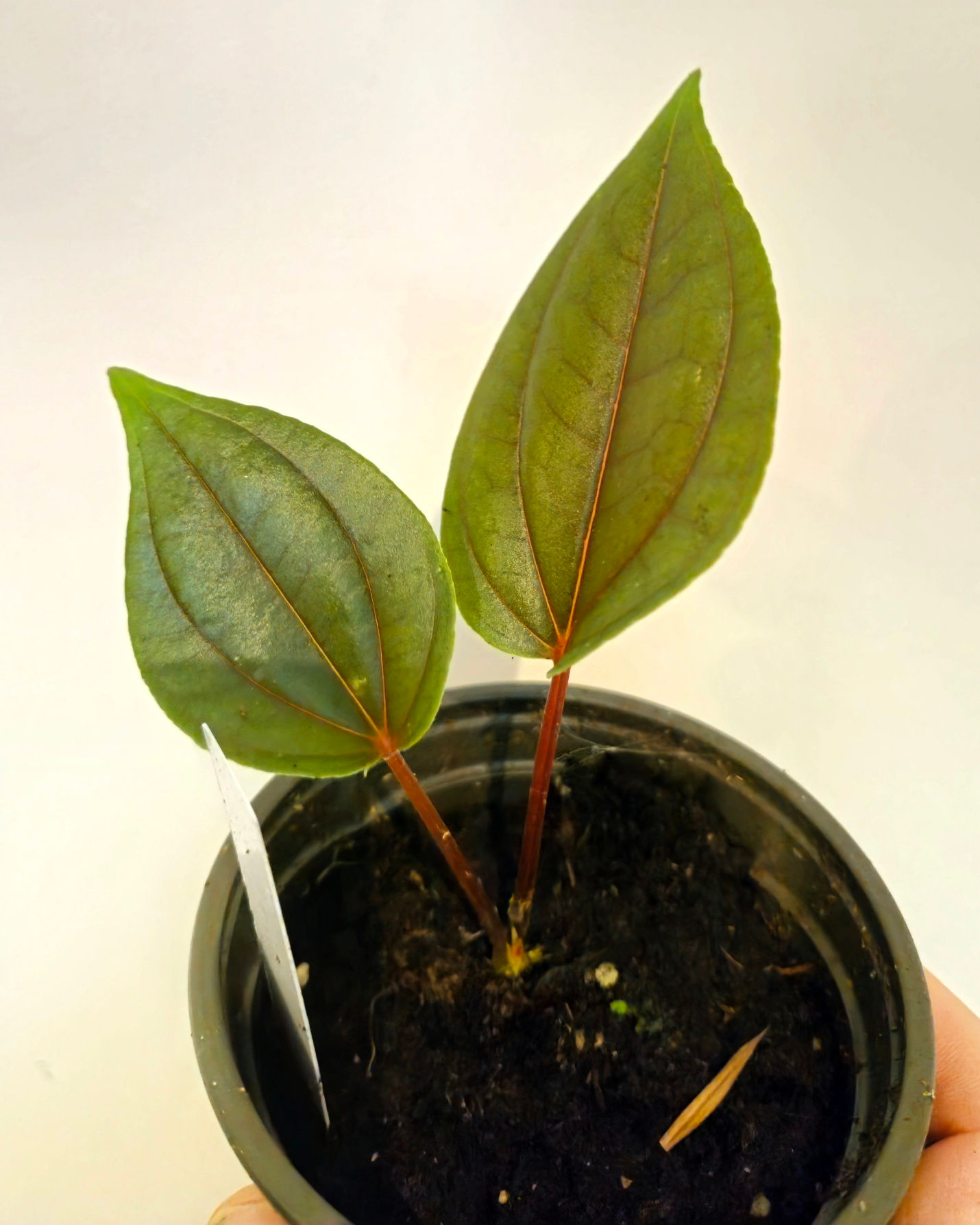
Foliage: The leaves are large, long-petiolate, and display the characteristic acrodromous venation (prominent longitudinal veins) of the Melastome family. The foliage is broadly elliptic, thin-textured, and ranges from mid to deep green, often featuring a subtle, velvety surface texture.
Flowers: The specific epithet primulifera translates to "primrose-bearing," referencing the arrangement and appearance of its inflorescence. It produces long, slender scapes (flower stalks) that rise above the foliage, carrying clusters of delicate, star-shaped flowers with distinct, bright yellow stamens that provide a sharp, beautiful contrast to the petals.
🔬 Taxonomy and Ethnobotany
Taxonomy
According to Kew Plants of the World Online (POWO), the accepted scientific name for this species is Monolena primulifera Hook.f. It belongs to the Melastomataceae family, within the tribe Bertolonieae. It was formally described in 1871 by the renowned British botanist Sir Joseph Dalton Hooker.
Ethnobotany
There are no recorded traditional medicinal or culinary uses for this localized Central American endemic. It is cultivated strictly as an ultra-premium ornamental, highly valued by specialist growers for its grace and its ability to thrive in the high-humidity, low-light conditions of an enclosed terrarium.
💧 Cultivation and Care
Because it is a deep understory tropical endemic, Monolena primulifera is an ideal candidate for closed or semi-closed environments where humidity can be strictly controlled.
Light: Requires deep, dappled shade or low-to-medium filtered light. Direct, harsh midday sun must be avoided entirely, as the delicate, thin-textured leaves will rapidly bleach, scorch, and collapse.
Substrate & Soil: Demands a loose, highly organic, and moisture-retentive substrate. A premium blend of fine-grade coco coir or peat, coarse perlite, chopped sphagnum moss, and a small amount of charcoal is ideal for maintaining the necessary acidic, moist environment without becoming stagnant.
Temperature: It is a warm-growing tropical species that resents cold drafts and significant temperature fluctuations.
Daytime Range: 22–28°C (72–82°F).
Nighttime Range: 18–21°C (64–70°F). Temperatures dropping below 15°C (59°F) can cause rapid stress and dieback.
Watering & Humidity: High ambient humidity (75% to 90%) is absolutely critical. Keep the potting medium evenly and consistently damp using pure rainwater or reverse osmosis (RO) water. Never allow the soil to dry out completely, but ensure it never sits in waterlogged, stagnant conditions.
🏷️ Specifications
Plant Size: as pictured
Plant Family: Melastomataceae
Plant Passport: A Monolena primulifera B 140084 C use the number written on the plant label D GB