🌏 Habitat and Ecology
Dendrochilum niveum is an enchanting, small-statured epiphytic orchid endemic to the Philippines, with specific wild populations recorded on the island of Luzon. It is a montane specialist, typically found growing on mossy tree trunks at elevations of approximately 1,000 metres. Surrounded by high cloud cover and dense mossy vegetation, it thrives in a highly humid, intermediate-growing environment with constant air movement and cool, damp breezes.
🌿 Description and Distinguishing Features
Known in collections as the "White Dendrochilum," this compact species is highly sought after by miniature orchid enthusiasts for its tidy, grass-like growth habit and spectacular flowering displays.
Habit & Pseudobulbs: It forms incredibly dense, neat clumps. The pseudobulbs are small, oval to egg-shaped, and tightly packed on a short-creeping rhizome.
Foliage: Each mature pseudobulb produces a solitary, apical leaf. The foliage is elegantly erect-arching, lanceolate to narrowly oblong, and soft-textured.
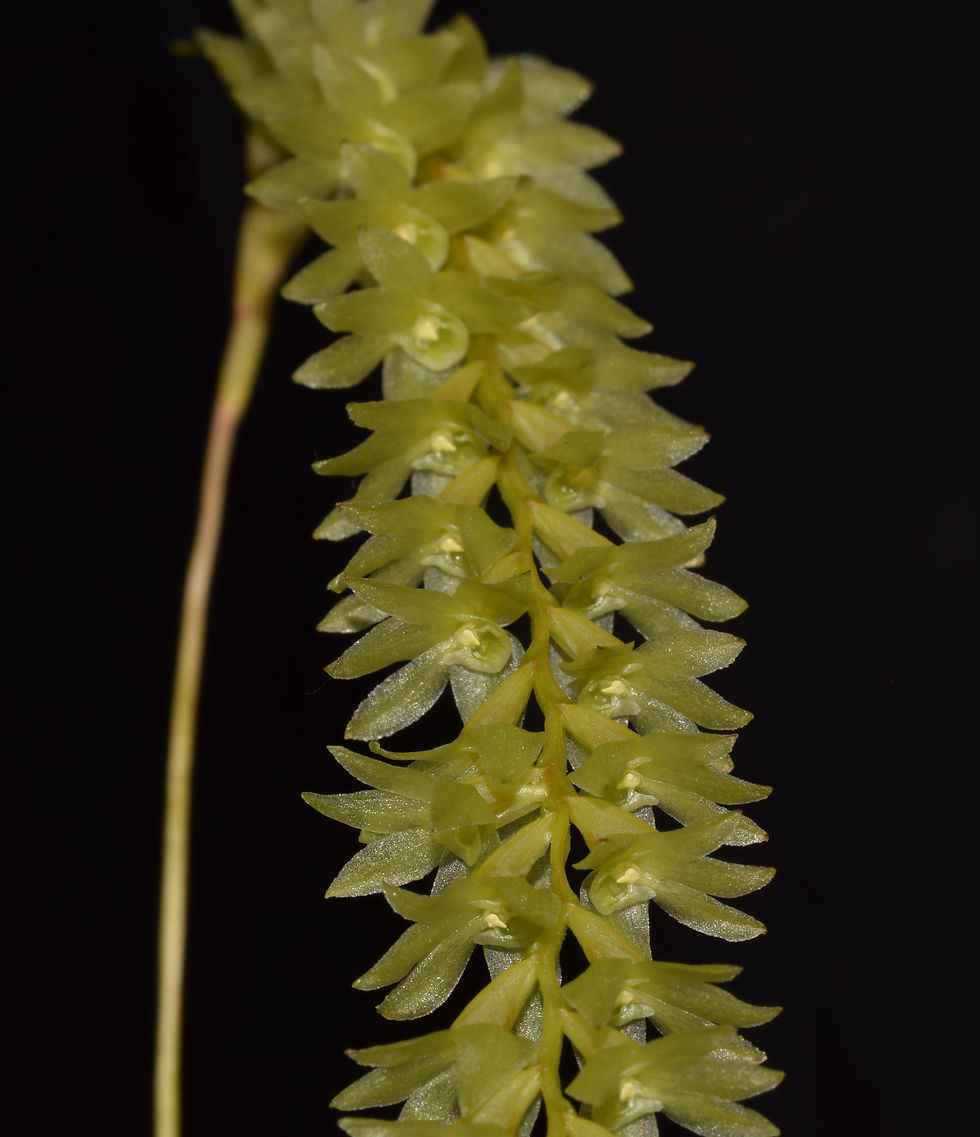
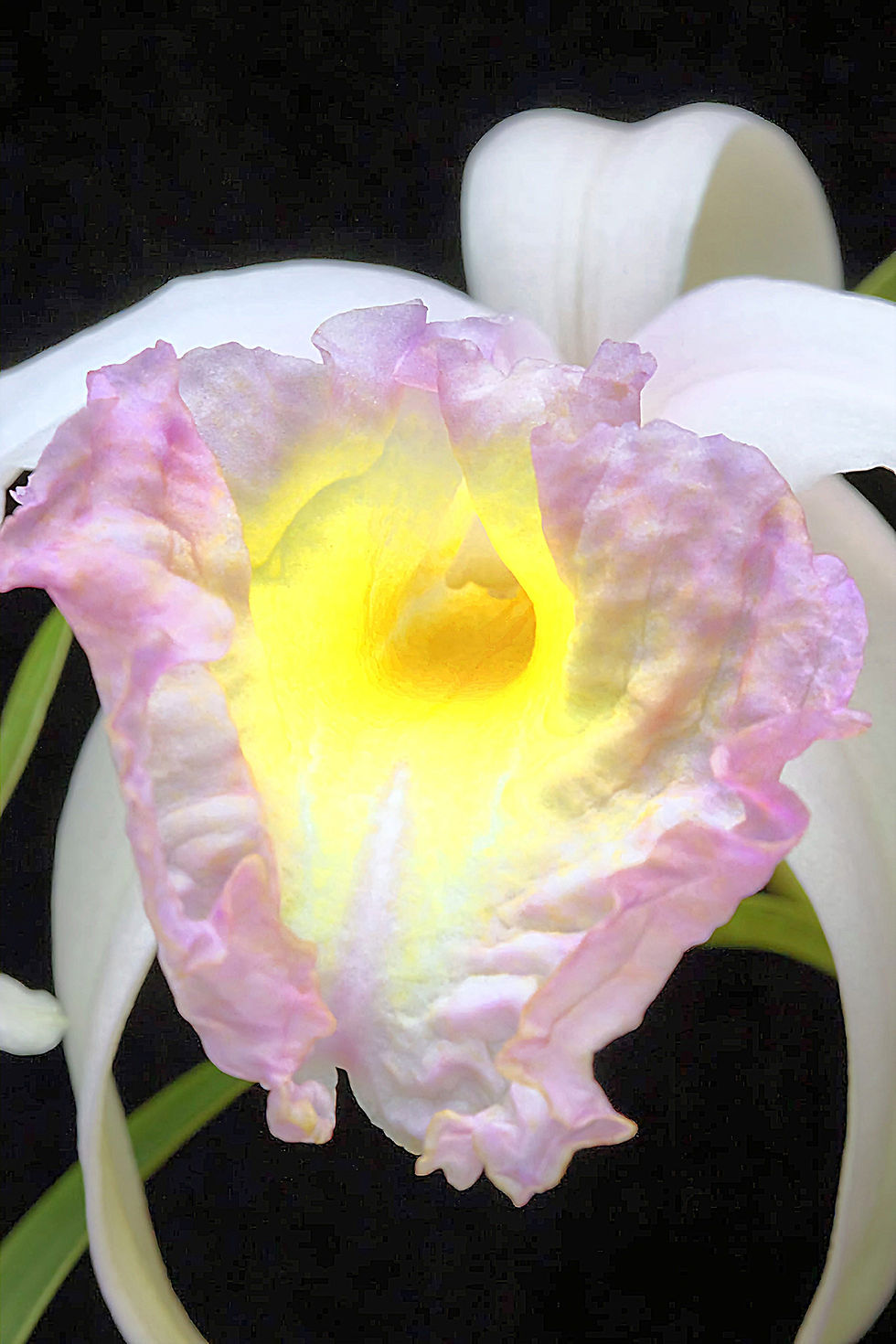
Flowers: Blooming primarily from late winter into early spring, it produces numerous, gracefully arching, pendant racemes that arise from the center of the newly developing leaves. The spikes carry a dense, chain-like arrangement of miniature, star-shaped, pristine white flowers that hover like a cloud above the foliage.
Scent: The flowers are highly fragrant, releasing a warm, spicy, and distinctly sweet scent during the day.
🔬 Taxonomy and Ethnobotany
Taxonomy
According to Kew Plants of the World Online (POWO), the accepted scientific name for this species is Dendrochilum niveum Ames (though molecular reclassifications have technically placed it as a synonym of Coelogyne nivea (Ames) M.W.Chase & Schuit. following broad generic updates). First formally described in 1920 by the American orchidologist Oakes Ames, it is classified within the Subgenus Platyclinis. The specific epithet niveum translates directly to "snow-white," referencing its pristine, crystalline blooms.
Ethnobotany
There are no recorded traditional medicinal uses for this localized orchid. It is cultivated globally as a premium ornamental collector's item.
💧 Cultivation and Care
Like most members of the genus, Dendrochilum niveum has a very fine, fibrous root system that is highly sensitive to both prolonged dry spells and stagnant, soggy conditions.
Light: Requires medium, bright filtered indirect light (roughly 22,000 lux). Strong, direct midday sun must be avoided, as it will rapidly bleach and yellow its delicate, narrow foliage.
Substrate & Soil: Demands a highly aerated, fast-draining, yet moisture-retentive potting medium. A premium, fine-grade mix of orchid bark, coarse perlite, and a generous amount of New Zealand sphagnum moss works beautifully. Due to its hanging, cascading inflorescences, it is also a sensational candidate for mounting on cork slabs or tree fern plaques with a moisture-retaining moss pad.
Temperature: It is an intermediate-to-warm grower that adapts exceptionally well to domestic and greenhouse conditions.
Daytime Range: 20–26°C (68–79°F).
Nighttime Range: 15–18°C (59–64°F). It benefits from a slight, gentle nightly drop in temperatures to encourage active growth.
Watering & Humidity: High ambient humidity (65% to 80%) along with constant air movement is critical to prevent foliar spotting. Water regularly, ensuring the fine roots never dry out bone-dry, but allow the potting substrate to become slightly airy before watering again. Always use pure rainwater or reverse osmosis (RO) water to prevent mineral burn on its delicate root tips.
🏷️ Specifications
Plant Size: As pictured.
Plant Family: Orchidaceae
Plant Passport: A Dendrochilum niveum B 140084 C use the number written on the plant label D GB