🌏 Habitat and Ecology
Coelogyne sparsa is a delightful miniature-to-small epiphytic orchid endemic to the Philippines. It is primarily found on the islands of Luzon (with historic records on Mount Mariveles in Bataan and the mountain province of Benguet), Mindoro, Negros, Panay, and Mindanao.
Thriving in trees within wet, lower montane forest environments at elevations ranging from 900 to 1100 metres, it is perfectly adapted to intermediate-to-warm tropical conditions. In its native habitats, it enjoys constant air movement, high ambient humidity, and regular moisture carried by tropical breezes and rain showers.
🌿 Description and Distinguishing Features
Highly prized by collectors of miniature orchids and terrarium hobbyists, this compact species is loved for its abundance of pristine, fragrant blooms and cooperative growth habit.
Habit & Pseudobulbs: It is a compact, sympodial epiphyte. The clustered pseudobulbs are obovoid to narrowly obovoid, often distinctly curved or pear-shaped. As they age, they develop clean, attractive longitudinal grooves, forming dense, tidy clumps.
Foliage: Each mature pseudobulb produces two apical, oblong-lanceolate leaves. The foliage is thin but leathery, acute at the tip, and narrows gradually at the base into a short petiole.
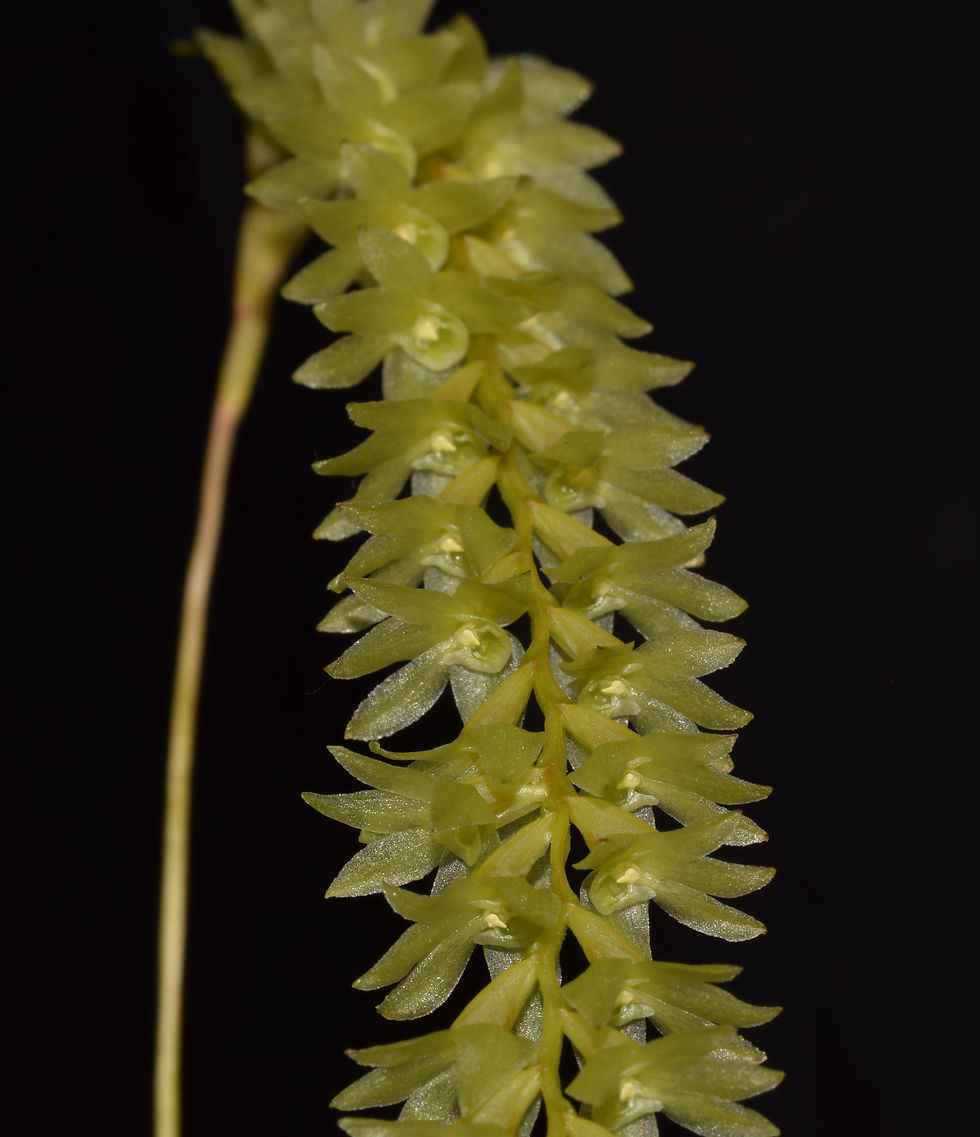
Flowers: Blooming from winter through spring (and occasionally into summer), it produces short, arching inflorescences that emerge from the base of the maturing pseudobulbs. The specific epithet sparsa translates to "sparse" or "scattered", referencing the airy, widely spaced arrangement of the flowers along the zig-zagging rachis.
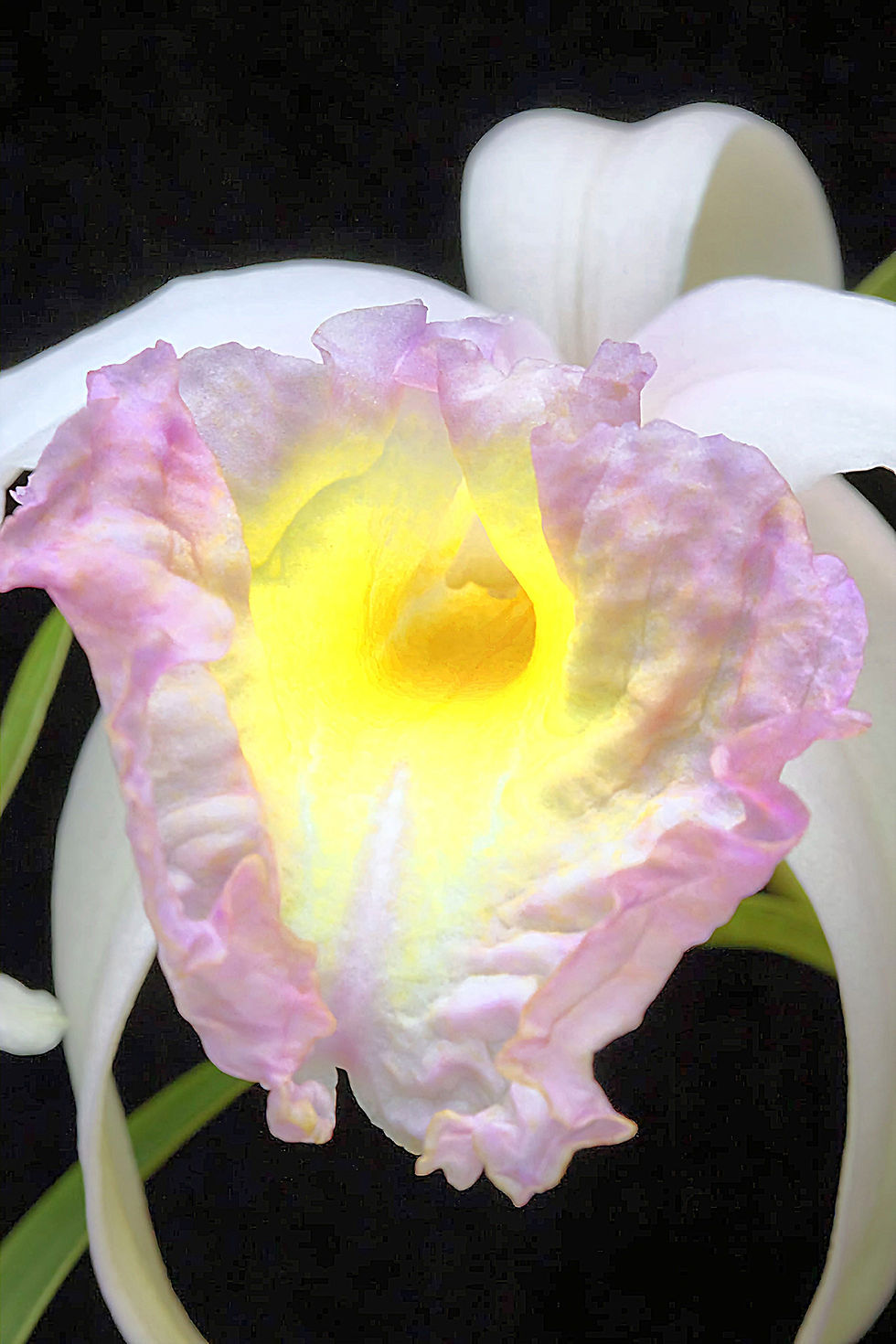
Floral Details & Scent: Each inflorescence carries up to 4 to 6 long-lasting, crystalline flowers, which span roughly 3.5 cm across. The sepals and petals are a beautiful, clean white to pale cream. The three-lobed lip (labellum) is intricately marked with golden-yellow, brown, and ochre lines and features three distinct wavy keels on the disc. The blooms emit a sweet, pleasant, and delicate fragrance.
🔬 Taxonomy and Ethnobotany
Taxonomy
According to Kew Plants of the World Online (POWO), the accepted scientific name for this species is Coelogyne sparsa Rchb.f. It belongs to the Orchidaceae family and is placed within the Section Lentiginosae. It was first formally described in 1883 by the eminent German orchidologist Heinrich Gustav Reichenbach.
Ethnobotany
There are no recorded traditional medicinal or economic uses for this Philippine endemic. It is grown strictly as an elite, premium miniature ornamental orchid, highly valued by specialist growers for its compact size, relative ease of culture, and beautiful fragrant displays.
💧 Cultivation and Care
Because it is a lower-montane epiphyte, Coelogyne sparsa is exceptionally rewarding to grow, tolerating warmer conditions than high-altitude cloud forest species while still benefiting from standard intermediate care.
Light: Requires bright, filtered indirect light. Gentle morning sun is highly tolerated, but harsh, direct midday summer sun will quickly yellow and scorch the delicate, thin foliage.
Substrate & Soil: Thrives in a highly aerated, fast-draining epiphytic potting medium. A premium blend of fine-to-medium grade orchid bark, coarse perlite, and a small fraction of high-quality New Zealand sphagnum moss is ideal. Because of its compact and clumping nature, it is an excellent candidate for mounting on cork slabs or tree fern plaques with a small pad of sphagnum moss at the roots.
Temperature: Easily managed in intermediate-to-warm domestic or greenhouse environments.
Daytime Range: 20–28°C (68–82°F).
Nighttime Range: 15–18°C (59–64°F). A minor drop in temperature at night is beneficial to stimulate strong seasonal growth and flowering.
Watering & Humidity: Maintain high ambient humidity (65% to 80%) along with consistent air movement. During the active spring and summer growth phases, water thoroughly and regularly, keeping the medium evenly damp but never soggy. In winter, slightly reduce the watering frequency to allow the substrate to approach dryness between waterings, but never allow the pseudobulbs to dry out to the point of severe shriveling.
🏷️ Specifications
Plant Size: as pictured
Plant Family: Orchidaceae
Plant Passport: A Coelogyne sparsa B 140084 C use the number written on the plant label D GB