🌏 Habitat and Ecology
Coelogyne pachystachya is an epiphytic orchid native to Southeast Asia. Its indigenous territory extends from Thailand down to Peninsular Malaysia.
It is a denizen of evergreen lowland to lower montane rainforests, typically found at elevations between 500 and 1,500 metres. In these environments, it thrives high in the canopy or on large tree branches, benefiting from high humidity, dappled sunlight, and the distinct seasonal rainfall cycles characteristic of the monsoon region.
🌿 Description and Distinguishing Features
This member of the Orchidaceae family is highly prized by collectors for its imposing vegetative footprint and unique flowering structure, which differs from the classic large-flowered Coelogynes like Coelogyne cristata.
Habit: It is a robust, clump-forming sympodial epiphyte.
Pseudobulbs & Foliage: The pseudobulbs are clustered tightly together, typically ovoid to conical in shape, and often become distinctly grooved or wrinkled with age. Each bulb is topped by a pair of large, impressive leaves. The leaves are coriaceous (leathery) and distinctly plicate (pleated) strongly along the veins, giving them a substantial, textured appearance similar to palm foliage.
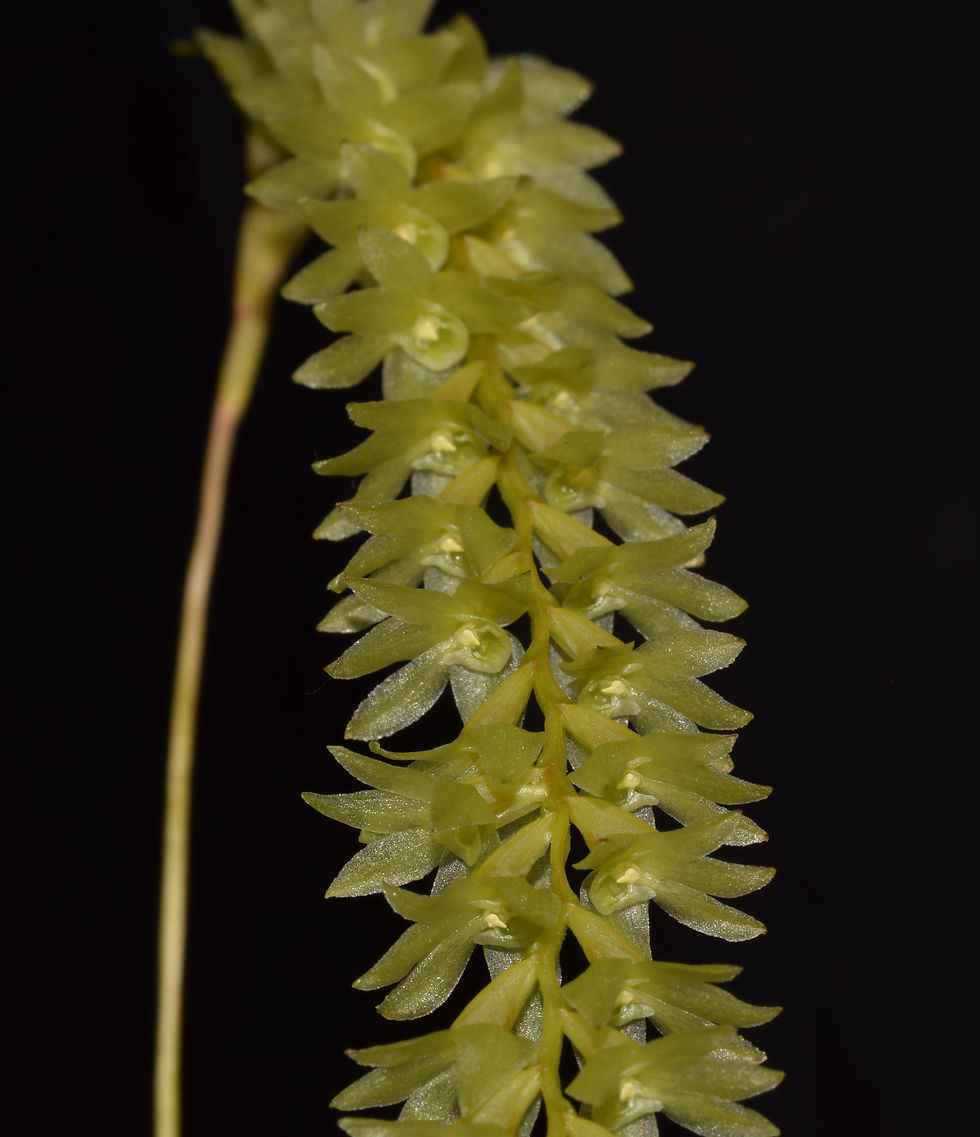
Inflorescence & Flowers: The flowering habit is the species' most defining feature. It produces an upright, densely flowered spike that emerges from the subtending new growth. The rachis (flower stem) itself is noticeably thickened and fleshy. The flowers are packed tightly along this thick spike, typically white, often with darker brownish or orange intricate markings on the lip.
🔬 Taxonomy and Ethnobotany
Taxonomy: It belongs to the large genus Coelogyne within the family Orchidaceae. The specific epithet pachystachya is derived from the Greek pachys (thick) and stachys (spike of corn or ear of grain), a direct botanical reference to its characteristic fleshy, densely packed, thick inflorescence.
Ethnobotany: While specific traditional medicinal uses are not prominently documented in general botanical literature, it is valued in specialist orchid horticulture for its unique, textural floral structure and robust pleated foliage.
💧 Cultivation and Care
Coelogyne pachystachya is an excellent subject for intermediate to warm orchid houses or large terrariums, requiring space to accommodate its hanging flowers.
Light: Requires bright, filtered light. It needs good light levels to initiate flowering, but the large pleated leaves are susceptible to scorching under harsh, direct sun.
Substrate: It is best grown in a pot with medium bark or mounted onto large tree fern plaques. Use a highly aerated epiphytic mix (e.g., coarse bark, charcoal, and large perlite) to ensure rapid drainage, as the roots dislike stagnation.
Watering: It originates from a monsoon climate with distinct seasons. Water copiously during the active growing season (spring and summer), keeping the medium moist. Reduce watering significantly during the cooler winter rest period, allowing the substrate to become drier between waterings, but do not allow the pseudobulbs to shrivel excessively.
Temperature: It is an intermediate to warm grower that appreciates a seasonal fluctuation.
Daytime: 22-28 C (72-82 F).
Night time: 16-20 C (61-68 F).
Humidity: High humidity (ideally above 70%) combined with excellent air movement is crucial for keeping the large, plicate foliage healthy and free from pests like spider mites.
🏷️ Specifications
Plant Size: 3-5 pseudobulbs
Plant Family: Orchidaceae
Plant Passport: A Coelogyne pachystachya B 140084 C [buyer to use number of the plant label] D GB