🌏 Habitat and Ecology
Peperomia pereskiifolia is a highly attractive, epiphytic or lithophytic succulent herb native to the tropical and subtropical forest understories of northern South America, with widely documented populations in Brazil, Colombia, Peru, and Venezuela.
In its native habitats, it grows nestled on mossy tree branches or creeping along damp rocky crevices on the forest floor. It thrives under a warm, deeply shaded canopy where it enjoys constant high humidity but remains perfectly adapted to tolerate dry spells thanks to its succulent water-storing tissues.
🌿 Description and Distinguishing Features
This highly architectural species is a favorite among terrarium hobbyists and succulent collectors for its clean, geometric arrangement of foliage and elegant trailing habit.Habit: It has a trailing or semi-erect growth habit, with branching, slightly woody, reddish-brown stems that can easily cascade down hanging baskets or climb along vivarium backgrounds.
Foliage: The specific epithet pereskiifolia translates to "leaves like Pereskia" (a genus of primitive cacti). The thick, succulent, and leathery leaves are arranged in distinctive whorls of 3 to 5 along the stems. They are elliptic to lanceolate, measuring roughly 3 to 5 cm long, and feature a glossy, deep forest-green upper surface with a lighter, sometimes reddish-tinted underside.
Flowers: Like most members of the Piperaceae family, its inflorescence is a slender, tail-like spadix. It produces erect, greenish-yellow, thread-like flower spikes that rise above the whorled foliage.
🔬 Taxonomy and Ethnobotany
Taxonomy
According to Kew Plants of the World Online (POWO), the accepted scientific name is Peperomia pereskiifolia (Jacq.) Kunth. It belongs to the pepper family, Piperaceae. It was first described by the Dutch botanist Nikolaus Joseph von Jacquin as Piper pereskiifolium before being transferred to Peperomia by Carl Sigismund Kunth.
Ethnobotany
There are no major traditional or medicinal uses recorded for this species. It is cultivated purely as a premium ornamental foliage plant, highly valued in the nursery trade for its structural symmetry and exceptional durability in indoor and greenhouse environments.
💧 Cultivation and Care
Thanks to its succulent nature, Peperomia pereskiifolia is highly resilient and far more forgiving of occasional underwatering than thin-leaved tropical plants.
Light: Requires medium to bright, filtered indirect light. While it can tolerate lower light conditions, bright indirect light helps it maintain compact whorls and strong stem coloration. Avoid harsh, direct midday sun, which can bleach or scorch its succulent leaves.
Substrate & Soil: Must have an exceptionally loose, well-aerated, and free-draining medium. A premium mix of fine orchid bark, perlite, and a small portion of peat moss or coco coir is ideal. It resents heavy, compacted soils which easily trap water and suffocate the root system.
Temperature: Thrives in standard warm-to-intermediate domestic or greenhouse conditions.
Daytime Range: 18–26°C (64–79°F).
Nighttime Range: 15–18°C (59–64°F). Ensure it is protected from cold winter drafts and temperatures dropping consistently below 12°C (54°F).
Watering & Humidity: Moderate to high humidity (50% to 75%) is appreciated, making it a great candidate for terrariums, though it adapts easily to average household humidity. Allow the potting medium to dry out significantly—almost completely—between thorough waterings. Its fine, shallow roots are highly susceptible to root rot if kept constantly wet or waterlogged.
🏷️ Specifications
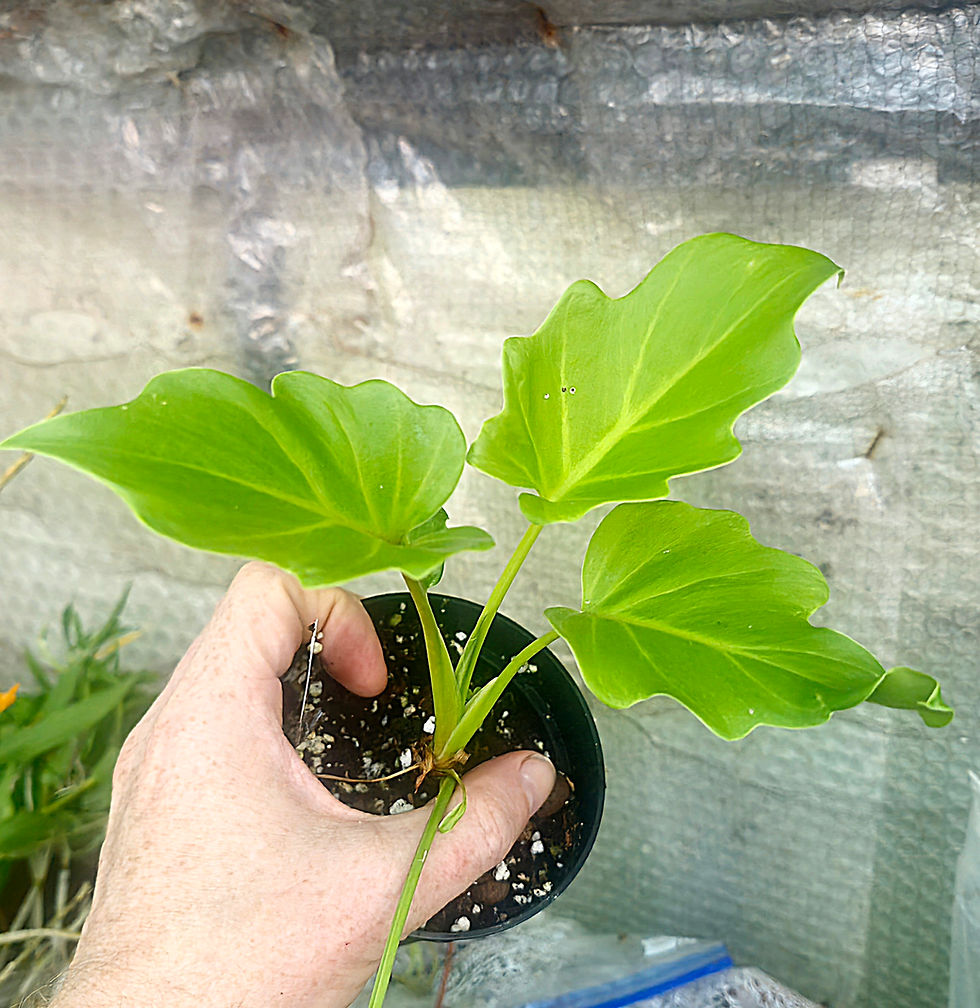
Plant Size: as pictured
Plant Family: Piperaceae
Plant Passport: A Peperomia pereskiifolia B 140084 C use the number written on the plant label D GB