🌏 Habitat and Ecology
Thaumatophyllum xanadu (long known in horticulture as Philodendron xanadu) is a highly resilient perennial aroid native to the tropical and subtropical biomes of southern Brazil and Paraguay. While many of its climbing relatives in the Araceae family start their lives as epiphytes, this species grows primarily as a terrestrial understory plant. It forms dense clumps along forest margins, savannas, and open, damp woodlands.
The variegated form is an extremely rare, highly coveted chimeric mutation (where some plant cells lack chlorophyll). Because this variegation is cell-deep and not viral, it is propagated primarily through careful division or specialized tissue culture to maintain its striking genetic patterns.
🌿 Description and Distinguishing Features
The variegated cultivar of the Xanadu brings an extraordinary splash of color to an already iconic, structurally dramatic plant.Habit & Growth: Unlike typical climbing philodendrons, it grows as a dense, self-heading, upright mounding shrub. Over time, it develops a thick, woody stem marked by beautiful eye-like leaf scars where older foliage has naturally shed.
Foliage & Variegation: The leaves are deeply dissected and divided into 15 to 20 distinct, finger-like lobes. In this variegated cultivar, these leathery, glossy leaves are beautifully painted with unpredictable splashes, sectors, and brushstrokes of creamy-white, pale yellow, and mint green against a deep forest-green base.
Inflorescence: On mature specimens grown in high-light tropical conditions, it can produce a dark red-to-purple spathe surrounding a creamy-white spadix. However, flowering is rare indoors, and the plant is grown almost exclusively for its outstanding foliage.
🔬 Taxonomy and Ethnobotany
Taxonomy
While still widely traded globally under its historical name, Philodendron xanadu variegated, extensive genetic and morphological studies led botanists to resurrect the genus Thaumatophyllum in 2018. Consequently, the accepted botanical name according to Kew Plants of the World Online is Thaumatophyllum xanadu (Croat, Mayo & J.Boos) Sakur., Calazans & Mayo.
Ethnobotany
Like most members of the Araceae family, the plant tissues contain calcium oxalate crystals, which are toxic to vertebrates and cause immediate mouth irritation if chewed. It is grown strictly as an ultra-premium ornamental foliage subject, highly valued by collectors for adding sophisticated variegation and a luxurious tropical aesthetic to interior designs, shaded conservatories, and greenhouse collections.
💧 Cultivation and Care
Variegated aroids require slightly more attention than their solid-green counterparts, as the white and yellow sections of the leaves lack chlorophyll and are highly sensitive to environmental stress.
Light: Requires bright, filtered indirect light. Brighter light is essential to help the plant photosynthesize through its green patches and to keep the variegation from reverting to solid green. However, avoid direct, harsh midday sun, which will rapidly scorch and turn the delicate variegated sectors paper-dry and brown.
Substrate & Soil: Demands an incredibly airy, chunky, and highly organic aroid mix. A premium blend consisting of medium-grade orchid bark, coarse perlite, charcoal, coco coir, and a small portion of worm castings ensures excellent drainage while retaining just enough ambient moisture.
Temperature: This is a tropical species that thrives in warm-to-intermediate environments.
Daytime Range: 20–29°C (68–84°F).
Nighttime Range: 16–20°C (61–68°F). Protect it from freezing winter drafts and never let temperatures drop below 12°C (54°F).
Watering & Humidity: High ambient humidity (60% to 80%) is highly beneficial for keeping the leaf edges immaculate. Water thoroughly only when the top 3–5 cm of the potting medium has dried out. It is far more tolerant of a brief dry period than it is of waterlogged, soggy soil, which can rapidly induce root rot and cause the white variegation to brown.
🏷️ Specifications
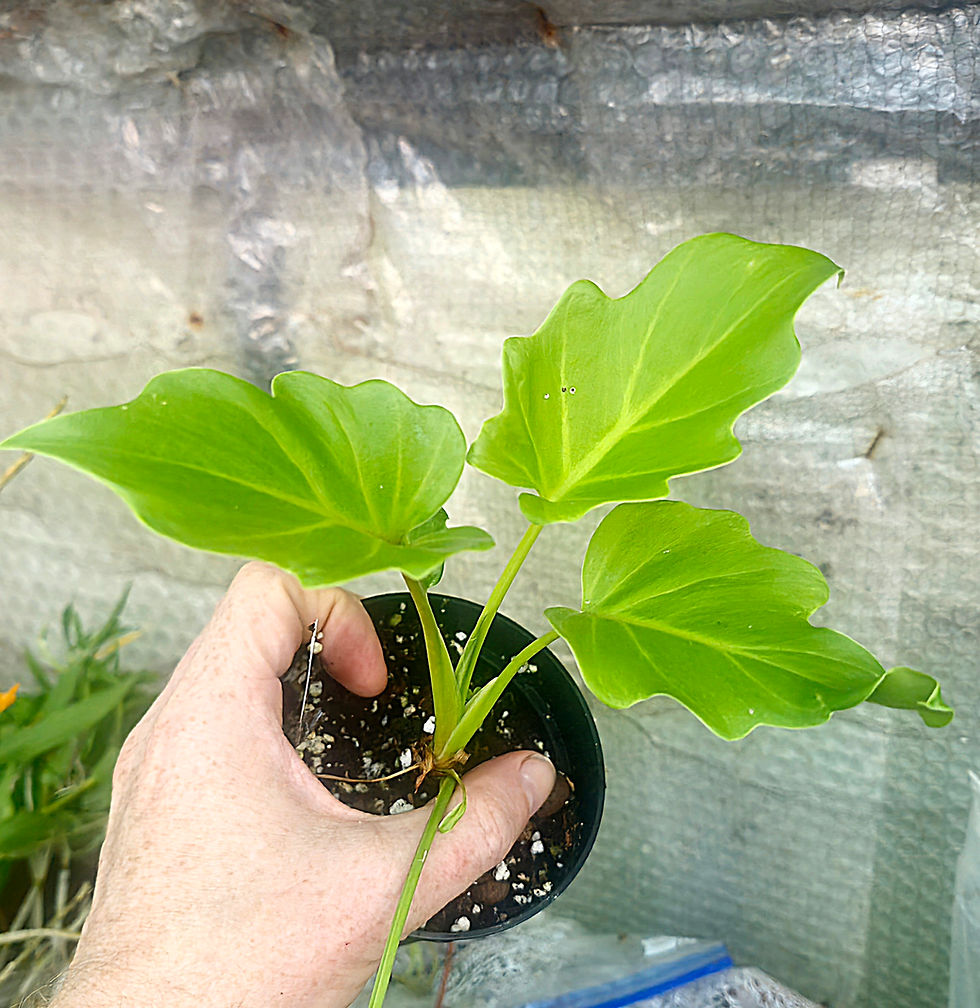
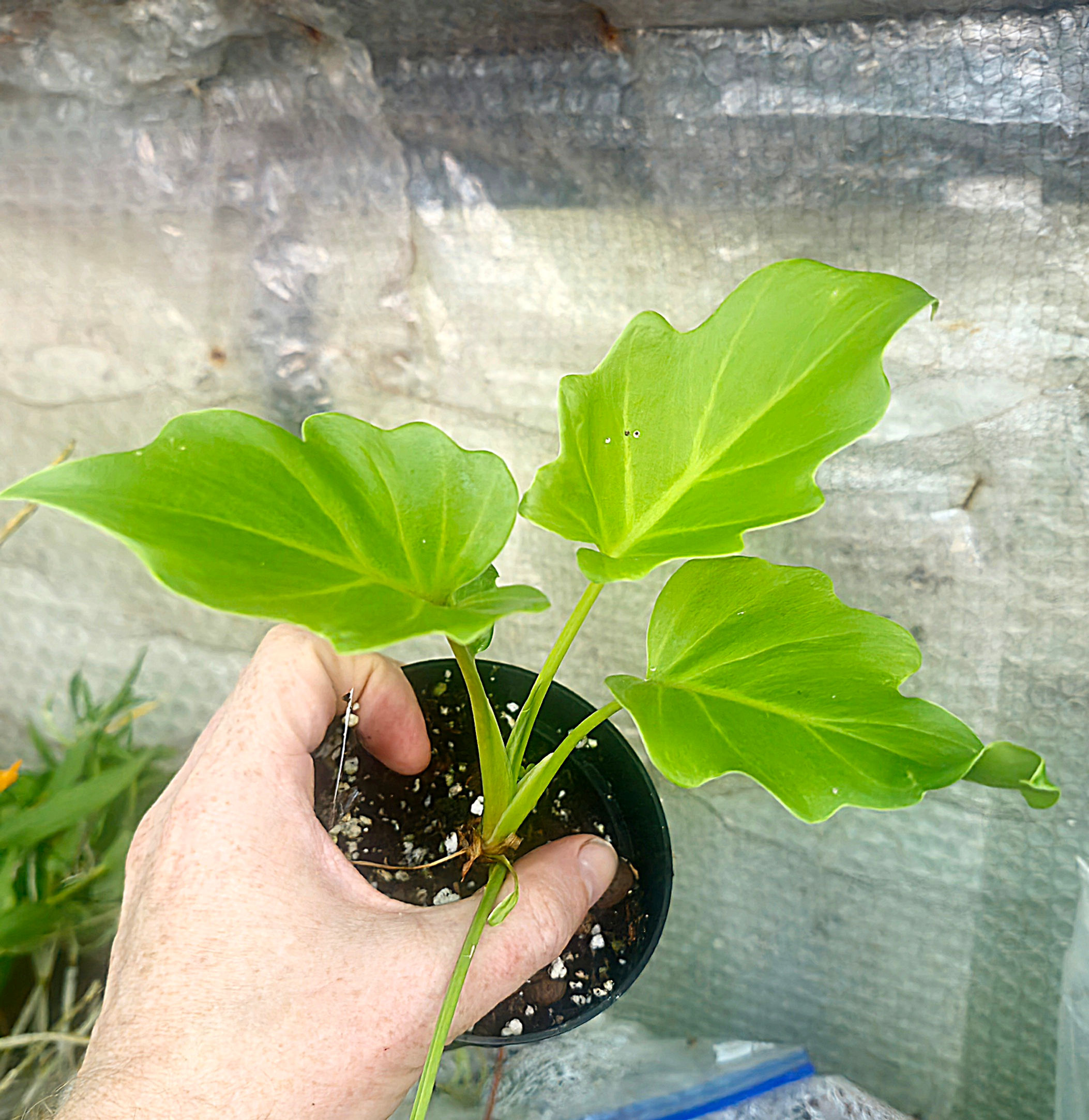
Plant Size: small as pictured
Plant Family: Araceae
Plant Passport: A Philodendron Xanadu variegated B 140084 C use the number written on the plant label D GB