🌏 Habitat and Ecology
Dendrobium chryseum, commonly known as the Golden Grass Orchid or Yellow-Flowered Dendrobium, is a medium-to-large epiphytic or lithophytic species widespread across the subtropical montane zones of Asia. Its natural range spans from the Himalayas through Assam, Bangladesh, Bhutan, Nepal, Myanmar, Thailand, Laos, Vietnam, south-central China, and Taiwan.
Thriving at elevations ranging from 1,000 to 2,600 metres, it inhabits broadleaf evergreen forests, exposed tree trunks, and south-facing rocky cliffs or sandy gulches. In its native montane ecosystems, it experiences pronounced seasonal dynamics: a hot, rain-filled monsoon summer followed by a dry, bright, and significantly cooler winter.
🌿 Description and Distinguishing Features
This classic species is celebrated for its golden floral displays, structural canes, and rich cultural heritage.
Habit & Canes: It produces erect to arching, slender, reed-like pseudobulbous canes that measure between 30 and 80 cm in length. The stems are yellowish-green, distinctly ridged, and clothed in dry, papery sheaths when mature.
Foliage: The leaves are alternate, linear-lanceolate, thin-textured, and measure up to 10–15 cm long. The plant is semi-deciduous to deciduous, frequently shedding its leaves from older canes prior to or during the blooming period.
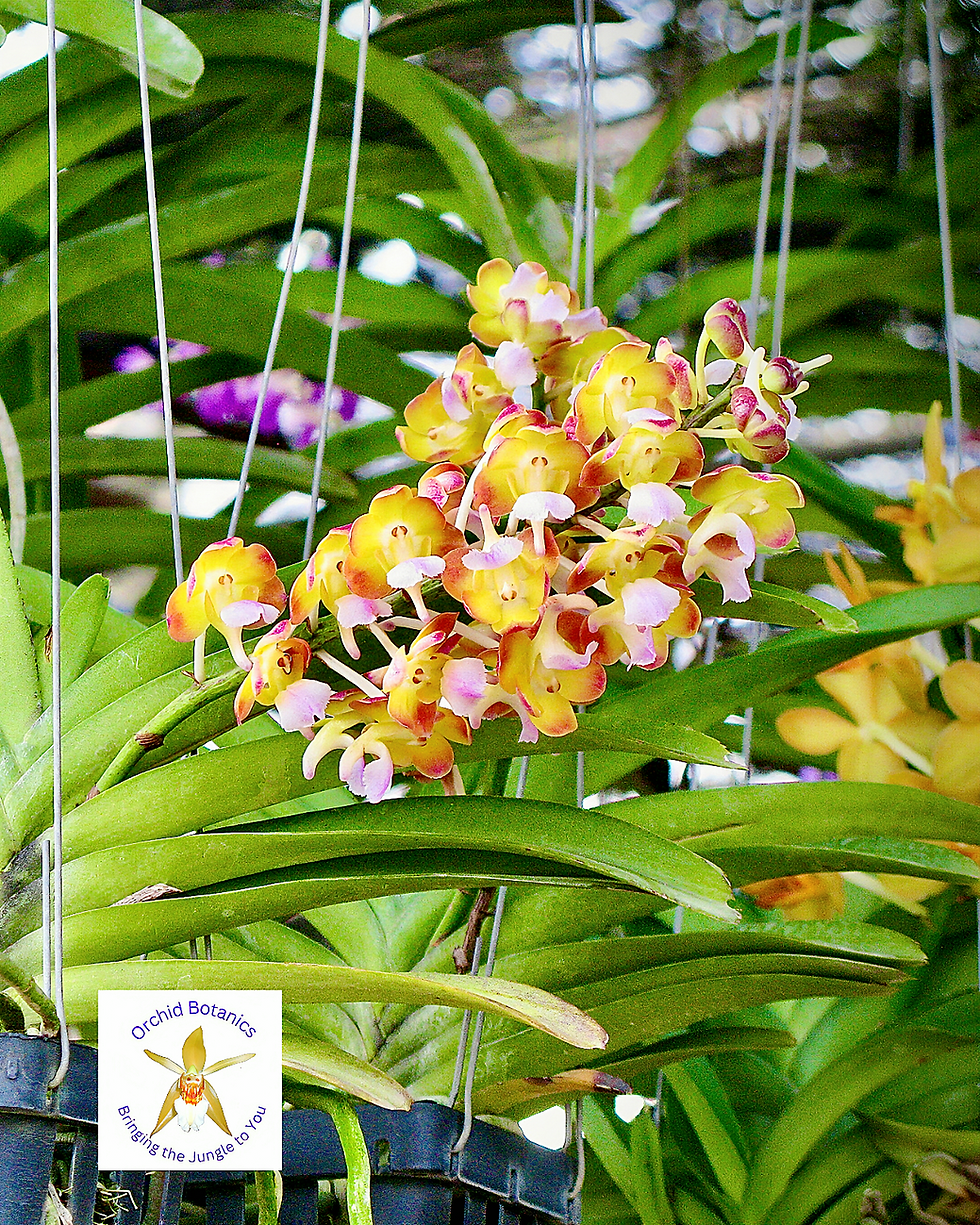
Flowers: Blooming from late spring into summer, it produces short racemes from the upper nodes of both leafy and leafless mature canes. Each inflorescence holds 2 to 6 glossy, widely opening flowers measuring 5 to 7 cm across.
Floral Details & Scent: The sepals and petals are a brilliant, glowing golden-yellow to rich orange-yellow. The rounded, concave labellum (lip) is fringed along the margins and features a darker orange-yellow throat or central disk. The blooms emit a warm, sweet, and delicate honey fragrance.
🔬 Taxonomy and Ethnobotany
Taxonomy
According to Kew Plants of the World Online (POWO), the accepted scientific name for this species is Dendrobium chryseum Rolfe. It belongs to the family Orchidaceae, subfamily Epidendroideae, and is classified within Section Dendrobium (historically referred to under Section Holochrysa). First described in 1888 by the British orchidologist Robert Allen Rolfe, this species has a complex synonymy in botanical literature. Homotypic and heterotypic synonyms include Dendrobium aurantiacum Rchb.f., Dendrobium clavatum var. aurantiacum (Kuntze) Tang & F.T.Wang, Dendrobium flaviflorum Hayata, and Dendrobium denneanum Kerr.
Ethnobotany
Dendrobium chryseum holds profound ethnobotanical importance across Asia. In Traditional Chinese Medicine (TCM), its dried stems are utilized as a valued form of Shi Hu (线叶石斛) to reduce fevers, nourish fluid production, and support immune health. Beyond medicinal applications, the species carries sacred cultural status in Taiwan among the indigenous Tsou people, who revere it as Fiteu ("The Flower of the Gods"). Traditionally planted on the roofs and entrances of the kuba (men's traditional meeting hall), warriors collect its flowers during the annual mayasvi ritual to decorate their headdresses, symbolizing spiritual renewal, protection, and connection to ancestral deities.
💧 Cultivation and Care
Because it originates from monsoon-driven montane forests, Dendrobium chryseum requires a distinct seasonal shift between a wet, warm summer growth cycle and a cool, dry winter rest to initiate flower buds.
Light: Requires bright, filtered light to full sun. High light intensity (25,000 to 35,000 lux) is essential during the winter rest period to mature the canes and stimulate strong spring flowering spikes.
Substrate & Soil: Demands a highly porous, well-aerated potting medium. A coarse mix of medium-to-large orchid bark, charcoal, and perlite in a well-drained pot or slatted basket works exceptionally well. It can also be mounted on cork bark or tree fern plaques if high atmospheric humidity is maintained.
Temperature: It is a cool-to-warm grower that benefits from strong diurnal and seasonal temperature variations.
Summer Growing Range: 22–29°C (72–84°F) daytime, 18–21°C (64–70°F) nighttime.
Winter Rest Range: 15–20°C (59–68°F) daytime, dropping down to 8–12°C (46–54°F) at night.
Watering & Seasonal Rest: High ambient humidity (70% to 85%) and continuous air movement are required year-round.
Spring & Summer (Active Growth): Water heavily and fertilize regularly, keeping the root zone consistently moist but never stagnant or waterlogged.
Autumn & Winter (Dormancy): Once new canes finish maturing in autumn, systematically taper off watering and stop all fertilization. Keep the plant cool and mostly dry throughout the winter, providing only light misting to keep the canes from severe shriveling, until flower buds appear in spring.
🏷️ Specifications
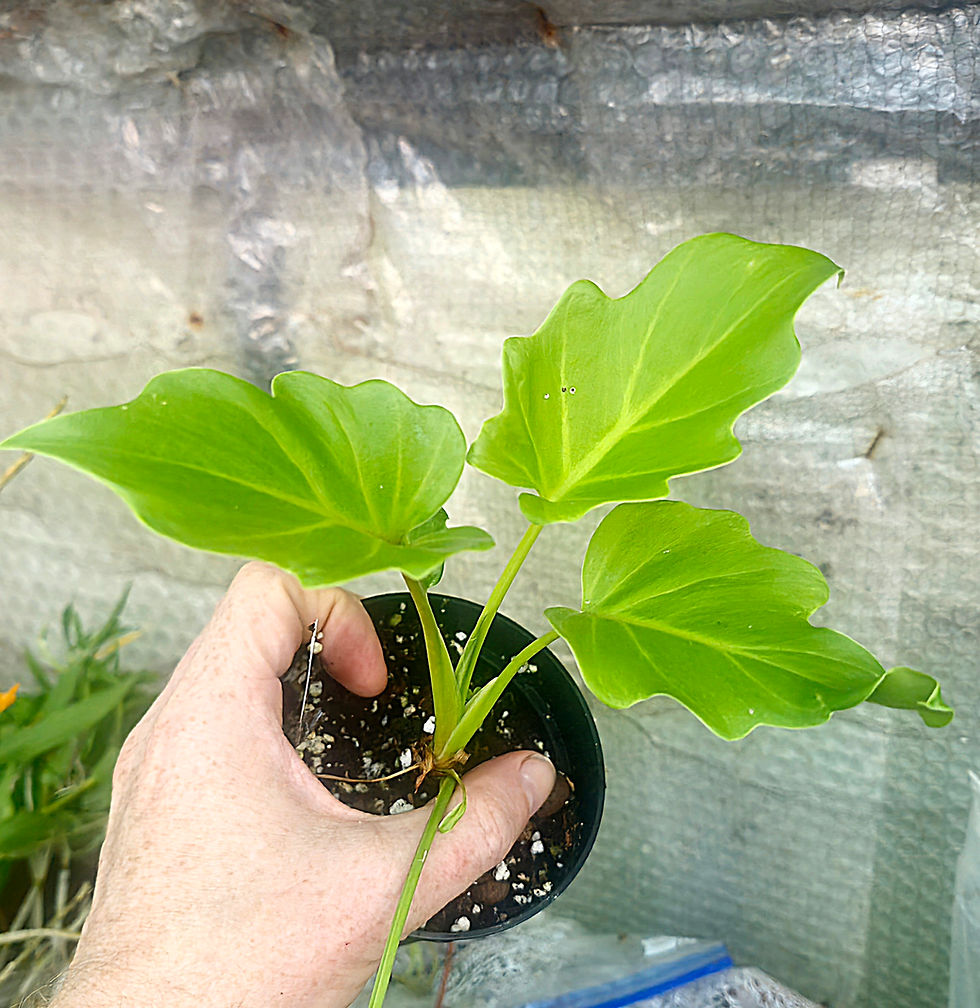
Plant Size: as pictured
Plant Family: Orchidaceae
Plant Passport: A Dendrobium chryseum B 140084 C use the number written on the plant label D GB