🌏 Habitat and Ecology
Maxillaria platypetala is a beautiful, highly architectural epiphytic orchid native to the wet, high-altitude montane cloud forests of the Andes. Its wild populations are primarily concentrated in Peru, where it is found growing at elevations ranging from 1,200 up to 2,500 metres.
It is a true cool-to-intermediate grower. Nestled on the mossy trunks and lower branches of dwarf cloud forest trees, this species thrives in conditions characterized by perpetual air movement, high atmospheric humidity, and regular cool mists rising from mountain valleys.
🌿 Description and Distinguishing Features
This medium-sized species is highly coveted by advanced orchid collectors for its distinct, geometric growth habit and extraordinarily showy, nodding flowers.
Habit & Pseudobulbs: It grows as a clumping, sympodial epiphyte. The pseudobulbs are flattened, oblong-ovoid, and closely set along a short, creeping rhizome. They remain a rich green and develop fine, clean longitudinal wrinkles as they mature.
Foliage: Each mature pseudobulb produces a solitary, apical leaf. The leaves are linear-ligulate, leathery (coriaceous), and elegantly arching, reaching lengths of up to 30 cm.
Flowers: Blooming primarily from autumn through winter, it produces single-flowered, thin, nodding inflorescences that arise from the base of the mature pseudobulb. The fragrant blooms are remarkably large and open fully, measuring roughly 5 to 7 cm across.
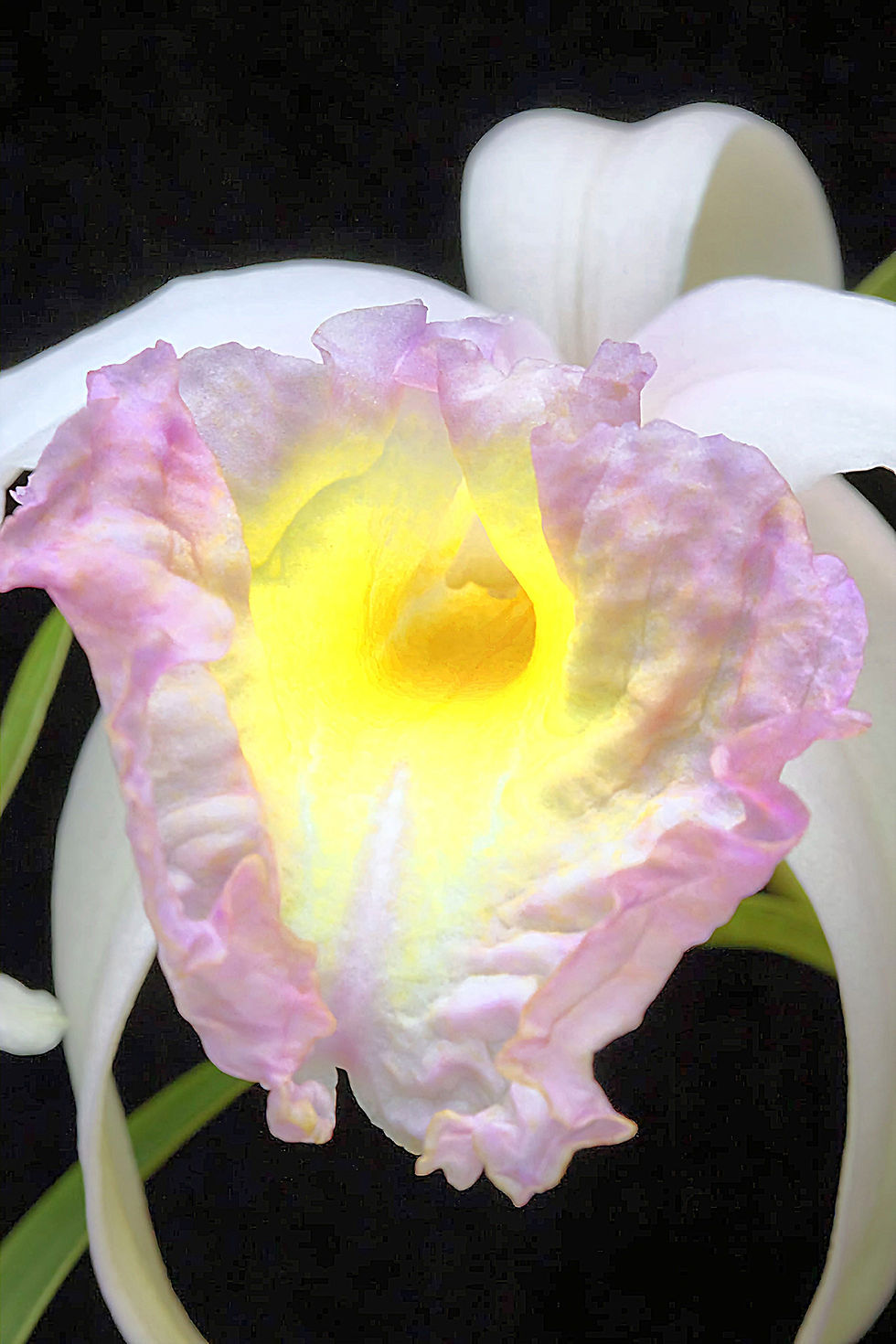
Floral Structure: The specific epithet platypetala translates to "broad-petaled," which describes the wide, spreading nature of its floral segments. The sepals and petals are a pristine, crystalline white to soft cream. The lip (labellum) provides a stunning, high-contrast focal point: it features a vibrant, golden-yellow callus at the center, beautifully outlined by fine, radiating stripes of rich reddish-purple or maroon.
🔬 Taxonomy and Ethnobotany
Taxonomy
According to Kew Plants of the World Online (POWO), the accepted scientific name for this species is Maxillaria platypetala Ruiz & Pav. It belongs to the family Orchidaceae, subfamily Epidendroideae, and subtribe Maxillariinae. It has a prestigious historical place in South American orchidology, having been formally described and published in 1798 by the celebrated Spanish botanists Hipólito Ruiz López and José Antonio Pavón y Jiménez during their landmark expedition to Peru and Chile.
Ethnobotany
There are no recorded traditional or medicinal uses for this montane species. It is cultivated purely as a premium, highly desirable ornamental subject. Its elegant, white-and-yellow starry displays make it a standout representative of the diverse and highly collectable genus Maxillaria.
💧 Cultivation and Care
Because of its high-elevation Andean canopy origins, Maxillaria platypetala requires cool-to-intermediate conditions and will not tolerate stagnant, dry, or excessively warm summer environments.
Light: Requires medium, bright filtered indirect light (roughly 15,000 to 22,000 lux). While it appreciates a well-lit position to stimulate heavy bud development, protect its thin, arching foliage from direct midday sun to prevent bleaching or scorching.
Substrate & Soil: Demands a highly aerated, fast-draining, yet moisture-retentive epiphytic potting medium. A premium blend of medium-grade orchid bark, coarse perlite, and high-quality New Zealand sphagnum moss is ideal. It performs beautifully in clay or plastic pots with excellent drainage holes, as well as in hanging slat baskets that allow maximum air circulation around the root zone.
Temperature: It is a cool-to-intermediate grower that requires a distinct diurnal temperature drop to trigger flower spike initiation.
Daytime Range: 18–24°C (64–75°F). Avoid letting greenhouse or grow-room temperatures exceed 28°C (82°F) for extended periods.
Nighttime Range: 10–14°C (50–57°F).
Watering & Humidity: High ambient humidity (70% to 85%+) paired with continuous air movement is critical to prevent foliar spotting or rot. The potting medium must be kept evenly and consistently moist year-round. While it does not have a strict dormant rest period, waterings can be spaced slightly further apart during the darkest winter months, but the roots must never be allowed to dry out bone-dry. Always water with soft, pure rainwater or reverse osmosis (RO) water.
🏷️ Specifications
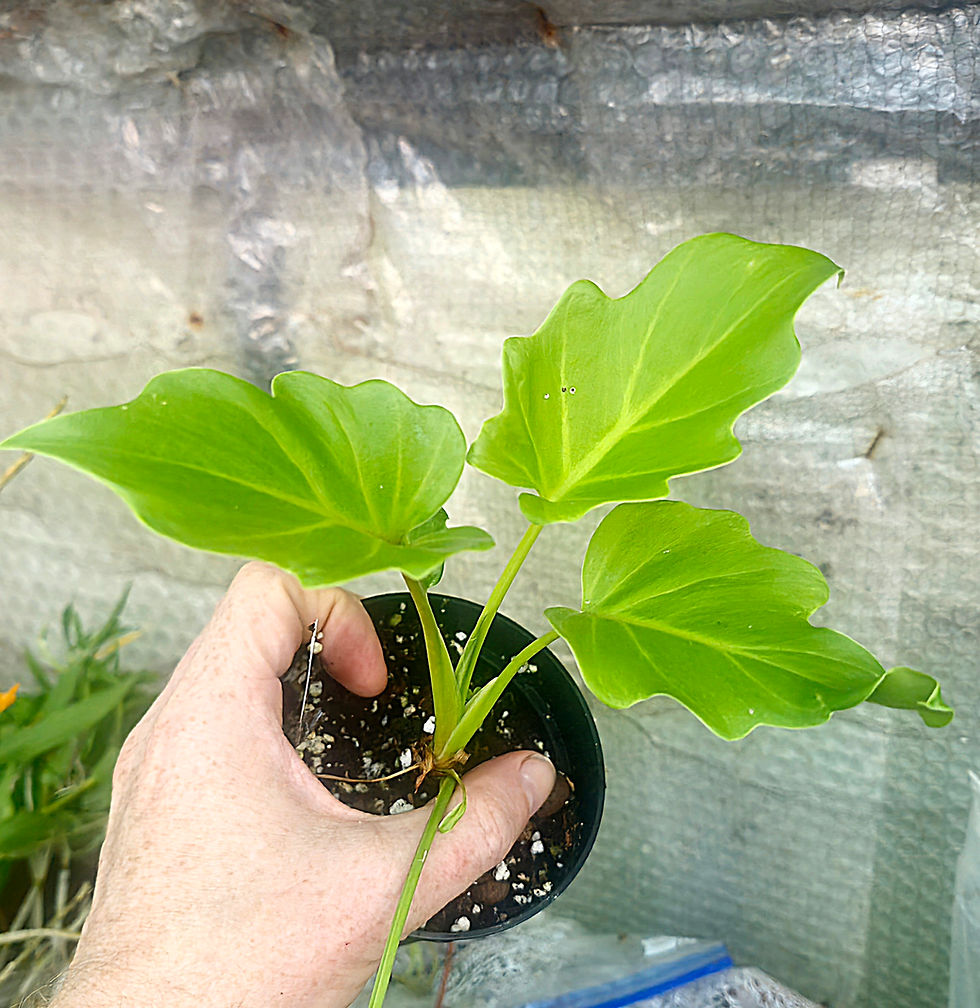
Plant Size: as pictured.
Plant Family: Orchidaceae
Plant Passport: A Maxillaria platypetala B 140084 C use the number written on the plant label D GB