🌏 Habitat and Ecology
Monophyllorchis maculata is a highly unusual, small-statured terrestrial orchid native to the dense, wet tropical rainforest understories of Central and northwestern South America. Its wild range spans across Costa Rica, Panama, Colombia, and Ecuador.Thriving primarily in deep shade at lowland to submontane elevations ranging from 100 to 1,200 metres, it grows rooted in rich, constantly damp leaf litter on the forest floor. It is highly adapted to environments with stable, high year-round humidity and very low light levels, sheltered beneath thick canopy layers where direct sunlight rarely penetrates.
🌿 Description and Distinguishing Features
This fascinating primitive orchid is highly coveted by advanced species collectors and biome creators for its elegant jeweled foliage and unique botanical architecture.
Habit: True to its generic name, Monophyllorchis (meaning "single-leaf orchid"), each individual upright stem produces only a solitary apical leaf, rising from a delicate, fleshy root system that lacks pseudobulbs entirely. It typically grows to a compact height of 15 to 30 cm.
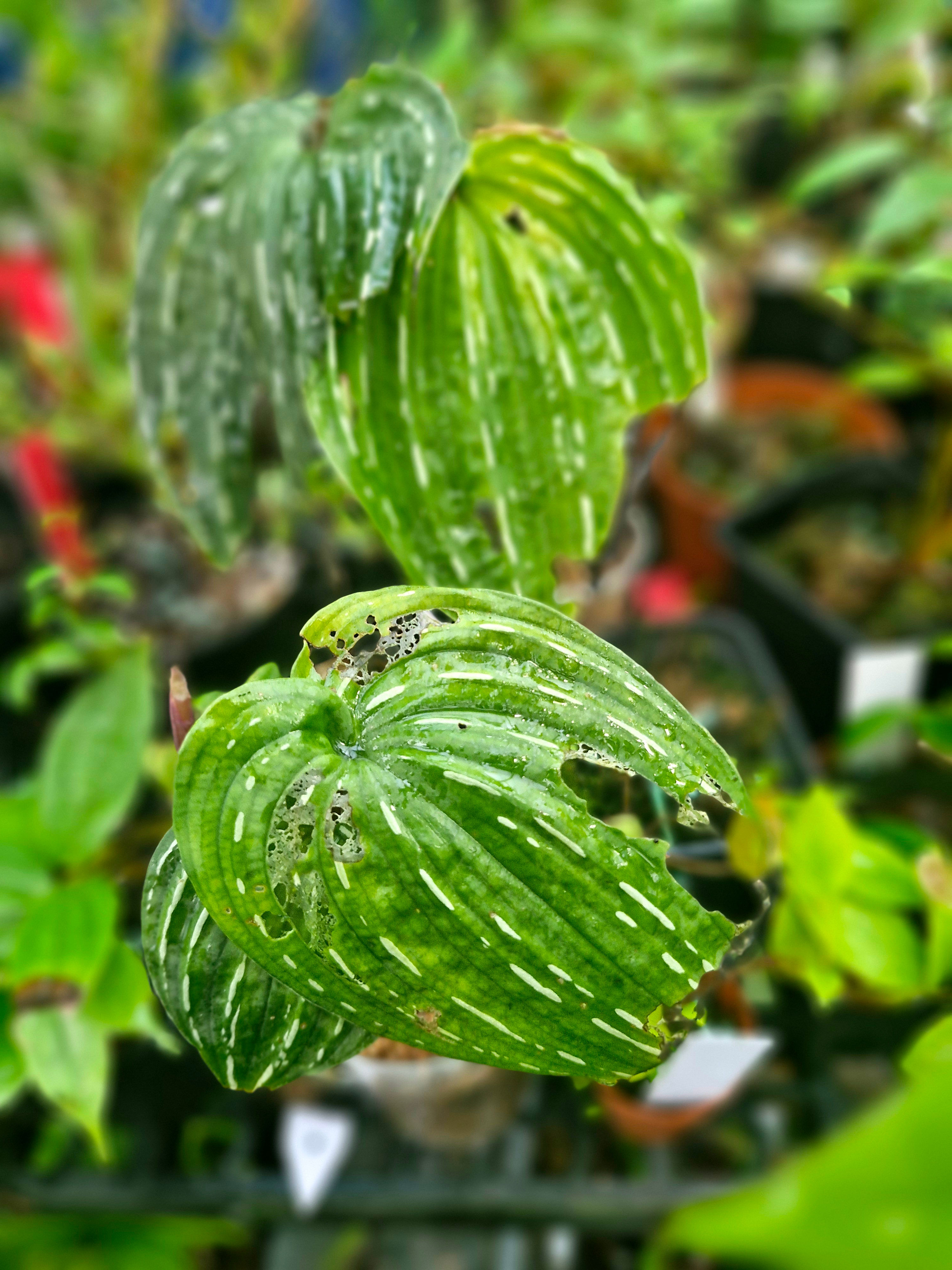
Foliage: The lone leaf is broad, ovate to cordate (heart-shaped), thin-textured, and heavily plicate (pleated). The specific epithet maculata means "spotted," referring directly to its spectacular foliage. The upper surface of the leaf displays a deep forest-green base heavily maculated with striking, irregular silvery-white to pale mint-green spots and patches running between the vertical pleats. The underside often exhibits a beautiful, dark purplish-wine flush.
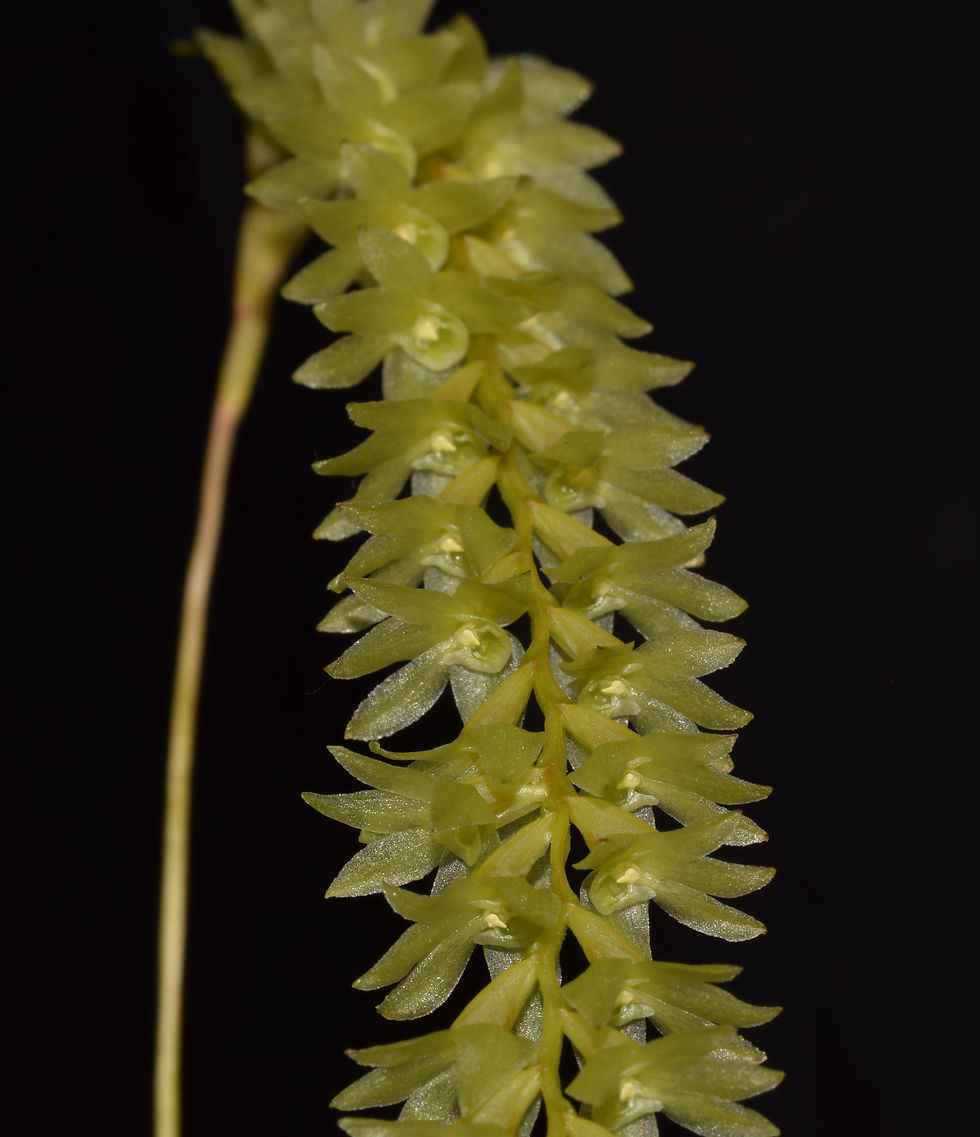
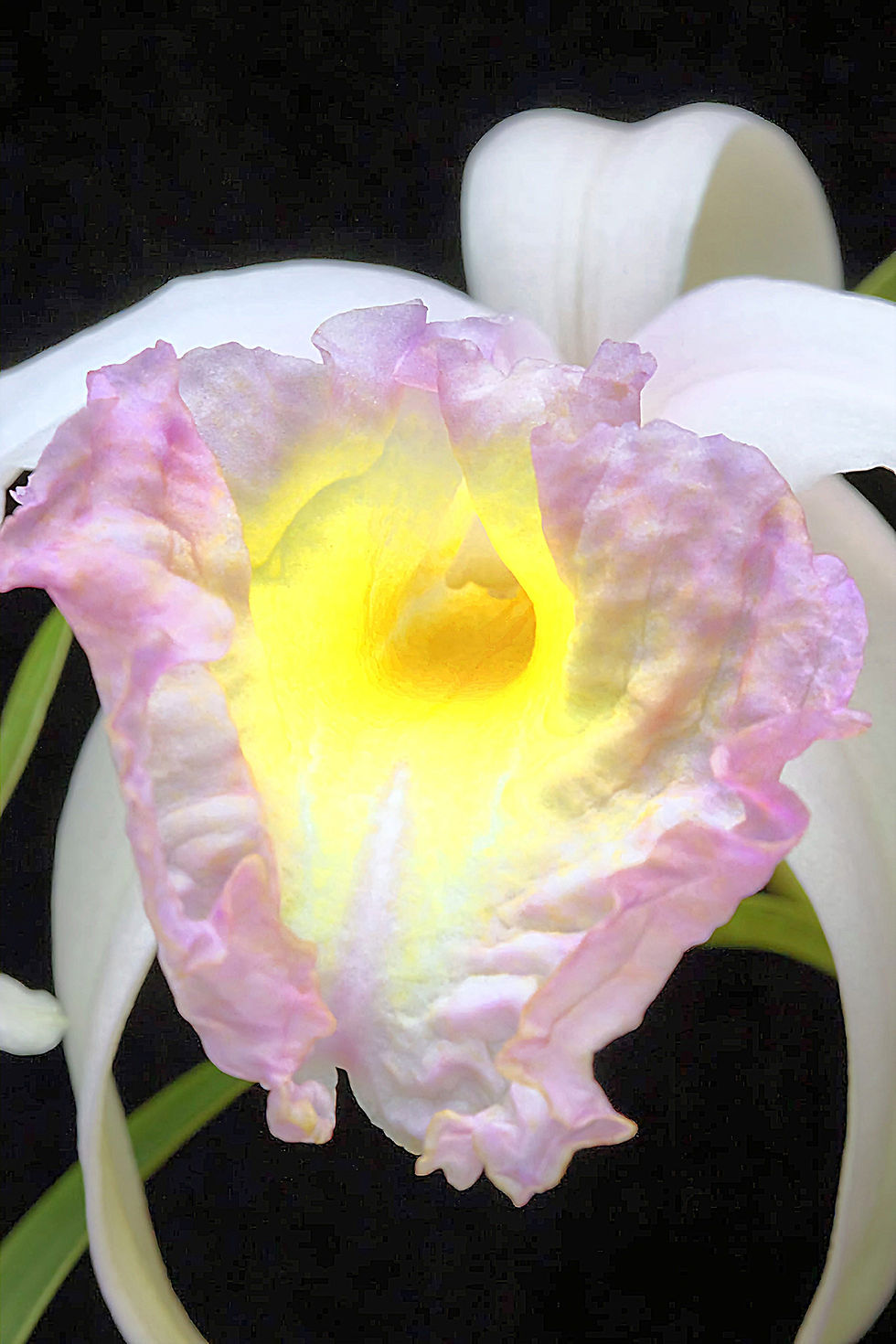
Flowers: The inflorescence is an erect, terminal raceme up to 15 cm long that arises from the base of the solitary leaf. It carries several small, delicately textured flowers that open sequentially. The blooms are typically translucent white or greenish-tan with a distinct, elongated labellum that features soft pink, violet, or lavender markings near the column.
🔬 Taxonomy and Ethnobotany
Taxonomy
According to Kew Plants of the World Online (POWO), the accepted scientific name for this species is Monophyllorchis maculata Garay. It belongs to the family Orchidaceae, subfamily Vanilloideae, and tribe Pogoniinae, making it an evolutionarily primitive member of the orchid family closely allied with genera like Pogonia and Cleistes. It was formally described and published in 1978 by the eminent Hungarian-American orchidologist Leslie A. Garay, separating it from more common terrestrial lineages due to its distinctive unifoliate habit and specialized floral morphology.
Ethnobotany
There are no recorded traditional medicinal, economic, or cultural uses for this highly localized Neotropical orchid. It is cultivated strictly as an ultra-premium ornamental subject for specialized botanical collections. Because it represents a primitive vanilla relative with highly distinct, patterned foliage, it holds substantial scientific interest and serves as a highly prestigious addition for advanced collectors who curate micro-climates or high-end tropical terrariums.
💧 Cultivation and Care
Because it is a primitive understory terrestrial that lacks water-storing pseudobulbs, Monophyllorchis maculata requires a constant supply of moisture and will not tolerate drying out or strong air drafts.
Light: Requires low, heavily filtered indirect light or deep dappled shade (similar to Jewel Orchids or sensitive Begonia species). Direct sunlight must be avoided entirely, as the thin, pleated leaves will rapidly bleach, scorch, and drop. It performs brilliantly under soft terrarium LED lighting away from hot spots.
Substrate & Soil: Demands a highly organic, loose, acidic, and open terrestrial medium that mimics a tropical forest floor. A premium blend consisting of high-quality New Zealand sphagnum moss, fine-grade orchid bark, well-decomposed leaf mold, and a generous portion of coarse perlite or tree fern fiber ensures excellent drainage while holding vital ambient moisture around the delicate roots.
Temperature: Thrives in intermediate-to-warm tropical conditions year-round.
Daytime Range: 20–27°C (68–81°F).
Nighttime Range: 16–20°C (61–68°F). Protect the plant completely from cold winter drafts and ensure temperatures do not drop below 14°C (57°F).
Watering & Humidity: High atmospheric humidity (70% to 85%+) is essential to prevent the thin, patterned leaves from developing dry, crispy margins. Keep the potting substrate consistently and evenly damp—never allow the medium to dry out bone-dry, but ensure it remains aerated enough to prevent stagnant, anaerobic conditions around the roots. Always water with pure rainwater or reverse osmosis (RO) water, as its fine root tips are highly sensitive to mineral or chlorine buildup.
🏷️ Specifications
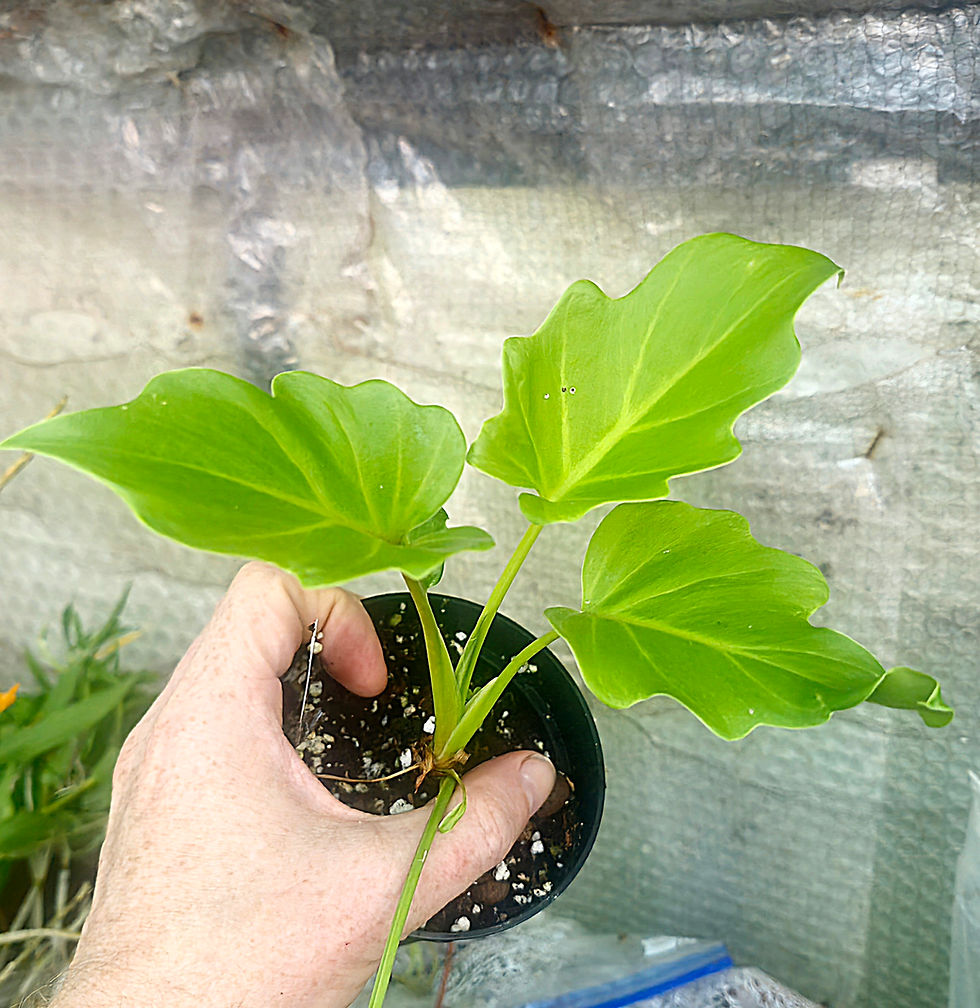
Plant Size: Plant just emerging from dormancy
Plant Family: Orchidaceae
Plant Passport: A Monophyllorchis maculata B 140084 C use the number written on the plant label D GB