🌏 Habitat and Ecology
Passiflora manicata, commonly known as the Red Passionflower or Red Passion Vine, is a vigorous, large-scale climbing liana native to the wet tropical, submontane, and montane forest margins of the northern Andes. Its native distribution spans across Colombia, Ecuador, Peru, and northwestern Venezuela.
Thriving at mid-to-high elevations in valleys, forest gaps, and along stream banks, it is adapted to cool-to-warm montane microclimates with high ambient humidity, generous seasonal rainfall, and strong overhead sunlight. It utilizes robust, coiling tendrils to scramble high into the forest canopy or drape over lower vegetation.
🌿 Description and Distinguishing Features
This striking, fast-growing evergreen climber is celebrated for its sheer vigor and dramatic, fiery floral displays.
Habit: It is a heavy, woody vine that can easily reach lengths of 5 to 10 metres or more when provided with adequate structural support, such as a sturdy trellis, pergola, or fence.
Foliage: The leaves are large, deeply three-lobed (trilobed), leathery, and dark forest-green. The leaf petioles are lined with small, distinct glands, and the stems are heavily angled or slightly winged when young.
Flowers: Blooming profusely from spring through autumn (or year-round in frost-free, high-light environments), it produces magnificent, brilliant scarlet-to-crimson flowers spanning 8 to 10 cm across.
Floral Details: The petals and sepals are a saturated, glowing red-orange, while the short central corona features a striking inner ring of deep blue, violet, or white filaments surrounding the prominent, raised central column. The flowers are highly attractive to hummingbirds and butterflies.
Fruit: Following successful pollination, it produces small, ovoid, yellowish-green fruits. While technically edible when fully mature, they are generally less palatable than commercial passionfruit (Passiflora edulis) and are predominantly grown for ornamental value.
🔬 Taxonomy and Ethnobotany
Taxonomy
According to Kew Plants of the World Online (POWO), the accepted scientific name for this species is Passiflora manicata (Juss.) Pers. It belongs to the family Passifloraceae and is placed within the subgenus Passiflora or historically classified under the classical subgenus Tacsonia due to its Andean origin and tubular floral structures. It was originally described as Tacsonia manicata by Antoine Laurent de Jussieu in 1805 before being transferred to Passiflora by Christiaan Hendrik Persoon.
Ethnobotany
In Andean folk traditions across Colombia and Ecuador, various parts of the vine have been utilized in rural medicine as mild sedatives, anti-spasmodics, and teas for nervous restlessness, similar to other native passionflowers. The fruit pulp is occasionally harvested locally for beverages. In modern horticulture, it is cultivated globally as a high-impact, ornamental cover for large outdoor trellises or spacious conservatories.
💧 Cultivation and Care
Because of its montane South American lineage, Passiflora manicata is significantly more cold-tolerant than purely lowland equatorial passion vines, making it a reliable performer in temperate conservatories or mild coastal landscapes.
Light: Requires bright, full direct sunlight to partial indirect shade. High light levels are essential to trigger continuous floral bud development; if grown in too much shade, vegetative growth will be rampant at the expense of flowers.
Substrate & Soil: Prefers a rich, fertile, yet exceptionally well-draining loamy potting mix. A blend of rich leaf mold, compost, and coarse grit or perlite ensures the roots receive adequate oxygen while retaining uniform moisture.
Temperature: It is an intermediate-to-warm grower that demonstrates notable resilience.
Daytime Range: 18–26°C (64–79°F).
Nighttime Range: 12–16°C (54–61°F). Mature, established vines can tolerate light, brief frosts down to -3°C (26°F) with minimal foliage damage, though prolonged hard freezes will kill the upper growth back to the roots.
Watering & Humidity: High ambient humidity (60% to 80%) keeps the leathery foliage looking crisp. During active spring and summer growth, water heavily and consistently, keeping the soil damp but never waterlogged or stagnant. In winter, reduce watering frequency, allowing the top layer of substrate to dry out slightly before rewatering. Feed regularly with a balanced or high-potassium liquid fertilizer during active growth to sustain its high energy demands.
🏷️ Specifications
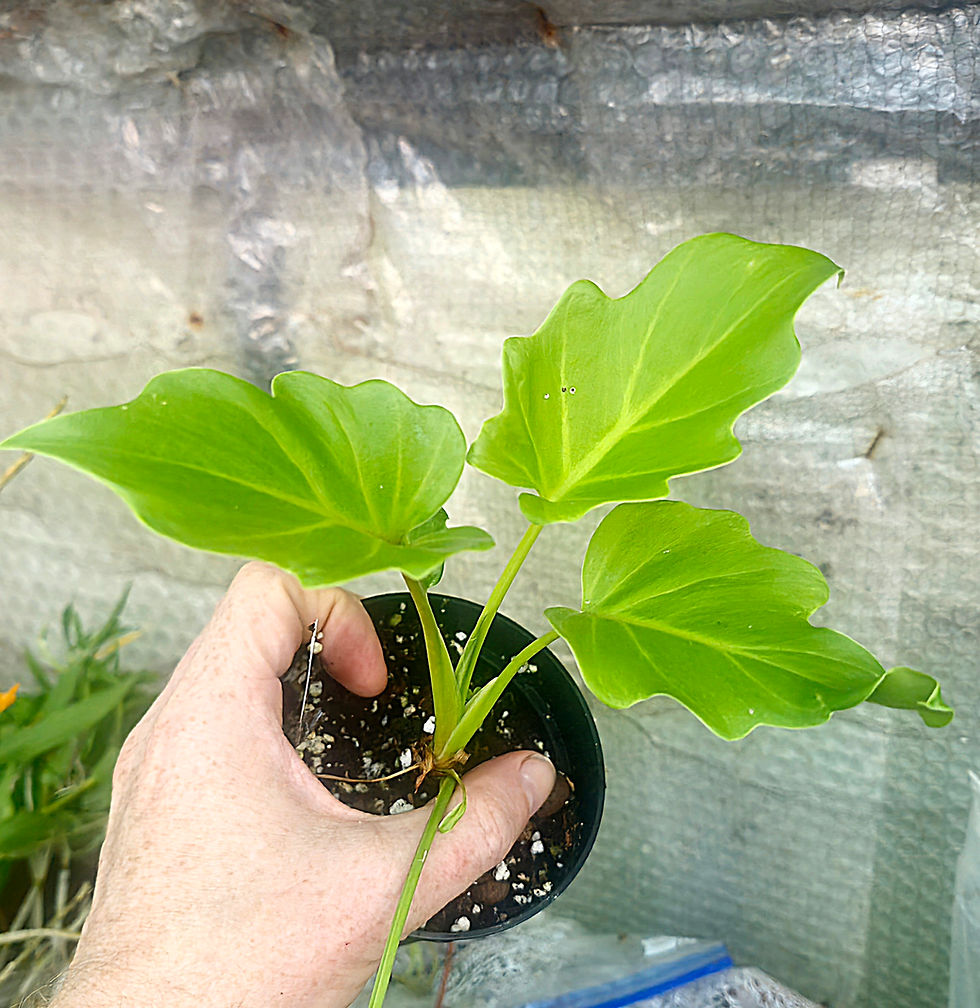
Plant size: as pictured
Plant Family: Passifloraceae
Plant Passport: A Passiflora manicata B 140084 C use the number written on the plant label D GB