🌏 Habitat and Ecology
Kaempferia pulchra, commonly known as the Peacock Ginger or Limestone Kaempferia, is a low-growing perennial herb native to the tropical forest understories and damp limestone karst formations of Southeast Asia. Its primary wild distribution spans southern Thailand and northern Peninsular Malaysia.
Thriving on the humid, deeply shaded forest floor and within nutrient-rich soil pockets among limestone outcrops, it is adapted to an understory environment with constant atmospheric humidity, warm temperatures, and high protection from direct sunlight. In its wild range, it undergoes a seasonal dormancy tied to monsoon dry periods, dying back completely to its underground rhizomes until the return of seasonal rains.
🌿 Description and Distinguishing Features
This compact, carpet-forming ginger is celebrated in tropical horticulture for its spectacular, patterned foliage and low, horizontal profile.
Habit: It grows as a stemless, deciduous perennial herb arising from a small, fleshy, rounded underground rhizome with thick storage roots. It typically reaches a height of only 10 to 30 cm, spreading laterally to form dense mats of decorative groundcover.
Foliage: The broadly ovate to elliptic leaves sit nearly flat against the substrate or stem. They feature a striking variegated pattern consisting of alternating bands or spots of olive-green, bronze, silver-grey, and deep green that resemble the eye-spots of a peacock tail. Emerging young leaves often showcase distinct yellowish-green and reddish-brown pigmentation before maturing.
Flowers: Blooming continuously from late spring through autumn, delicate flowers emerge sequentially from the center of the leaf rosette. The small, four-petaled flowers are pale purple, lavender, or soft pink, anchored by a clear white central eye. Each individual bloom lasts only a day, but new flowers are produced regularly throughout the active growing season.
🔬 Taxonomy and Ethnobotany
Taxonomy
According to Kew Plants of the World Online (POWO), the accepted scientific name for this species is Kaempferia pulchra Ridl. It belongs to the family Zingiberaceae, subfamily Zingiberoideae, and tribe Zingibereae. It was formally described by the British botanist Henry Nicholas Ridley in 1899. The specific epithet pulchra is Latin for "beautiful" or "pretty," referencing its highly ornamental foliage.
Ethnobotany
Across its native range in Southern Thailand and Malaysia (where it is known locally as Cekur Hitam or Cekur Hutan), Kaempferia pulchra holds traditional value in regional folk medicine. Crushed rhizome pastes and leaf extracts have been applied topically in poultices to treat localized swelling, mumps, and rheumatic pains, while decoctions are used in traditional wellness tonics aimed at supporting digestion and blood circulation. Phytochemical analyses have identified bioactive diterpenoids within the rhizomes that display anti-inflammatory and antiproliferative properties. In global horticulture, it is cultivated as a choice shade-tolerant groundcover, terrarium subject, and container plant.
💧 Cultivation and Care
Because it originates from tropical limestone understories, Kaempferia pulchra demands deep shade, high humidity, free-draining media, and careful moisture management during its natural seasonal rest.
Light: Requires partial to full shade or soft, filtered indirect light. Harsh, direct midday sun will rapidly scorch the tender, decorative leaves and bleach the silver foliage patterns.
Substrate & Soil: Thrives in a rich, porous, and highly organic potting mix that drains rapidly. A blend of coco coir or peat, well-rotted leaf mold, perlite, and a small fraction of fine limestone chippings or crushed charcoal mimics its native karst habitat while preventing moisture stagnation around the rhizomes.
Temperature: Cultivated as a warm-climate tropical plant.
Active Season Range: 20–30°C (68–86°F).
Dormancy Tolerance: The foliage will die back when temperatures drop below 15°C (59°F) or during dry periods. The underground rhizomes are hardy down to USDA Zone 8/9 if kept strictly dry and protected from hard soil freezes.
Watering & Seasonal Rest:
Spring & Summer (Active Growth): Keep the substrate consistently moist but never waterlogged. Provide moderate atmospheric humidity (60% to 80%) to keep the soft leaf margins immaculate. Apply a balanced, diluted liquid fertilizer every few weeks during peak growth.
Autumn & Winter (Dormancy): As day length shortens and temperatures cool, the leaves will yellow and collapse naturally. Once the plant goes dormant, withhold water entirely and keep the resting rhizomes in warm, dry soil until new leaf shoots break the surface in late spring. Excess moisture during dormancy will cause fungal rhizome rot.
🏷️ Specifications
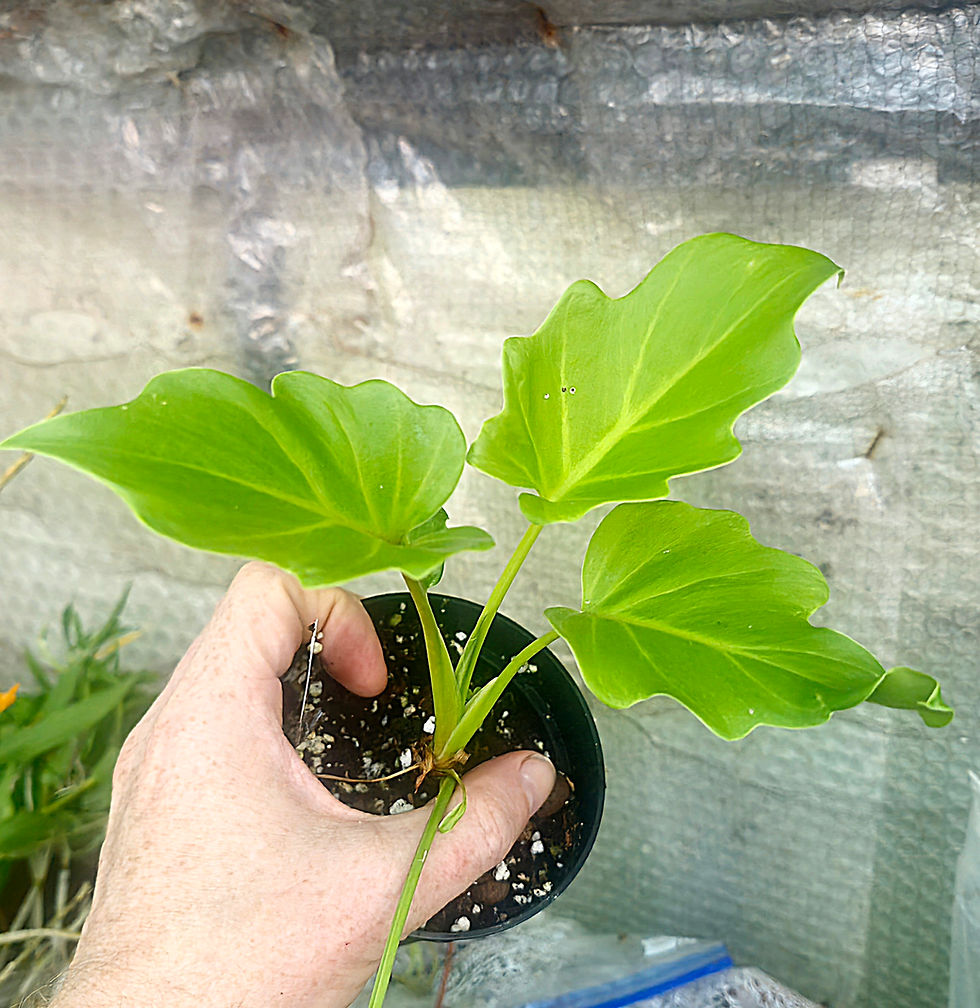
Plant size: as pictured
Plant Family: Zingiberaceae
Plant Passport: A Kaempferia pulchra B 140084 C use the number written on the plant label D GB